


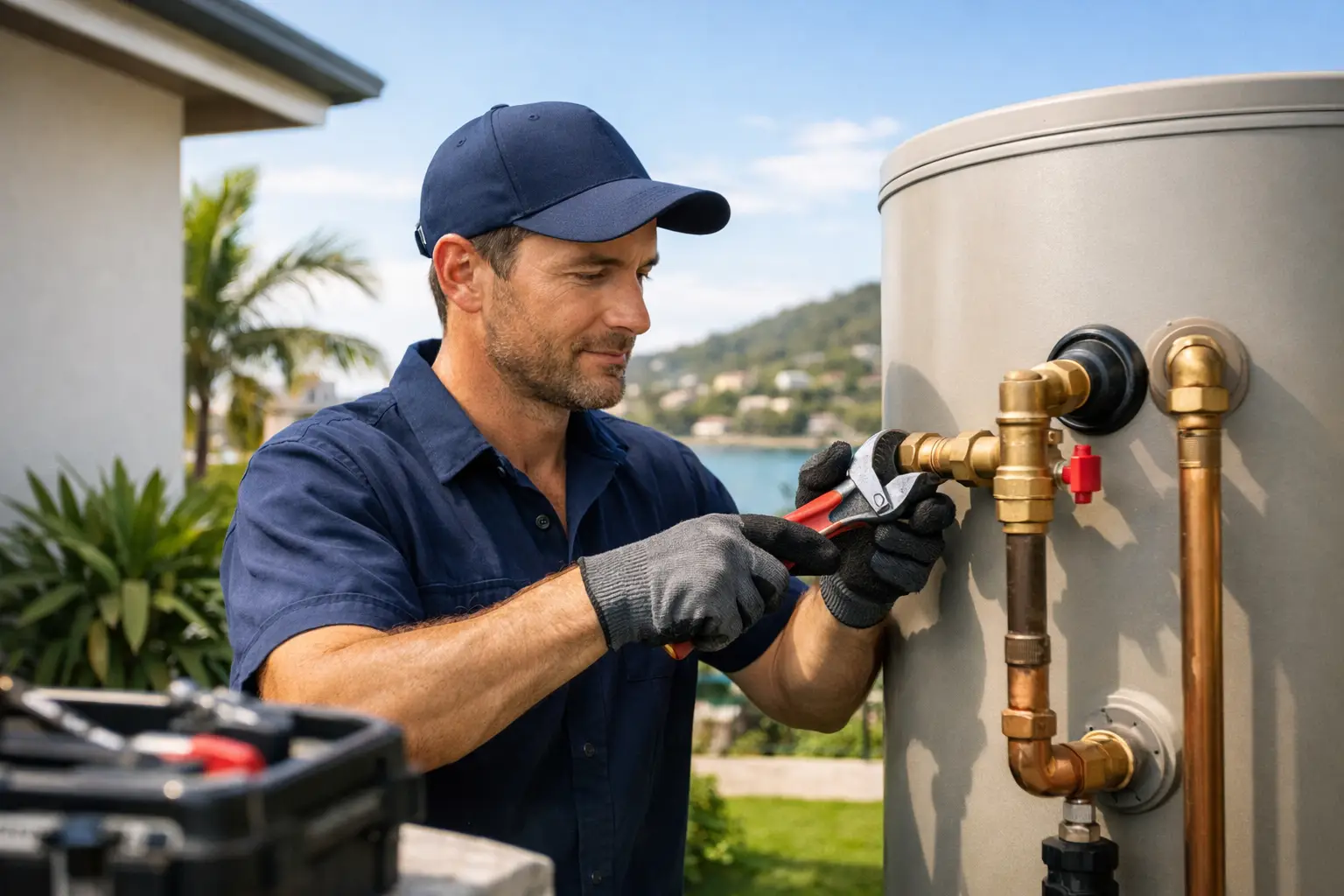
When the hot water cuts out, most homeowners ask the same thing – who installs hot water systems, and who do I actually need to call? The short answer is a licensed professional, but the right trade depends on the type of system you’re putting in, what’s already in your home, and whether petrol, plumbing or electrical work is involved.
That’s where people often get stuck. It sounds simple until you realise a new hot water system can involve more than one trade, approvals, safety checks and a bit of coordination. If you’re trying to get hot water back fast, the last thing you want is being bounced between a plumber, electrician and petrol fitter with no clear answer.
Who installs hot water systems in Australia?
In most cases, a licensed plumber installs the unit itself because hot water systems are connected to your home’s water supply. But that’s only part of the job. If the system is petrol, you’ll also need a licensed petrol fitter. If it’s electric, heat pump or certain solar setups, you may need a licensed electrician as well.
So if you’re asking who installs hot water systems, the practical answer is this: the installer must hold the right licence for the work being done. Sometimes that’s one qualified professional with the correct endorsements. Sometimes it’s a team handling plumbing, petrol and electrical together.
For homeowners, the safest option is to book a company that can manage the full job without leaving you to organise separate trades. It saves time, reduces delays and makes it much easier to get a fixed quote upfront.
The installer depends on the type of system
Electric storage hot water systems
An electric storage system usually needs a plumber to connect the water lines and position the unit. If there’s any wiring involved, such as replacing or reconnecting the power supply, a licensed electrician must handle that side of the install.
If you’re swapping an old electric unit for a similar new one in the same location, the job is often straightforward. But if the switchboard needs upgrading or the new unit has different electrical requirements, the electrical side can add time and cost.
Petrol hot water systems
Petrol systems need more than general plumbing. A licensed petrol fitter is required to connect or alter the petrol line, test for leaks and make sure the installation complies with safety standards. If the system also involves water connections, the person doing the work must be licensed for those too, or the job needs both trades covered.
This is one area where cutting corners is not worth the risk. Poor petrol work can create serious safety issues, and it can also void warranties or insurance if the installation isn’t done properly.
Heat pump hot water systems
Heat pumps are becoming more popular because they’re energy efficient, but installation can be a bit more involved. You’ll typically need plumbing work, and in many cases electrical work as well. Placement matters too, because the unit needs suitable ventilation and enough space to operate properly.
A heat pump can be a smart long-term choice, but the right fit depends on your household size, your power setup and where the unit will sit on the property.
Solar hot water systems
Solar systems are a little more specialised. Installation can involve roof-mounted collectors, storage tanks, plumbing connections and often petrol or electric booster integration. Depending on the setup, you may need a combination of licensed plumbing, roofing-related access skills, petrol fitting and electrical work.
That doesn’t mean solar is complicated for every household, but it does mean it pays to use an installer who has done this type of work before and can manage the whole installation safely.
Why licensing matters more than price alone
It’s tempting to focus on the cheapest quote when a system fails unexpectedly. Hot water is essential, and most people just want it sorted. But this is one of those jobs where the lowest price can cost more later if the work isn’t compliant or the system is installed incorrectly.
A properly licensed installer should know how to size the unit for your household, connect it to the right services, test it, check tempering requirements where needed and make sure the installation meets current standards. They should also be able to advise if your old system can be like-for-like replaced, or if changes are needed because regulations or site conditions have changed.
Good installation protects more than the unit. It helps with safety, energy efficiency, warranty support and the lifespan of the system itself.
Who installs hot water systems if you’re changing system type?
This is where many jobs become less simple than expected. Replacing an electric system with another electric unit is usually the cleanest option. But changing from electric to petrol, petrol to heat pump, or storage to continuous flow can involve new service connections, different clearances and extra compliance checks.
For example, switching to petrol may require a petrol line extension or meter capacity check. Upgrading to a heat pump may mean checking the available electrical circuit and finding a suitable location with drainage and airflow. Moving the system from one side of the house to another can also add labour because pipework, wiring or petrol lines may need to be rerouted.
So while the question sounds like it should have one answer, who installs hot water systems really depends on what you’re installing and whether you’re keeping things like for like.
Signs you need a professional replacement, not a repair
Sometimes a hot water issue is a repair job. Sometimes the system is telling you it’s done. If your unit is older, leaking from the tank, running out of hot water quickly, making odd noises or showing signs of rust, replacement may be the better call.
Age matters here. Many storage systems have a limited service life, and once the tank itself starts failing, repairs usually won’t buy you much time. At that point, having a licensed installer assess the current setup and recommend a suitable replacement can save you from repeated call-outs.
It also gives you the chance to choose a system that actually suits how your household uses hot water now, not how it did ten or fifteen years ago.
What a good installer should help you with
A decent installer does more than remove the old unit and bolt in a new one. They should ask about household size, peak usage times and whether you’re after lower running costs, faster recovery or a more compact system.
They should also be upfront about trade-offs. A bigger tank may suit a family better, but it takes more space. Continuous flow units save room and can be efficient, but they may not be the best fit for every property. Heat pumps can cut power bills, but they usually cost more upfront than a standard electric replacement.
Most importantly, they should make the process easy. Clear advice, honest pricing, licensed work and a proper handover matter just as much as the product itself.
How to avoid delays when booking installation
If you want the job done quickly, have a few details ready when you call. Knowing whether your current unit is petrol or electric, where it’s located, whether it’s inside or outside, and if it’s leaking can help speed up quoting and scheduling. A photo of the compliance plate or the existing system often helps too.
This is especially useful if you need urgent replacement. The more information you can give upfront, the easier it is for the installer to confirm what’s required and whether extra electrical or petrol work may be needed.
For homes across the Gold Coast, Southern Brisbane and Tweed Heads, that kind of coordination matters. Nobody wants to take time off work for one trade, only to hear they need another one before the job can be finished.
The easiest answer is a provider that covers the whole job
If you’re still wondering who installs hot water systems, the simplest answer is a licensed provider that can handle plumbing, petrol and electrical requirements as needed. That takes the guesswork out of the process and gives you one point of contact from quote to installation.
That’s exactly why many homeowners prefer working with a company like No Hassle Homes. Instead of chasing multiple tradies, you can book the job with one local team that understands how to get replacement or installation sorted quickly, safely and without the usual run-around.
Hot water problems are stressful enough without having to become an expert in trade licensing. The right installer won’t just fit a unit – they’ll help you choose the right system, explain what’s involved and get your home back to normal with as little fuss as possible.
If your hot water system is on the way out, the smartest next step is to talk to a licensed installer who can assess your setup properly and give you a clear path forward.