


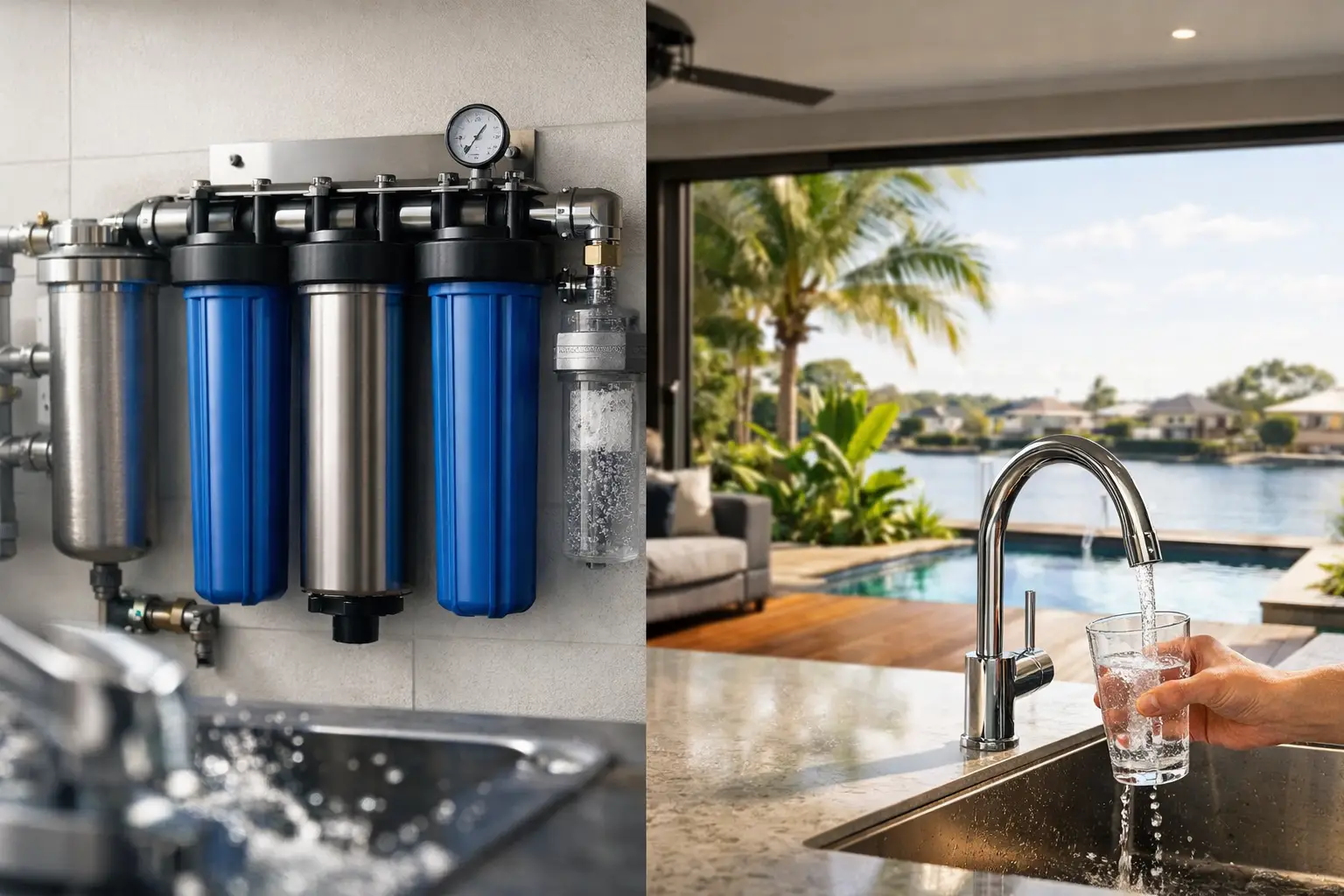
You usually start asking if a whole house water filter is worth it after something gets annoying enough to stop ignoring – the chlorine smell in the shower, scale building up on taps, dry skin, cloudy kettle water, or appliances not lasting as long as they should. For many homeowners, the real question is not just is whole house water filter worth it, but whether it will solve the problems they actually have without turning into another expensive system to maintain.
When a whole house filter makes sense
A whole house water filter treats water as it enters your home, so the water going to your showers, laundry, kitchen, toilets and outdoor taps is filtered before it reaches the pipework inside. That is different from an under-sink filter, which only treats drinking water at one point.
If your biggest concern is taste and drinking water only, a smaller under-sink system may be enough. But if you notice issues across the whole home – skin irritation, chlorine odour, sediment, staining, scale, or a general desire to protect appliances and plumbing – a whole house system starts to make a lot more sense.
This is where many homeowners in the Gold Coast, Southern Brisbane and Tweed Heads area weigh up convenience. Instead of fitting separate filters in different places, a whole house setup handles the entire property in one go. You turn on any tap or shower and get the same filtered supply.
Is whole house water filter worth it for your home?
The honest answer is: it depends on your water, your household, and what is bothering you day to day.
For some homes, the benefits are obvious almost straight away. Showers smell better, tapware stays cleaner for longer, washing feels better on the skin, and sediment is reduced before it can settle in fixtures and appliances. If your household is sensitive to chlorine or you are tired of replacing kettles, shower heads or tap aerators because of build-up, the value can be easy to see.
For others, the return is less dramatic. If your mains water is already acceptable to you, and your only issue is wanting nicer drinking water, paying for a whole house system may be more than you need. In that case, a smaller drinking water filter often gives better value.
That is why a proper assessment matters. The best system is not the biggest one. It is the one that matches your home and solves the problem without overcomplicating things.
What are you really paying for?
A whole house filtration system is not just the filter unit itself. You are paying for equipment, licensed installation, correct sizing, pressure considerations, fittings, and future servicing. If the job is done properly, it should be installed where it is accessible, protected, and easy to maintain.
The upfront cost can feel significant compared with a jug filter or under-sink cartridge, but they are not solving the same problem. Whole house filtration is about home-wide water quality and system protection, not just a better tasting glass of water.
There are also longer-term value factors people forget to count. Better water conditions can help reduce scale on fixtures, lower wear on some appliances, and cut down the frustration of constant cleaning around taps and shower screens. That does not mean every system pays for itself neatly on paper, but it can make daily life easier and reduce maintenance hassles around the home.
The benefits people notice most
The biggest win for many households is shower and bathing water. If your water has a strong chlorine smell, filtering it before it reaches the bathroom can make a noticeable difference. People often describe the water as feeling gentler on skin and hair, even if the chemistry behind that varies from one setup to another.
The second common benefit is cleaner fixtures. Sediment and scale can leave marks, clog aerators and shorten the life of shower heads and valves. A suitable filtration setup can help reduce that mess before it gets throughout the house.
Then there is convenience. You are not remembering which tap is filtered and which one is not. The whole home is covered. For busy households, that simplicity matters more than people expect.
The trade-offs to think about
Whole house filtration is not a magic fix for every water issue. Different problems need different treatment. Chlorine, sediment, hardness, odour and specific contaminants may require different filter media or additional stages. Buying a standard system without matching it to your water can lead to disappointment.
Maintenance is another trade-off. Filters need servicing and cartridges or media need replacing on schedule. If you ignore maintenance, performance drops and the system can become more hassle than help. A good installer should explain what is required in plain English, including service intervals and realistic running costs.
There can also be pressure considerations. A poorly selected or poorly installed system can affect water flow. In a family home with multiple bathrooms, system sizing matters. This is one reason professional advice is worth it.
Whole house vs under-sink filtration
This is where the decision often becomes clearer. If you want better tasting water for drinking and cooking, under-sink filtration is usually the more affordable option. It is targeted, effective and easier on the budget.
If you want filtered water in showers, laundries and bathrooms, or you want to protect the home more broadly from sediment and build-up, a whole house system is the better fit. It costs more, but it is solving a much larger problem.
Some households even combine both. They use whole house filtration for general water quality and add a finer drinking water filter at the kitchen sink. That approach is not necessary for everyone, but it can be a smart choice if you want broad coverage and the best drinking water quality from one tap.
Is a whole house water filter worth it in South East Queensland?
In our part of the world, water quality concerns vary from suburb to suburb and from one home to the next. Mains water is treated and generally safe, but that does not mean every homeowner is happy with how it smells, tastes or behaves in the home. Chlorine is one of the most common reasons people start looking at filtration, followed by sediment and the impact of hard water on fixtures.
Homes near the coast, older properties with ageing plumbing, and larger family households tend to notice water-related annoyances more quickly. If your shower screens are always marked up, your taps are crusting over, or your water has a smell you would rather not have in every bathroom, then yes, a whole house filter may be worth serious consideration.
If your home has no noticeable water issues and your main priority is drinking water, you may be better off keeping it simple.
Questions to ask before you buy
Before committing, think about what problem you are trying to fix. Are you bothered by taste, smell, skin irritation, sediment, scaling, or all of the above? If you cannot clearly name the issue, it is hard to choose the right system.
Ask about flow rate, maintenance intervals, replacement costs and warranty. Ask whether the system is designed for your household size and whether it could affect pressure at busy times. Most importantly, ask who is installing it and whether they will also service it later. The handover matters just as much as the installation.
For homeowners who want fewer moving parts and one reliable provider, using a company that understands plumbing, installation and ongoing support can make the process much easier. That is often the difference between a system you are happy with and one you end up avoiding because maintenance was never clearly explained.
So, is whole house water filter worth it?
If water quality issues affect more than just the kitchen tap, a whole house filter can be well worth it. It gives you consistent filtered water across the home, helps reduce common annoyances like chlorine smell and sediment, and can make daily use of your bathrooms, laundry and appliances more pleasant.
If your only goal is better drinking water, it may not be the best value option. A smaller system could do the job for less.
The smart move is to match the solution to the problem. A whole house filter is worth it when it solves the issues you notice every day, fits your home properly, and is installed with honest advice and clear ongoing costs. If that sounds like what your home needs, it is less of a luxury and more of a practical upgrade you will notice every time you turn on the tap.