


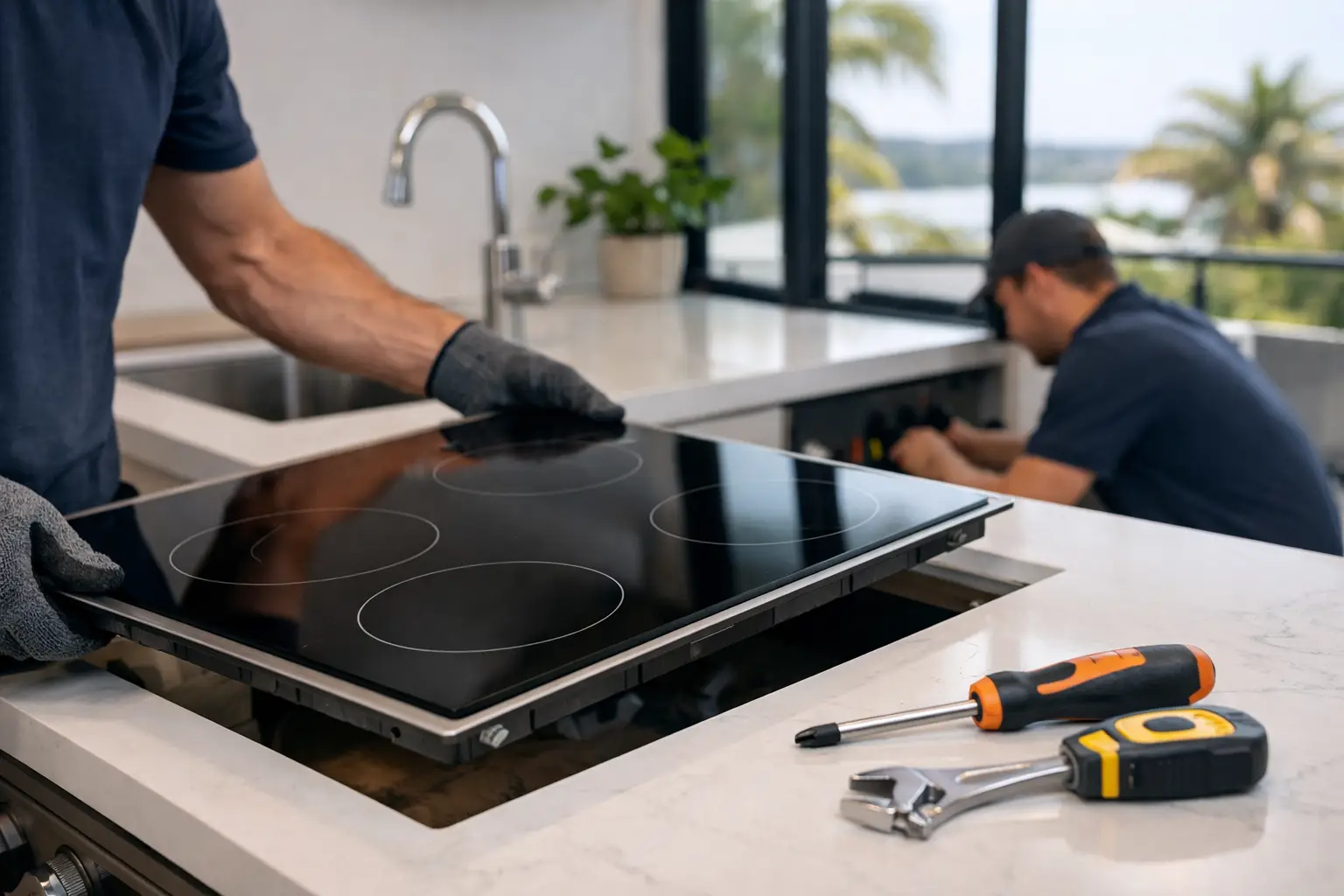
A cooktop can look like a simple swap-over job until the quote lands higher than expected. That is usually where homeowners start asking about cooktop installation cost – and the honest answer is that the final price depends on more than the appliance itself.
If you’re replacing an older unit in the Gold Coast, Southern Brisbane or Tweed Heads area, the biggest cost difference usually comes down to whether the new cooktop matches what is already there. A like-for-like replacement is generally the most affordable option. Once you change from electric to petrol, petrol to induction, or need cabinet and benchtop changes, the price can move quickly.
What affects cooktop installation cost?
The main factors are the type of cooktop, the condition of the existing connections, and whether extra work is needed to make the new unit compliant and safe. Labour is only one part of the total. Materials, upgrade work and access can all affect the final figure.
A standard replacement is usually straightforward when the new cooktop is the same size, uses the same power source, and the existing services are in good condition. In that case, the installer can remove the old unit, fit the new one, test it properly and complete any required compliance steps without much extra work.
It gets more involved when the cut-out size does not match, the wiring is outdated, the petrol point needs altering, or isolation switches and safety devices are missing. Those are the jobs that often catch people off guard because the appliance price looks clear, but the install requirements are not.
Typical cooktop installation cost by type
For most homeowners, cooktop installation cost sits somewhere between a basic service call and a small upgrade project. A simple electric-to-electric replacement may be at the lower end if the circuit is suitable and the dimensions match. A basic petrol cooktop replacement can also be relatively straightforward if there is already a compliant petrol connection and shut-off arrangement in place.
Induction cooktops can cost more to install than many people expect. The appliance itself is one thing, but the electrical demand is often higher than an older ceramic or standard electric unit. If your switchboard, circuit or cabling needs upgrading, the install cost can rise well beyond a simple replacement.
Petrol cooktops can also vary. If you’re changing from one petrol model to another and the existing setup is compliant, pricing is usually easier to predict. If a new petrol line, regulator adjustment, ventilation check or bottle connection changes are needed, that is when the scope broadens.
As a rough guide only, a like-for-like replacement with no remedial work is generally the most budget-friendly scenario. Installations that involve electrical upgrades, cabinetry work or a fuel change are usually where costs move into a higher bracket.
Petrol, electric or induction – why the price changes
Homeowners often compare appliance prices without comparing install requirements. That is where the numbers can get misleading.
A petrol cooktop needs a licensed petrol fitter to connect, test and confirm the installation is safe. If LPG is involved, the setup must suit the property and the appliance. If the home already uses bottled petrol and the line is in the right place, the job can be fairly efficient. If not, there may be extra work to run or alter the petrol supply.
An electric cooktop generally needs a licensed electrician, and an induction model may need more from your electrical system than the old appliance did. That can mean a new circuit, different cabling or switchboard work. In older homes, especially, this is a common reason a quote changes after inspection.
Switching between fuel types is where cooktop installation cost usually increases most. You’re not just installing a new appliance. You’re changing the infrastructure that supports it.
Hidden costs homeowners should ask about
Nobody likes a cheap quote that grows halfway through the job. The best way to avoid that is to ask what is included before booking.
Removal and disposal of the old cooktop is one area to check. Some installers include it, while others charge separately. Benchtop modifications are another. If the new unit is even slightly different in size, the stone, laminate or timber cut-out may need adjusting. That can add time and, in some cases, require a cabinet maker or stonemason.
Electrical upgrades can also sit outside a base installation price. The same goes for adding an isolation switch, replacing damaged fittings, or correcting non-compliant existing work discovered during installation.
With petrol cooktops, ask whether the quote includes connection testing, leak testing, commissioning and certification where required. Those steps are not optional. They are part of a safe, professional job.
When a cheap install ends up costing more
Cooktops are not a place to cut corners. A very low price can sometimes mean key steps are excluded, or the installer has not allowed for compliance requirements. That can lead to delays, extra invoices, or worse, a setup that is unsafe.
This matters most with petrol and high-load electrical appliances. A poor installation can create fire risk, petrol leak risk, nuisance tripping, damage to the new cooktop or warranty issues. Saving a small amount upfront is rarely worth the headache if the job needs to be redone properly later.
A clear fixed quote is usually the better option, especially when the installer asks the right questions before booking. Appliance model, fuel type, cut-out size, existing services and property access all matter. The more detail sorted upfront, the fewer surprises on the day.
How to keep cooktop installation cost under control
The easiest way to manage cooktop installation cost is to choose a model that suits your existing setup. If your current cooktop size, fuel type and power supply already work well, replacing like for like is usually the most cost-effective path.
It also helps to have the appliance details ready before requesting a quote. The model number, dimensions, power requirements and installation manual can answer a lot of questions early. Photos of the existing cooktop, switchboard, under-bench area and petrol bottle setup can also help an installer spot likely extras before they arrive.
If you’re renovating, coordinate the cooktop installation with any benchtop, cabinetry or electrical works. Doing things in the wrong order can create rework and extra call-out fees. A bit of planning often saves more than trying to rush the job later.
Is it worth replacing the cooktop only?
Sometimes yes, sometimes no. If the oven below is still working well and the cooktop has failed, replacing just the cooktop can make good sense. But if both appliances are ageing, it may be worth pricing the broader upgrade at the same time.
This is especially true if access is already available and other trade work is likely. Bundling jobs can reduce repeat call-outs and help you avoid paying twice for related work. For households already replacing petrol bottles, hot water systems or other essential services, using one reliable provider can also make the process much easier.
What to expect from a proper quote
A proper quote should tell you what is included, what assumptions have been made, and what could change the price. It should be clear about labour, connection work, testing, and whether disposal of the old unit is covered.
For more complex jobs, an on-site check is often the smartest option. That gives the installer a chance to inspect wiring, petrol access, clearances and cabinet space before locking in the scope. It is a more practical approach than guessing from appliance prices alone.
For homeowners who want the job done quickly and properly, clarity matters as much as price. That is why many local households prefer dealing with one team that can handle petrol, electrical and installation work without the usual run-around.
The right cooktop should make life easier, not create a string of extra jobs. If you start with a clear quote, a licensed installer and the right fit for your home, the cost is usually far easier to manage than the stress of fixing a rushed job later.