


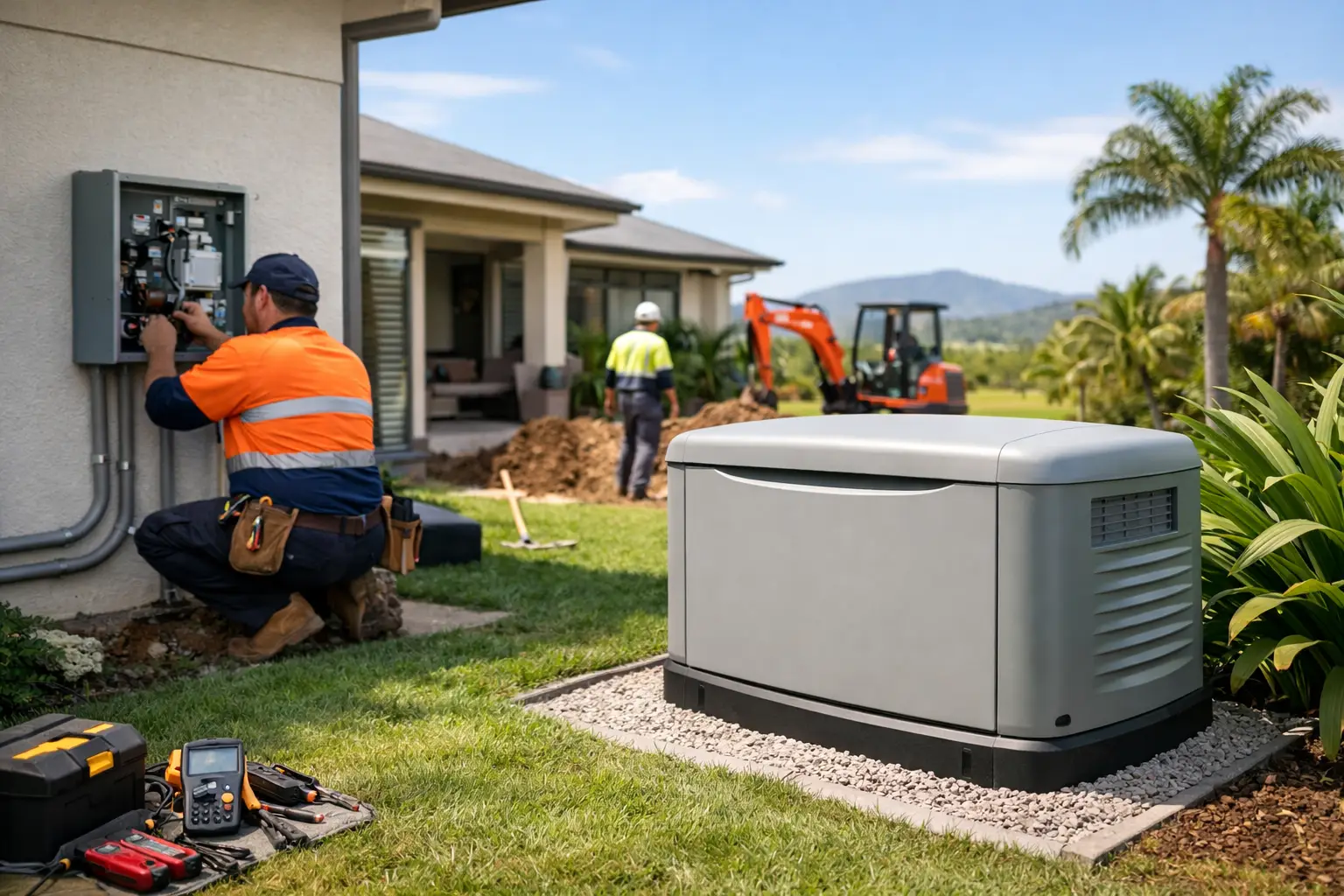
When the power goes out at 6 pm and the fridge, lights, Wi-Fi and air con all stop at once, backup power stops feeling like a luxury. For many local homeowners, home generator installation cost becomes a real question the moment blackouts start disrupting work, comfort or medical needs.
The honest answer is that the price can vary a fair bit. A small setup for a few essentials is very different from a whole-home generator connected to your switchboard and petrol supply. What matters most is getting a system that suits your home, your usage and your budget without surprises later.
What affects home generator installation cost?
The biggest factor is the size of the generator. If you only want to keep the fridge, a few lights, the internet and maybe one power circuit running, the system will usually be much more affordable than a setup designed to run most of the house during an outage.
Fuel type also changes the price. Many homeowners prefer a generator that runs on petrol because it can be a practical option for reliable backup power, especially when the system is planned properly from the start. But the final cost depends on whether there is an existing compliant petrol connection, whether upgrades are needed, and how far the generator sits from the supply point.
Installation complexity is another major part of the quote. A straightforward job with easy access, modern switchboard capacity and a simple cable run will generally cost less than a property with tight side access, an older board, extra trenching or additional safety upgrades.
Then there is the transfer switch. This is what allows your home to change safely from mains power to generator power. In most fixed home generator installations, this is not optional. The type of transfer setup, and how your existing electrical system needs to be modified to accommodate it, can make a noticeable difference to the overall figure.
Typical home generator installation cost in Australia
As a general guide, a basic backup generator setup for selected circuits may start from a few thousand dollars, while a larger permanently installed system can run much higher once equipment, electrical works, petrol fitting, compliance and commissioning are included.
For many homes, a realistic home generator installation cost sits somewhere between $5,000 and $15,000, but that range is broad for a reason. At the lower end, you may be covering a smaller generator and simpler install. At the higher end, you may be looking at a larger unit, more extensive switchboard work, acoustic considerations, slab preparation and longer installation time.
If you need whole-home backup, the price can go beyond that. Larger homes with ducted air con, pool equipment, pumps, electric hot water or multiple high-demand appliances often need a more capable system. Once the generator itself gets bigger, installation usually becomes more involved too.
That is why rough online price guides only help to a point. They can give you a ballpark figure, but they cannot tell you what your property will actually need to be safe and compliant.
Generator supply is only part of the cost
A common mistake is comparing generator sticker prices and assuming installation will be minor. In reality, the generator unit is only one part of the project.
A proper quote may include site inspection, load assessment, generator supply, concrete or mounting base, electrical labour, petrol work, transfer switch installation, testing, compliance documentation and commissioning. Depending on the property, it may also include switchboard upgrades, weatherproofing, sound control measures or relocation of nearby services to meet clearance rules.
This is where some homeowners get caught by cheap-looking quotes. A low starting price can quickly grow once essential items are added back in. Fixed quotes matter because they make it easier to compare properly and avoid that sinking feeling halfway through the job.
Choosing between essential backup and whole-home backup
One of the easiest ways to control home generator installation cost is to be clear about what you actually need powered during an outage.
Essential backup is the more budget-friendly option. This usually covers things like refrigeration, lighting, internet, garage door access, a few power points and sometimes a medical device circuit. For many households, that is enough to stay safe and comfortable until mains power returns.
Whole-home backup gives you more convenience, but it comes at a higher cost. If you expect to run larger appliances, more air conditioning, kitchen loads and multiple circuits at once, you will need a bigger generator and more planning. That added capability can be worth it, but only if you will genuinely use it.
A good installer should talk you through those trade-offs clearly. Bigger is not always better if it pushes the budget up without solving a real problem.
Site conditions can change the final price
Two homes on the same street can have very different installation costs. That often comes down to site conditions.
If the generator can be installed close to the switchboard with clear access and a compliant location, labour is usually simpler. If the unit needs to be positioned further away because of noise, ventilation, boundaries or access restrictions, the install can take longer and require more materials.
Older homes may also need extra work before the generator can be connected safely. An ageing switchboard, limited space for new protection devices or non-compliant existing wiring can all add to the total cost. These are not upsells. They are the kind of issues that need to be addressed if you want backup power that works properly and safely.
Why licensed installation matters
Generators are not a DIY category. You are dealing with live electrical systems, petrol connections, ventilation, exhaust placement and equipment that must integrate correctly with your home.
Poor installation can lead to nuisance faults, damage to appliances, safety risks or systems that simply fail when you need them most. That is why the cheapest quote is not always the cheapest outcome. A properly installed generator should be tested, commissioned and explained to the homeowner so there is no guesswork during an outage.
For households across the Gold Coast, Southern Brisbane and Tweed Heads, dealing with one provider who can coordinate the job properly saves a lot of headaches. Instead of chasing separate trades and hoping everyone lines up, the process is clearer and quicker.
How to keep costs under control without cutting corners
The smartest way to manage home generator installation cost is to start with a proper assessment. That helps you avoid paying for a system that is oversized or missing essential components.
It also helps to decide early whether you want short-term outage protection or something closer to full-home continuity. If your main concern is keeping food cold, phones charged and a few critical circuits running, say that upfront. If you work from home, rely on medical equipment or have frequent extended outages, that should shape the design too.
Ask whether the quote includes all electrical and petrol work, switchgear, testing and compliance. Ask if there are likely to be site-related extras. And ask how the system will actually operate when the power fails. Clear answers now usually mean fewer surprises later.
Is the investment worth it?
For some homes, a generator is absolutely worth it. If your area sees regular outages, if someone in the household depends on powered medical equipment, or if losing refrigeration and connectivity causes major disruption, backup power can be more than a convenience.
For others, the value comes down to peace of mind. Storm season, grid pressure and unexpected outages are not hypothetical problems. When the lights go out, having a reliable system already installed is a lot easier than scrambling for extension leads and torches.
The key is matching the solution to the home. A well-planned system can feel like money well spent. An oversized or poorly explained one can feel expensive fast.
At No Hassle Homes, that is why the better approach is simple – clear advice, honest pricing and an installation plan that suits the property rather than forcing a one-size-fits-all setup. When backup power is done properly, it should make life easier, not more complicated.
If you are weighing up generator options, focus less on the cheapest advertised number and more on what the finished system will actually do for your household when the power drops out.