


A hot shower that turns cold halfway through usually gets this question moving fast: should you replace your system with petrol or electric? When homeowners compare instant petrol vs electric hot water, they are usually not chasing theory. They want reliable hot water, fair running costs and a setup that suits the way their household actually lives.
The right choice depends on more than the sticker price. It comes down to how many people use hot water, what energy source is already connected at your property, how much space you have, and whether you want the cheapest install or better long-term efficiency. For homes across the Gold Coast, Southern Brisbane and Tweed Heads, climate and household size can shift the answer too.
Instant petrol vs electric hot water – what is the difference?
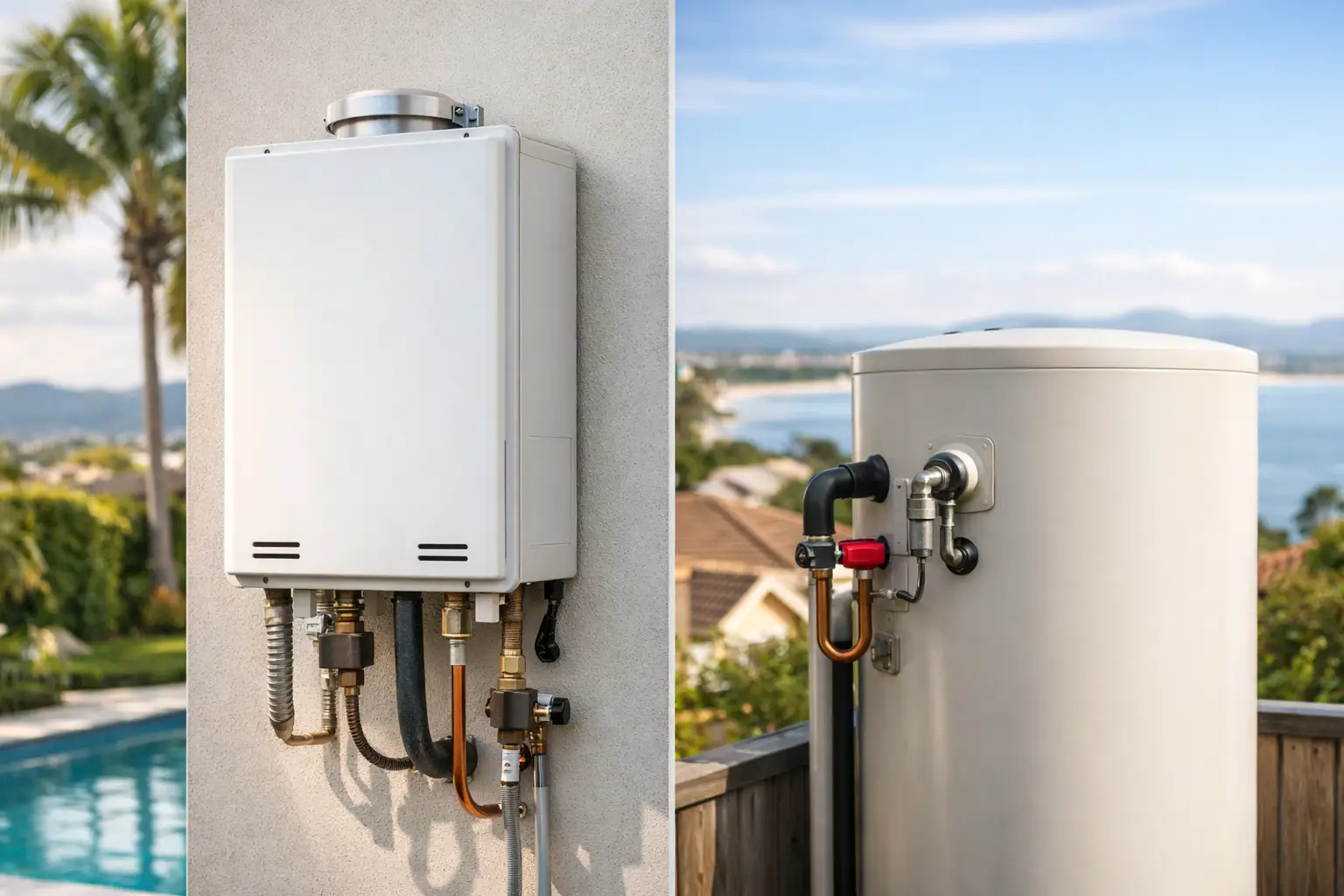
An instant petrol hot water system heats water only when you turn on the tap. There is no storage tank sitting full of hot water all day. Cold water passes through the unit, the burner fires up, and hot water is delivered on demand.
Electric hot water can mean two different things. Some electric systems are storage tanks that heat water and keep it ready for later use. Others are continuous flow electric systems, though these are less common in many homes because they often need a substantial electrical supply. When most homeowners ask about electric hot water, they are usually comparing instant petrol against an electric storage system.
That difference matters. A petrol continuous flow unit is designed for on-demand performance. A standard electric storage unit is more about storing a set amount of hot water and reheating it as needed. So while the comparison sounds simple, the experience of living with each one can be quite different.
Running costs matter more than purchase price
The cheapest system to buy is not always the cheapest system to own. Electric storage hot water units are often less expensive upfront, which makes them attractive when a system fails unexpectedly. If you need a fast replacement and want to keep initial costs down, electric can make sense.
But running costs can tell a different story. Instant petrol systems are generally more efficient in day-to-day use because they heat water only when needed. You are not paying to keep a tank hot around the clock. For households with regular hot water use, that can make a noticeable difference over time.
Electric storage systems can still work well, especially if paired with off-peak tariffs. If your household uses most of its hot water at the right times and your tariff setup suits that pattern, an electric unit may be more affordable than expected. The catch is that off-peak heating does not always line up neatly with family life. If everyone showers in the evening and the tank runs low, you may be waiting for reheating.
For larger households, petrol often pulls ahead on practicality. When several people need showers back-to-back, or the dishwasher and washing machine are running as well, continuous hot water is a real advantage.
Performance in busy households
This is where instant petrol often wins people over. A properly sized petrol continuous flow system can provide hot water as long as demand stays within the unit’s flow capacity. That means no running out of stored hot water after the third shower.
Electric storage systems have limits. Once the tank is depleted, recovery time becomes the issue. In a one or two-person home with predictable usage, that may not be a problem. In a family home, it often is.
There is one trade-off. Instant petrol units need to be correctly sized to your peak demand. If the unit is too small for the number of bathrooms and appliances being used at once, you may notice a drop in performance. This is why installation advice matters. It is not just about choosing petrol or electric. It is about choosing the right system capacity for your home.
Installation costs and what changes may be needed
Installation can swing the decision more than many homeowners expect. If your home already has a suitable petrol connection and the replacement is straightforward, moving to or replacing an instant petrol system can be very cost-effective.
If there is no existing petrol setup, installation costs may be higher. You may need petrol line work, compliance checks, ventilation considerations and a suitable mounting location. On the other hand, if you are replacing an existing electric storage system with another similar electric unit, the job can be simpler and cheaper.
Electrical upgrades can also add cost. Some homes are not well set up for high-demand electric hot water systems, especially if you are considering a more powerful electric unit than what was there before. That is why a proper site check beats guesswork every time.
For many homeowners, the practical question is not which technology is best in general. It is which one fits the house without turning the install into a bigger project than necessary.
Space, placement and household layout
Instant petrol units are compact and wall-mounted, which makes them a good option where space is tight. If you want to free up room around the side of the house or remove a bulky tank, petrol continuous flow can be a neat solution.
Electric storage systems need room for the tank. In some homes that is no issue. In others, especially smaller properties or renovations where every metre counts, tank size becomes a drawback.
Placement also affects convenience. The closer the system is to where hot water is used, the less water is wasted waiting for it to heat at the tap. That is true for both petrol and electric, but it is often easier to work with when planning a compact continuous flow installation.
Maintenance, lifespan and reliability
Both petrol and electric hot water systems need professional installation and proper maintenance. Neither is a set-and-forget item forever.
Instant petrol systems are reliable when installed correctly and serviced as required. They do have more components involved in ignition, burners and controls, so servicing matters. The upside is that many issues can be diagnosed and repaired without replacing the whole unit.
Electric storage systems are mechanically simpler in some respects, but tanks do age. Over time, heating elements, thermostats and the tank itself can fail. Once a storage tank starts leaking, replacement is usually the only option.
If reliability under heavy use is the priority, petrol continuous flow has a strong reputation. If simplicity and lower upfront replacement cost matter most, electric still has a place.
Which homes suit instant petrol vs electric hot water?
There is no one-size-fits-all answer, but some patterns show up again and again.
Instant petrol usually suits family homes, properties with higher daily hot water demand, and households that do not want to think about running out of hot water. It is also a good fit where saving space matters and where petrol is already available.
Electric hot water often suits smaller households, investment properties where upfront cost is a key factor, or homes where replacing like-for-like keeps installation simple. It can also suit owners who prefer a familiar system and have a tariff arrangement that keeps costs manageable.
If you are planning other home upgrades, the decision can tie into the bigger picture. For example, if your property already uses petrol for cooking or heating, keeping hot water on petrol may be the more practical path. If your home is all-electric and the existing setup works well, staying electric might be the easier option.
The decision is easier when you look at real household habits
A couple in a unit has very different hot water needs from a family of five in a freestanding home. That is why the best advice starts with your actual usage, not a generic online recommendation.
Think about when you use hot water, how many bathrooms you have, whether your current system struggles during peak times, and whether you are replacing in a hurry or planning ahead. Also consider the age of your existing connections. A cheap unit can become expensive if it triggers major upgrade work.
For local homeowners, speed matters too. When a hot water service fails, you want a clear answer, an honest quote and a licensed installer who can sort the job properly without sending you off to chase separate trades. That practical, no-fuss approach is exactly why many people choose a provider like No Hassle Homes when it is time to replace or upgrade.
If you want lower running costs and continuous performance, instant petrol is often the stronger choice. If you want the simplest upfront replacement and your usage is modest, electric can still be the right call. The best system is the one that fits your home, your budget and your daily routine without creating new headaches.
A good hot water system should make life easier, not force the household to work around it.