


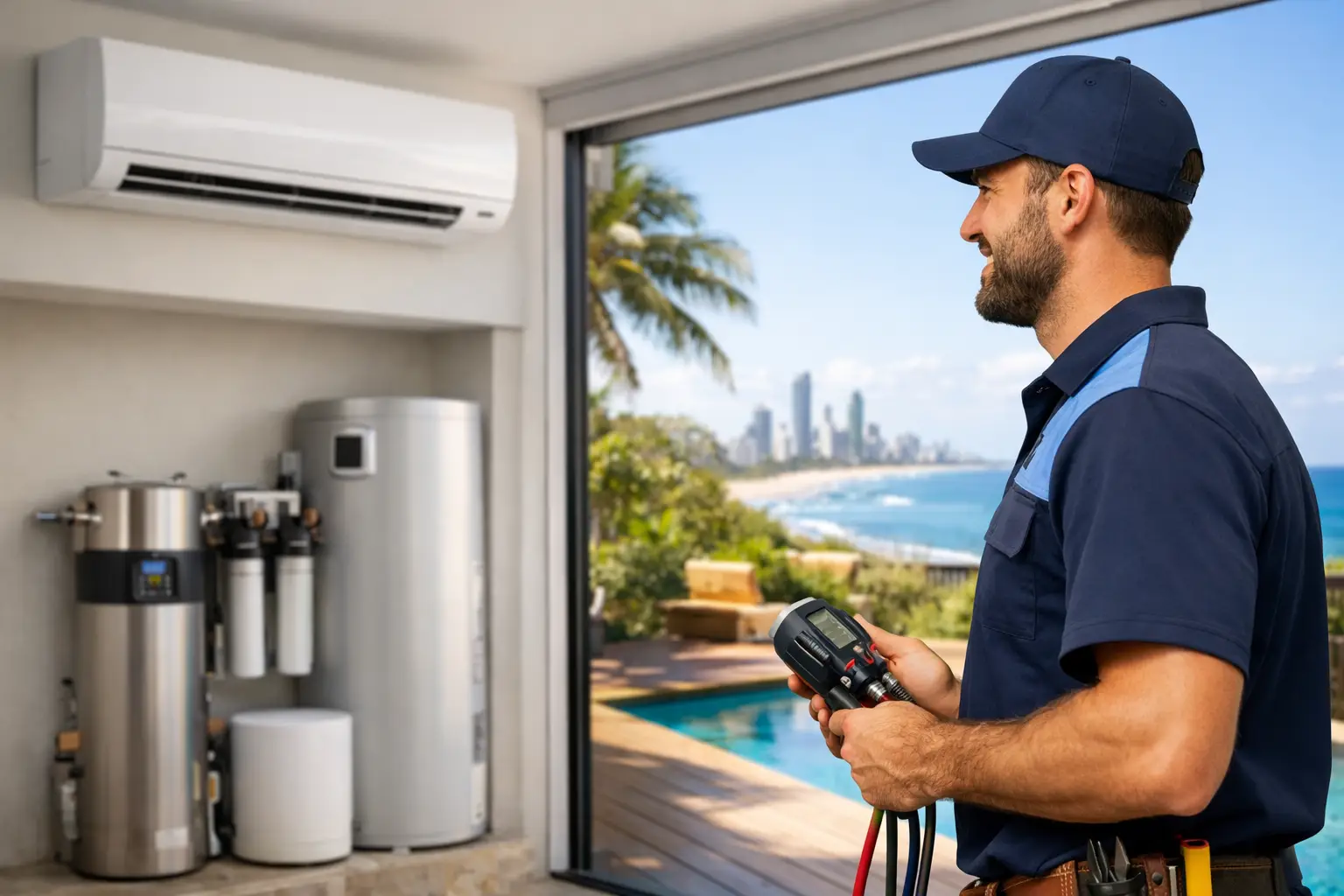
A split system can make the difference between avoiding the lounge room by midday and feeling comfortable at home all summer. But a good split system aircon review is not just about which brand has the most features. For Gold Coast and Tweed homes, the right choice comes down to room size, humidity, where the unit will sit, how you use the space and whether the installation is done properly.
The cheapest unit on the shelf can be a false economy if it struggles through a hot afternoon, runs loudly or costs more to operate than it should. On the other hand, the biggest, feature-packed system is not automatically the best fit either. Here is what is genuinely worth comparing before you book an installation.
What a split system does well
A split system air conditioner has two main parts: an indoor unit that delivers cooled or heated air, and an outdoor unit that releases heat outside. They are connected by refrigerant pipework and electrical wiring. Because the noisy compressor sits outdoors, split systems are usually quieter inside than a window-mounted unit.
They are a practical choice when you want to cool one key area, such as an open-plan living room, main bedroom or home office. Most reverse-cycle models also provide heating in winter, so one system can cover both seasons without taking up floor space.
For many households, the biggest advantage is control. You can cool the room you are using rather than running a whole-home ducted system. That can make a real difference to running costs, particularly for couples, retirees or families who spend most evenings in the same living area.
The trade-off is that a single split system will not cool every room evenly. Cold air does not travel well around corners, through closed doors or down long hallways. If bedrooms are separate from the living room, you may need additional units or a different air conditioning design.
Split system aircon review: what matters most
Get the capacity right
Capacity is measured in kilowatts, and it is the first thing to get right. An undersized system may run constantly on hot, humid days without bringing the room down to a comfortable temperature. An oversized unit can cool the room too quickly, cycle on and off more often, and remove less moisture from the air. That can leave the room feeling clammy even when it is cool.
As a rough starting point, a small bedroom may suit a 2.5 kW unit, while a larger open-plan living area may need 5 kW, 7 kW or more. Those figures are only a guide. Ceiling height, windows, insulation, west-facing glass, roof colour, room layout and how many people use the space all change the calculation.
On the Gold Coast, sun exposure and humidity deserve extra attention. A living room with large afternoon-facing windows often needs more cooling capacity than a similar-sized shaded room. A professional site assessment is more reliable than selecting a unit solely by square metres.
Check efficiency, not just the purchase price
Air conditioners cost money twice: when you buy them and every time you turn them on. The energy rating label helps you compare models, but it should not be read in isolation. Compare like-for-like units of a similar capacity, and look at both cooling and heating efficiency if you will use reverse cycle year-round.
Inverter technology is standard on many quality systems. Rather than simply switching fully on and off, an inverter adjusts output to maintain the selected temperature. In everyday use, that usually means steadier comfort, less noise and better efficiency.
A higher-rated unit may cost more upfront, but it can be worthwhile in a main living area that runs most days through summer. For a spare room used a few weekends a year, a simpler system may be better value. The right answer depends on how often the room is occupied, not just the sticker price.
Prioritise humidity control and quiet operation
Cooling is only part of comfort in coastal Queensland and northern New South Wales. When the air is humid, a good split system should remove enough moisture for the room to feel fresh rather than sticky. A dry or dehumidification mode can help in mild but muggy weather, although it is not a replacement for choosing the correct unit size.
Noise is another detail people often notice only after installation. Check the indoor sound rating, especially for bedrooms, nurseries and home offices. Outdoor unit noise matters too if it will be close to a neighbour’s boundary, outdoor entertaining area or bedroom window.
Features such as Wi-Fi controls, timers and sleep modes are useful when they suit your routine. Being able to turn the system on before arriving home can be handy, and timers can stop a unit running all night unnecessarily. They should be a bonus, though, not the reason you choose an air conditioner with the wrong capacity or poor efficiency.
Installation quality is part of the product
Even an excellent air conditioner will disappoint if it is poorly installed. The indoor unit needs a clear path to circulate air across the room, while the outdoor unit needs enough ventilation to release heat. Tucking it into a tight, hot corner can reduce performance and make servicing harder.
Drainage is particularly important in humid conditions. Your system produces condensation while it cools, and that water needs to drain safely. A poor drain route can lead to dripping, staining, blockages or water damage. The pipework should also be correctly insulated, protected from physical damage and installed neatly.
Before work starts, a licensed installer should consider the following:
- the best indoor and outdoor locations for airflow, access and noise;
- the electrical supply and whether a dedicated circuit or switchboard work is needed;
- a safe condensate drain path; and
- wall structure, pipework length and any access challenges that affect the quote.
This is why a fixed quote after assessing the job gives more certainty than a vague starting price. It identifies what is included, along with any site-specific work that may be required, before installation day.
Is one split system enough for your home?
For a unit or compact home, one well-sized system in the main living area can be enough for day-to-day comfort. Ceiling fans can help circulate air and allow you to set the temperature a little higher without feeling warmer.
Larger homes often suit a mix of systems. For example, a living-area unit may do the heavy lifting during the day, with smaller bedroom units used only at night. This approach gives room-by-room control and avoids cooling unused spaces, although there are more outdoor units to accommodate and more filters to maintain.
Ducted air conditioning may be worth considering when you want consistent cooling across multiple bedrooms and living areas, particularly during overnight heat. It has a higher upfront cost and requires roof-space access, but it can be a neater whole-home solution. There is no one-size-fits-all winner – the layout of your home and your family routine should lead the decision.
The maintenance that protects performance
A split system does not need constant attention, but it does need regular care. Clean the indoor filters every few months during periods of regular use. Dusty filters restrict airflow, reduce efficiency and can contribute to odours.
Keep leaves, dirt and stored items away from the outdoor unit. If you notice weak airflow, water leaking indoors, unusual noise, a musty smell or a system that no longer cools properly, arrange a professional check rather than hoping it will sort itself out. Early repairs are usually easier than waiting for a full breakdown in the middle of a heatwave.
A professional service can check drainage, electrical connections, refrigerant performance, coils and overall operation. It is a sensible way to protect an air conditioner that works hard through long summers.
A practical way to choose with confidence
Start by deciding which room needs comfort most and when you use it. Then consider capacity, efficiency, noise, humidity control and installation requirements as one package. Do not let a long feature list distract you from the basics: the system needs to be correctly sized, installed safely and simple for your household to use.
For homeowners around the Gold Coast, Southern Brisbane and Tweed Heads, local conditions make a proper assessment especially worthwhile. Heat, humidity, salt air near the coast and challenging room layouts can all influence the best setup. A clear, fixed quote from a licensed installer gives you the information to make the decision without the usual tradie run-around.
The best split system is the one that keeps the rooms you actually use comfortable, operates efficiently and is backed by reliable installation and support when you need it.