


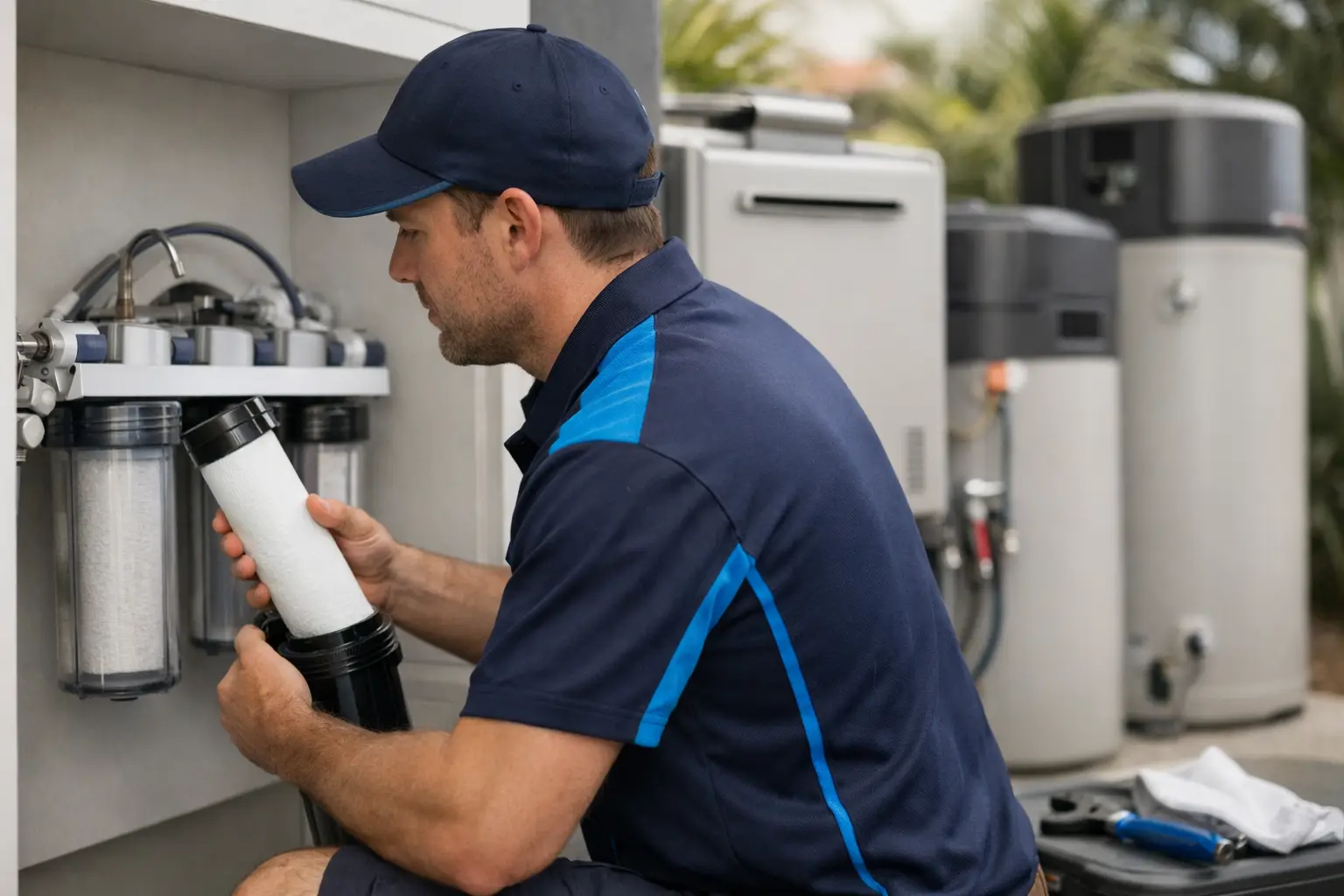
A water filter is easy to forget about when it is doing its job properly. Water comes out clear, the kettle stays cleaner and the family has better-tasting drinking water. But every filter has a working life. Following a simple water filter maintenance schedule helps keep water quality consistent, prevents reduced flow and protects the system you have paid to install.
For most Gold Coast and Northern NSW homes, maintenance is not complicated. The key is knowing which filter you have, using the right replacement parts and acting before an overdue cartridge affects performance.
Why filter changes cannot be put off
A water filter works by trapping or reducing unwanted particles and contaminants as water passes through it. Over time, the filter media fills up. Once it reaches capacity, it may no longer improve the water as effectively, and in some cases it can restrict water flow noticeably.
That does not always mean your tap water will suddenly look or taste bad. Many filters continue to appear normal long after their best replacement date. This is why a calendar reminder is more reliable than waiting for an obvious warning sign.
Regular servicing also gives you a chance to check seals, housings, taps and connections. A small drip under the sink can turn into water damage if it is missed for months. For whole-house systems, maintaining sediment filtration can also help protect appliances, taps and hot water equipment from build-up.
Your water filter maintenance schedule at a glance
The right interval depends on the filter type, household water use and the quality of the incoming water. Manufacturer instructions should always come first, but these timeframes are a practical starting point for many homes.
Under-sink drinking water filters
Most under-sink systems use a cartridge that should be changed every 6 to 12 months. A smaller household may get closer to the 12-month mark, while a busy family filling drink bottles, cooking daily and using a filtered water tap constantly may need a new cartridge sooner.
If your system has multiple cartridges, they may not all have the same replacement interval. A sediment pre-filter often needs changing more regularly than a carbon cartridge. Check the model specifications rather than replacing everything on guesswork.
Benchtop and jug filters
Benchtop units and filter jugs generally need more frequent cartridge changes, often every one to three months. Their cartridges are smaller, so they reach capacity faster. They also need regular cleaning because the reservoir and lid can collect residue, especially in warm weather.
Wash removable non-filter parts with warm, soapy water as directed by the manufacturer. Avoid using harsh cleaners around the cartridge or housing unless the instructions specifically allow it.
Whole-house water filtration systems
Whole-house systems filter water as it enters the home, so they deal with a much larger volume than a drinking-water tap. Sediment cartridges commonly need replacement every three to six months. Carbon filters may last six to 12 months, depending on their size and your water use.
Some systems use larger cartridges designed for longer intervals. Others include specialist media for particular water concerns. This is one area where the installation details matter. A fixed schedule is useful, but a licensed professional can confirm the best timing for your actual system.
Reverse osmosis systems
Reverse osmosis systems usually have several stages. Pre-filters are commonly replaced every six to 12 months, while the membrane may last two to five years. The storage tank, taps and lines should also be checked during servicing.
These systems can deliver excellent results, but they are less forgiving of skipped maintenance. Old pre-filters can place extra load on the membrane, shortening the life of the most expensive component.
Signs your filter may need attention sooner
Your scheduled change date is the main guide, but day-to-day performance matters too. Arrange a check if filtered water has a slower flow than usual, develops an unusual taste or smell, or looks cloudy when it was previously clear.
A change in water pressure can also point to a blocked cartridge, although it may have another plumbing cause. If there is leaking around the filter housing, a loose tap, damaged tubing or water pooling under the sink, do not simply tighten everything and hope for the best. Turn off the water supply to the unit if you can and arrange a proper inspection.
Homes on tank water, bore water or supplies with higher sediment levels may need a shorter maintenance cycle than households on a standard town-water connection. Renovations nearby, heavy rain and changes to local water conditions can also increase sediment temporarily.
What to do at each filter service
A cartridge change should be more than a quick swap. First, confirm you have the correct replacement cartridge for the brand and model. A cartridge that looks similar is not necessarily the right fit or filtration rating.
Turn off the water supply, release pressure from the system if required and follow the manufacturer’s instructions for removing the old cartridge. Inspect the housing and O-rings for wear, flattening or cracking. Clean the housing only with approved products, then fit the new cartridge carefully and make sure seals sit correctly.
Once the water is turned back on, check slowly for leaks. Most new carbon cartridges also need flushing before use to clear loose carbon fines. The required flush time varies by model, so follow the instructions supplied with the cartridge rather than guessing.
For whole-house systems and reverse osmosis units, professional servicing can be the safer option. These setups have more connections and, depending on the system, may need pressure checks, sanitising or membrane performance testing.
Keep a record so maintenance stays simple
The easiest system is the one you will actually use. Write the cartridge change date on the housing with a permanent marker, keep a note in your mobile or add a recurring reminder to your calendar. Include the cartridge type and the next due date, particularly if your system has multiple stages.
It is also worth keeping one replacement cartridge on hand if your model is common and storage conditions allow. That avoids a last-minute scramble when water flow drops. Store unopened cartridges somewhere cool, dry and clean, away from direct sunlight.
If you have just moved into a property and do not know when the filter was last serviced, treat it as due for inspection. Starting fresh gives you a reliable baseline and removes the uncertainty around an old cartridge.
DIY replacement or professional service?
A straightforward under-sink cartridge replacement is manageable for many homeowners who are comfortable following the manufacturer’s instructions. The trade-off is that you are responsible for choosing the right cartridge, fitting seals correctly and spotting any installation issues.
Professional help makes sense when there is a leak, difficult access, unknown system history or a more complex setup. It is also a good choice if you want the full system checked rather than only replacing a cartridge. A qualified installer can identify worn fittings, poor water pressure or a filter configuration that no longer suits your household.
For homeowners who prefer one dependable contact for household systems, No Hassle Homes can assist with water filtration installation and maintenance. The focus is simple: clear advice, safe work and no chasing multiple trades for a small but important job.
A well-timed filter service is one of those quiet household tasks that pays off every day. Set the reminder now, use the correct cartridge when the date arrives and ask for help before a minor leak or overdue filter becomes a bigger inconvenience.