


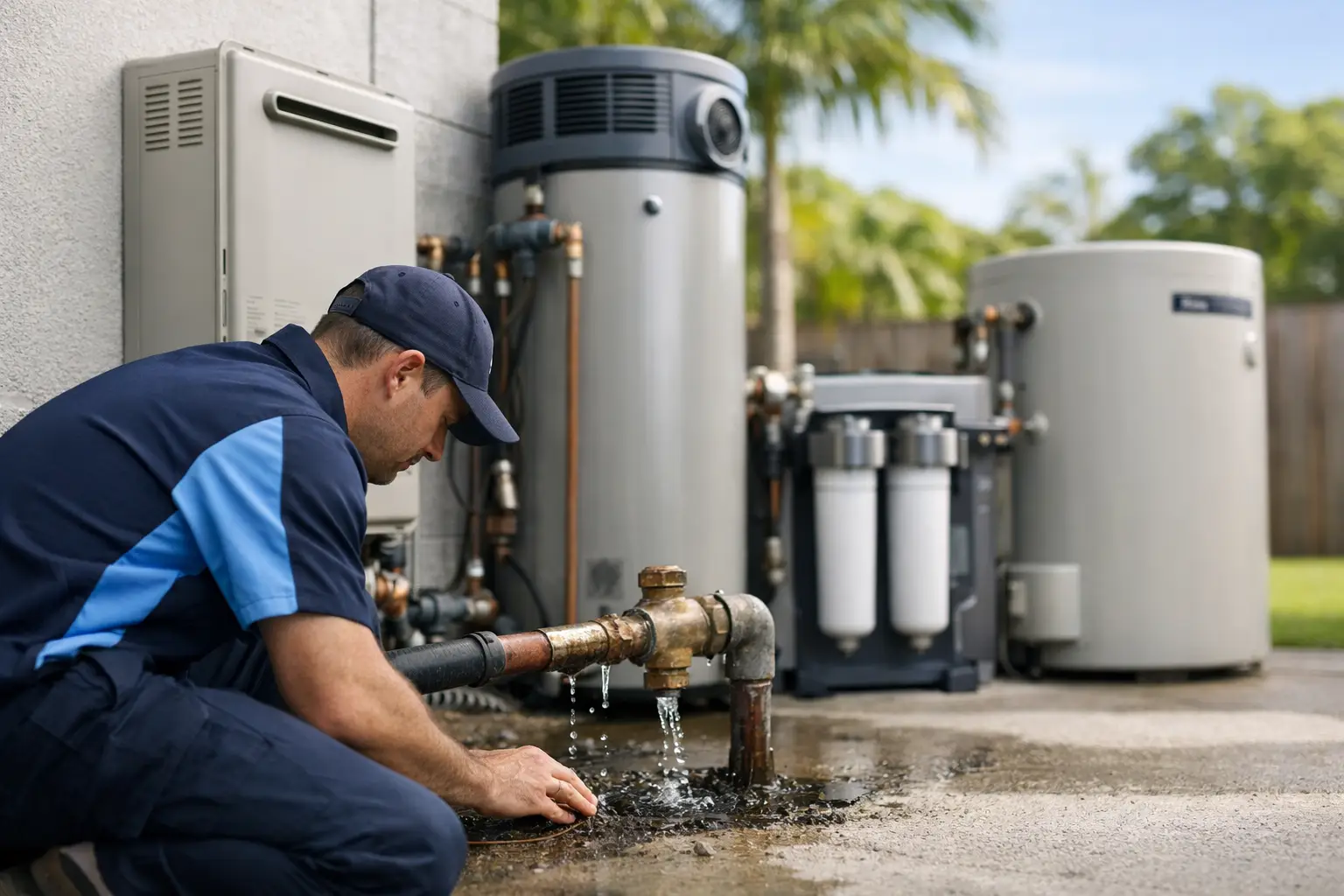
A hot water leak rarely starts with a dramatic burst pipe. More often, the first hot water leak warning signs are easy to brush off: a small damp patch near the unit, a faint hissing sound, or hot water that seems to run out sooner than usual. Acting early can protect your home from water damage, reduce wasted water and energy, and help you avoid the stress of a complete system failure.
1. Water pooling around the hot water system
A puddle or consistently damp ground near your storage tank is one of the clearest signs something needs attention. Check around the base of the unit, the pipe connections and nearby drainage. A leak can come from a corroded tank, loose fitting, worn valve or pipework issue.
Not every drop means the tank has failed. Some systems release a small amount of water through the temperature and pressure relief valve during heating cycles. But a steady trickle, regular pooling or water running down the side of the tank is not something to leave for later.
If the system is in a cupboard, garage or under the house, check the surrounding floor and walls too. Water can travel further than expected before you see it.
2. Rust, corrosion or staining on the tank
Rusty patches around the bottom seam of a storage tank often point to corrosion inside the cylinder. Once a tank starts leaking through its body, a repair is not always practical. Replacement may be the safer and more cost-effective option, particularly if the unit is older or has had repeated issues.
Look for orange-brown streaks, flaky metal, bubbling paint or white mineral build-up around fittings. On the Gold Coast and nearby coastal areas, moisture and salt in the air can be tough on external equipment, so a quick visual check every few months is worthwhile.
Surface rust on a bracket or outer panel is not automatically an emergency. Rust around the tank seam, valves or pipe connections deserves a licensed plumber’s assessment.
3. A dripping relief valve or overflow pipe
The relief valve is a safety component. It releases pressure if the water inside the system gets too hot or the pressure becomes excessive. Water from this pipe can occasionally be normal, especially while the unit is heating.
The concern is persistent discharge. If you notice water dripping for long periods, flowing continuously or creating a wet patch that never dries, the valve may be worn, the water pressure may be too high, or the system may have another fault.
Do not cap, block or modify a relief valve pipe. That can create a serious safety risk. A plumber can test the valve and identify whether the cause is the valve itself, excessive mains pressure or a problem inside the hot water unit.
4. Hot water that is rusty, cloudy or discoloured
Turn on the hot tap and pay attention to the water. Brown, rusty or cloudy hot water may indicate corrosion inside a storage tank or deteriorating pipework. If only the hot water is discoloured while cold water runs clear, the hot water system is the likely place to start checking.
A brief change in colour after plumbing work or a water supply interruption can sometimes settle quickly. Ongoing discolouration, metallic-smelling water or grit in the hot water should be investigated. Apart from being unpleasant, it may be a sign that sediment or corrosion is building up where it should not be.
5. Damp walls, mould or peeling paint nearby
Not all leaks are visible at the system. Hot water pipes can run through wall cavities, ceilings and under floors, where a small leak has time to cause significant damage before it is found.
Watch for paint that bubbles or peels, plasterboard that feels soft, mould that returns after cleaning, warped cabinetry, loose tiles or unexplained damp smells. You may also notice a warm spot on a floor or wall, particularly where a hot water pipe is leaking beneath the surface.
Mould is not always caused by plumbing. Condensation, poor ventilation and roof leaks can produce similar symptoms. Still, when the damp area is near a bathroom, laundry, kitchen or hot water line, a plumbing inspection is a sensible next step.
6. Your water or energy bill has climbed unexpectedly
A hidden hot water leak sends treated water down the drain all day, and the system has to keep heating replacement water. That means a leak can show up in both your water and energy use.
Compare recent bills with the same period last year if you can. A sudden increase is worth checking, particularly when your household routine has not changed. For homes with gas hot water, more frequent gas use without an obvious reason can also point to a system that is reheating too often.
Bills alone do not confirm a leak. Extra guests, school holidays, a new appliance or seasonal changes can all affect consumption. But when higher bills appear alongside dripping, dampness or unreliable hot water, do not ignore the pattern.
7. Hissing, dripping or unusual noises
A quiet drip can be hard to notice in a busy household. Check the hot water unit when the house is quiet, especially early in the morning or at night. Hissing, whistling, gurgling and repeated dripping can indicate water escaping from a valve, fitting or internal component.
Storage systems may also make popping or rumbling sounds when sediment builds up at the bottom of the tank. This is not always a leak, but it can reduce efficiency and put extra strain on the system. An inspection will help determine whether maintenance can extend its life or whether replacement is the better call.
8. Hot water runs out faster than it used to
If a storage system once handled the family’s showers but now goes cold halfway through the morning, it could be losing capacity due to a leak or internal deterioration. A faulty tempering valve, heating element or thermostat can cause similar symptoms, so this one needs proper diagnosis rather than guesswork.
For an instantaneous gas system, fluctuating temperatures, poor flow or unexpected shutdowns may be caused by a water-side leak, blocked component or another service issue. Keep an eye on whether the problem affects every hot tap or only one fixture. That information will help the technician narrow it down faster.
9. You can see water near electrical components or smell gas
Treat this as urgent. Water and electricity are a dangerous combination, particularly when a hot water system is installed near a power point, switchboard, pump or outdoor electrical connection. Do not touch wet switches, exposed wiring or the unit if water is close to electrical equipment.
If you have a gas hot water system and smell gas, avoid flames, cigarettes and electrical switches. If it is safe to do so, turn off the gas supply at the meter or cylinder valve, move away from the area and call for qualified help. A water leak and a gas fault are separate problems, but both need prompt, professional attention.
What to do when you spot a hot water leak
First, take a quick look at where the water is coming from without removing panels or attempting repairs. If the leak is from a visible pipe or fitting and you can safely identify the cold-water isolation valve to the unit, turning it off can limit water damage. If you are not sure which valve is which, do not force anything.
For a major leak, turn off the home’s main water supply if it is safe to access, then contact a licensed plumber. Move valuables away from the wet area, but avoid using towels or buckets as a reason to delay the call. Water in walls, ceilings and cabinetry can cause damage long after the floor looks dry.
Take a few photos and note what you observed: when the leak started, whether water is hot or cold, whether it is constant, and any changes in system performance. This can help a technician arrive prepared and give you clearer options.
Repair or replace? It depends on the cause
A leaking valve, connection or section of pipe can often be repaired. A tank leaking through its body usually cannot. Age matters too. Spending money on repeated repairs for an older system may not make sense when a replacement provides better efficiency, dependable hot water and a new warranty.
The right choice depends on the condition of your current unit, the size of your household, available space and whether gas, electric or heat pump hot water best suits your home. A clear, fixed quote before work begins helps you make the decision without surprises.
For homeowners across the Gold Coast, No Hassle Homes can arrange qualified help for hot water issues, from identifying a leak to replacing a system that has reached the end of its working life. A small warning sign is always easier to deal with before it becomes a flooded cupboard, cold shower or weekend emergency.