


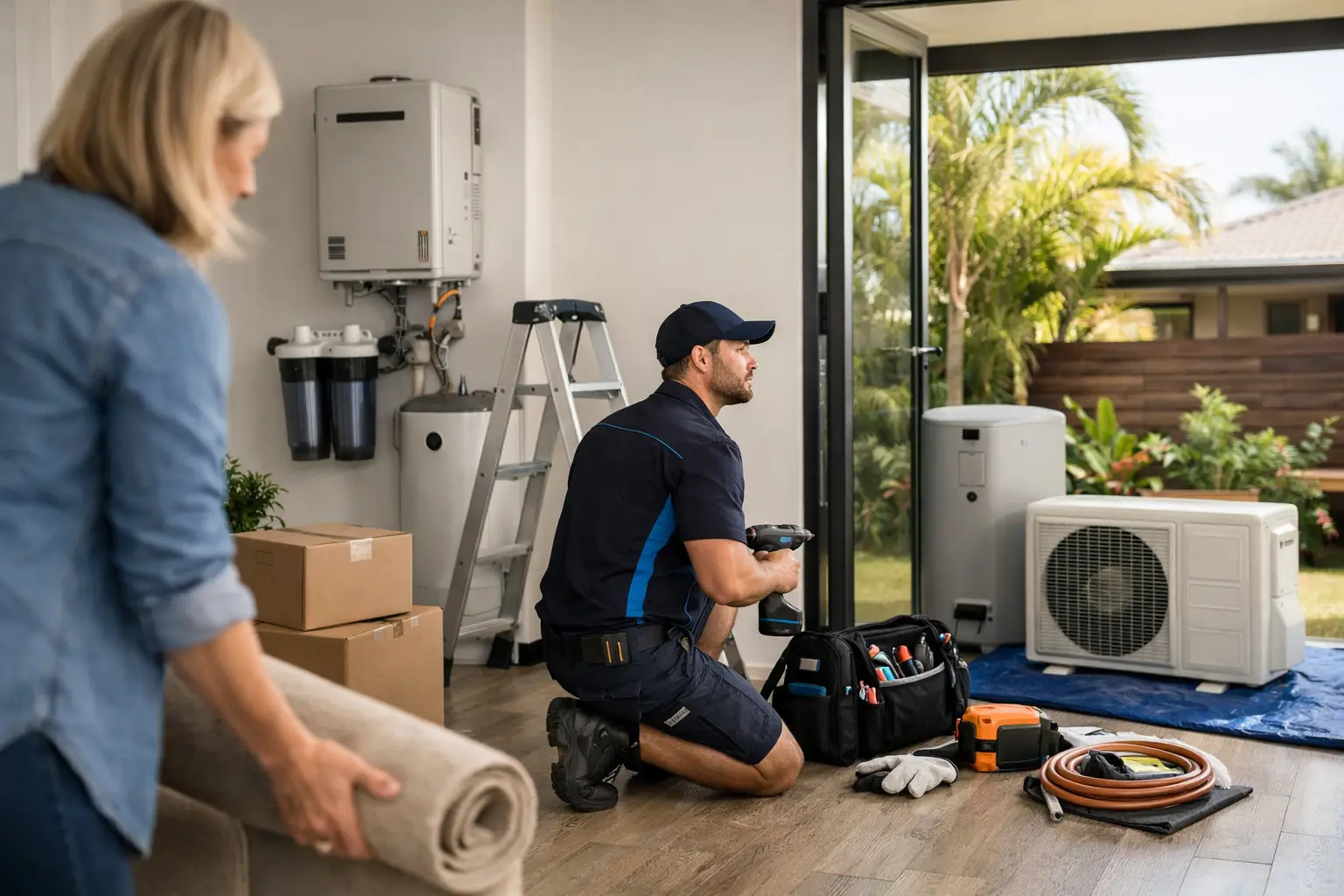
A new air conditioner should make your home more comfortable, not create a day of moving furniture, hunting for switchboard access and wondering where the outdoor unit will go. Taking a little time to prepare for aircon installation helps your installer work safely, keeps the job moving, and gives your new system the best chance of performing well through a Gold Coast summer.
Most preparation is straightforward. You do not need to know the technical side of air conditioning, but you do need to make the key areas accessible and raise any concerns before installation day.
Prepare for Aircon Installation Before the Technician Arrives
Start with the room where the indoor unit will be installed. Move furniture, artwork, curtains and fragile items away from the wall and create a clear path from the front door, driveway or garage to the work area. Installers need room for tools, ladders and safe handling of the unit, so an open space is far more useful than trying to work around a lounge, dining table or children’s toys.
If the indoor unit is replacing an older system, clear the space below and around it. Let the installer know if the old unit has been leaking, making unusual noises or struggling to cool the room. These details can help identify issues with drainage, wiring or the previous installation that may need attention.
The outdoor unit also needs a clear, workable area. Trim back plants and remove stored items, pot plants, hoses and garden furniture from nearby. The unit needs unrestricted airflow once it is operating, not just enough space for the installation itself. Blocking it in with screening, dense shrubs or stored gear can reduce efficiency and make future servicing harder.
Make access easy from start to finish
Air conditioning systems are not light, and installers may need to carry equipment through your home or along the side of the house. Keep gates unlocked, shift vehicles if they block the driveway, and make sure pets are safely inside or in a separate area. If access is tight, such as a narrow side passage, steep block or apartment stairwell, mention it when booking rather than leaving it as a surprise on the day.
It is also worth checking whether there are any site rules. Unit complexes, townhouses and homes managed by a body corporate may have conditions around external unit placement, noise, wall penetrations or working hours. Owners should arrange approval where required before the booking. If you are renting, obtain written permission from the property owner or managing agent first.
Choose the Right Spot for Indoor and Outdoor Units
Placement has a major effect on comfort, noise and running costs. Your installer will assess the home and recommend suitable locations, but it helps to think about how each room is used before they arrive.
For the indoor unit, aim for a position that allows air to travel across the main living area or bedroom without blowing directly onto where people sit or sleep. A unit mounted above a sofa might look convenient, but constant cold air on one spot can become uncomfortable. In bedrooms, consider whether the airflow will point at the bed and whether the unit’s display light or operating sound may bother a light sleeper.
The outdoor unit needs stable support, ventilation and reasonable access for maintenance. It should not be placed where hot air is trapped against a fence or wall, or beneath an area where leaves and debris regularly build up. Avoid locations directly outside a bedroom window where possible, particularly if the system may run overnight.
On the Gold Coast and in nearby coastal areas, salt air and heavy summer rain can be part of the equation. A well-considered position can reduce exposure without boxing the unit in. The answer is not always to hide it completely – airflow and service access still matter. Your installer can talk through the trade-off between appearance, noise, pipe run length and long-term performance.
Consider drainage before the work starts
Air conditioners produce condensation, and that water has to drain to an appropriate point. Think about the proposed route before installation day, especially if the unit is being fitted above a doorway, in an upstairs room or on an internal wall.
The drain should not discharge where it will create a slippery path, affect a neighbour’s property, run across a footpath or constantly soak a garden bed near the home. If you have noticed poor drainage around the house after heavy rain, let the installer know. A small discussion upfront can prevent a frustrating drip point later.
Check Power and Switchboard Access
A properly installed air conditioner needs the right electrical supply and compliant electrical work. Make sure the switchboard is accessible by moving stored items away from it and unlocking any cupboard, garage or side-gate access needed to reach it.
Do not assume an existing power point is suitable for a new system. Depending on the air conditioner’s size, the existing electrical setup and the installation design, dedicated wiring or switchboard work may be needed. A licensed electrician should assess this and explain the required work and cost before proceeding.
If your switchboard is older, frequently trips, has limited space, or you have recently added major electrical items such as a pool pump, solar system, induction cooktop or EV charger, raise it early. It does not automatically mean there is a problem, but it gives the installer the information needed to plan properly rather than delay the job on the day.
Keep your mobile nearby during the installation, particularly if you need to approve a practical decision such as a revised outdoor-unit position or extra electrical work. Fixed-price quoting is helpful, but the quote should reflect the actual site and agreed scope. Clear communication is the best protection against unexpected changes.
Protect Your Home and Plan for the Noise
Installation involves drilling through walls, running pipework and working around ceilings or external cladding. There may be short periods of drilling noise, dust and movement through the house. Remove valuables from the immediate area, cover nearby furniture if you are concerned, and keep children away from the work zone.
If you work from home, schedule calls around the installation where you can. If a baby sleeps during the day, or someone in the household is sensitive to noise, tell the team on arrival. They may not be able to eliminate drilling, but they can usually give you a heads-up before the noisier parts begin.
Outdoor access matters too. Make room near the driveway or kerb for the service vehicle where practical, and point out anything that could affect the job: hidden pipes, irrigation lines, recent landscaping, a septic system, solar equipment, or areas you do not want drilled into. Photos from before renovations can be useful if you know there are concealed services in a wall.
What to Ask Before Aircon Installation Day
A good installer should make the process easy to understand. Before work begins, confirm what system is being installed, where the indoor and outdoor units will sit, how the pipework and drainage will run, and what is included in the quote.
Ask who will complete the electrical work, whether removal of the old unit is included, and what documentation you will receive once the job is complete. It is also sensible to ask about operating the remote, cleaning filters and the recommended servicing schedule. A quality system still needs basic care, especially after dusty weather, building work or a long cooling season.
For most households, a split system is the practical choice for cooling one main room or bedroom zone. A larger or multi-room setup may be better if you want whole-home comfort, but it will involve different planning around unit locations, electrical capacity and budget. The best option depends on the size of the space, insulation, sun exposure, how many rooms you use and how you want to control running costs.
A Simple Install-Day Checklist
Before your appointment, make sure there is a clear route to the installation areas, the switchboard and outdoor space are accessible, pets are secured, and vehicles or bins are not blocking access. Have body corporate or owner approval ready if it applies, and keep your phone available for questions.
Once the installation is finished, do not rush the handover. Ask the technician to show you how to change modes, set the temperature, use timers and clean the filters. Check that you understand where the condensate drain runs and where to find the relevant switchboard circuit.
No Hassle Homes helps homeowners across the Gold Coast area organise air conditioning installation without the runaround. The easiest installation days are the ones where everyone knows the plan, the work areas are clear, and there is time to get the final questions answered before the technician leaves.