


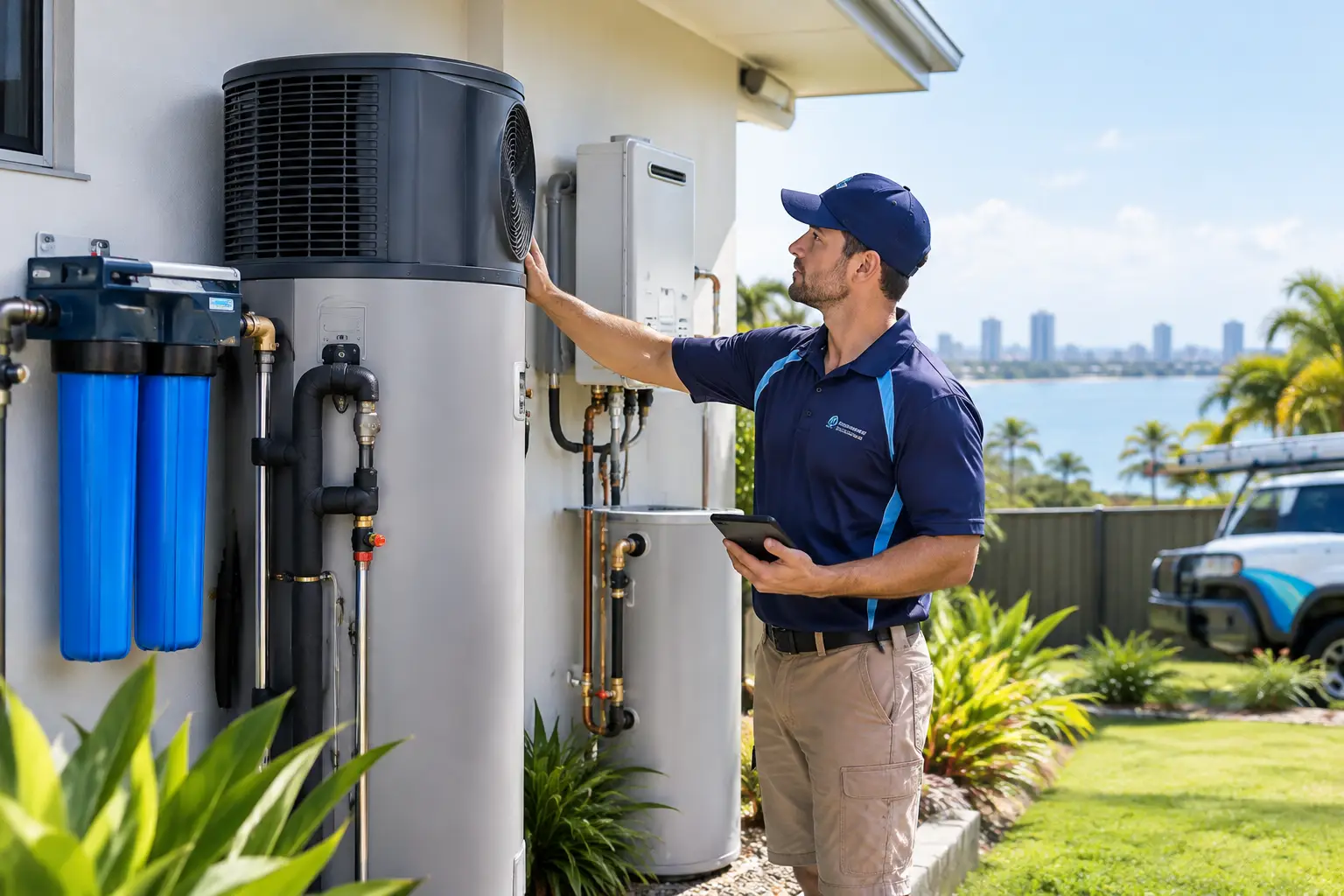
A heat pump water heater can cut the energy used to make hot water, but it is not a one-size-fits-all replacement. It needs the right location, enough space and a properly planned installation. For many Gold Coast homes, the warm climate makes it a practical option – provided the unit suits your household’s hot water habits.
How a heat pump water heater works
Unlike a standard electric storage system, which heats water directly with an element, a heat pump draws warmth from the surrounding air. It uses that heat to warm the water stored in its tank, much like an air conditioner works in reverse.
The key point is that it runs on electricity but does not have to create all the heat itself. That can make it far more efficient than conventional electric hot water. In a warm, humid climate such as the Gold Coast, there is generally plenty of ambient heat available for the system to use.
Most units combine the heat pump and storage tank in one outdoor appliance. Some systems have a separate tank and heat pump, which can help where access or available space is tight. Either way, the unit needs room to draw in and discharge air, along with suitable plumbing, drainage and electrical connections.
Why homeowners are considering heat pump hot water
Hot water can be one of the larger energy users in a household, particularly for families with several showers a day. A heat pump system is designed to reduce that load by using heat already in the air rather than relying only on direct electric heating.
For households moving away from an ageing electric tank, a heat pump may offer lower running costs over time. It can also work well with rooftop solar, especially when the system is set to heat water during the day while solar generation is available. Some models include timers or smart controls to help schedule heating around your household routine.
There may also be government incentives available for eligible systems and installations. These schemes, product requirements and values can change, so it is worth confirming what applies before you make a decision. An upfront quote should clearly show the equipment, installation work and any eligible discount separately.
The trade-offs to consider before you buy
Efficiency is a strong reason to consider a heat pump, but it is only part of the decision. The system is a mechanical appliance, with a fan and compressor, so it makes more noise than a standard electric tank. It is usually not intrusive when installed well, but location matters.
Avoid placing it right beside bedroom windows, outdoor entertaining areas or close to a neighbour’s boundary where noise could become a frustration. A licensed installer can help identify a position with adequate airflow that is sensible for your home and the people around it.
A heat pump also takes longer to recover than some gas continuous-flow systems. It stores hot water in a tank, so capacity matters. A small tank may be fine for a couple with predictable use, but a busy family with back-to-back showers, laundry and dishwashing needs a system sized for peak demand.
Cold weather can reduce efficiency because there is less heat in the air to collect. That is less of a concern in coastal South East Queensland and northern New South Wales than in colder inland areas, but performance still varies between products. Check the manufacturer’s operating range and ask how the system manages cooler winter mornings.
Choosing the right tank size
The right capacity depends on how many people live in the home and when they use hot water. As a broad guide, a household of one or two people may suit a smaller storage system, while families generally need a larger tank to avoid running short during the morning or evening rush.
That said, household size is not the full story. A home with two people who both take long showers may use more water than a family with efficient showerheads and staggered routines. A freestanding bath, multiple bathrooms, a large rain shower or regular guests can all increase demand.
Ask for a recommendation based on your actual usage, not just the number of bedrooms. An appropriately sized system costs less to run than an oversized tank, but a unit that is too small can rely more heavily on its electric booster or leave the household without enough hot water.
Location, drainage and access matter
A heat pump water heater is typically installed outside, where it can access fresh air. It needs a stable base, clear space around it and a place for condensate to drain safely. As the unit extracts heat from air, it produces water in a similar way to an air conditioner.
The installation also needs safe access for delivery and future servicing. Think about side paths, gates, stairs and whether the unit can be positioned close enough to existing hot water pipes. Long pipe runs can add cost and increase heat loss before water reaches the tap.
If you are replacing an existing gas hot water system, the plumbing layout may be usable, but the electrical work and new unit position must still be assessed. Do not assume every replacement is a simple swap-over. A proper site check prevents surprises on installation day.
Heat pump versus gas hot water
There is no universal winner. Gas continuous-flow hot water is valued for delivering hot water on demand, without storing a tank full of heated water. It can be a practical choice for larger households, homes with high peak demand or properties where outdoor space for a heat pump is limited.
A heat pump is often attractive where reducing electricity consumption is the priority, particularly when the household has solar or plans to add it. It stores hot water for later use, so it rewards households that choose the right tank size and schedule heating sensibly.
Your best option depends on current energy connections, available space, hot water demand, budget and plans for the home. If your existing system is failing, it is tempting to choose the quickest like-for-like replacement. Taking a little time to compare running costs and installation requirements can pay off over the life of the system.
What a professional installation should include
Hot water is essential, so the installation should be planned for safety and reliability, not just a low advertised price. A fixed quote should explain what is included and identify any likely extras before work begins.
A professional installation may involve removing the old system, positioning and securing the new unit, connecting water services, fitting tempering valves where required, arranging safe condensate drainage and completing electrical work by a licensed electrician. The installer should also test the system, check for leaks and show you how to use any timer or control settings.
Ask who will handle each part of the work. Heat pump installations can involve plumbing and electrical work, and both should be completed by appropriately licensed professionals. It is also worth checking the warranty conditions, service access requirements and who to call if you need support after installation.
Getting better performance from your system
Once installed, a few simple habits can help a heat pump work efficiently. Set the timer to heat during daylight hours if you have solar and your model allows it. Keep the air intake clear of stored items, leaves and garden growth. If the system has a filter or maintenance schedule, follow it rather than waiting for a problem.
Consider your water use too. Efficient showerheads and repairing dripping taps reduce demand without compromising comfort. They also make it easier for a storage system to keep up with your household on the busiest days.
For homeowners across the Gold Coast, a heat pump can be a smart long-term hot water choice when it is correctly sized and installed in the right spot. No Hassle Homes can provide clear advice and a fixed quote, so you can choose a system that suits the way your household actually lives.