


A shower that drops to a trickle when someone turns on a tap is more than an everyday annoyance. Water pressure problems can affect hot showers, washing machines, dishwashers and outdoor taps, while also pointing to an issue that needs attention. The good news is that the cause is often identifiable – but the right fix depends on whether the problem affects one fixture, your hot water only, or the whole home.
Start by working out where the pressure is low
Before assuming the worst, test a few taps around the house. Run the kitchen cold tap, bathroom basin tap, shower and an outdoor tap one at a time. Then check the hot water at the same fixtures.
If one tap or shower is weak, the fault is usually local to that fixture. A blocked aerator, shower head, flexible hose or mixer cartridge is often to blame. If every cold tap has poor flow, the issue may be in the water supply, meter, pressure limiting valve or main pipework. Low pressure on the hot side only narrows the search towards the hot water system or its associated valves.
This quick check matters because water pressure and water flow are not quite the same thing. Pressure is the force pushing water through the pipes. Flow is how much water actually comes out. A partly blocked tap can have adequate pressure behind it but still deliver very little water.
Is it one fixture or the whole house?
A single weak shower is commonly caused by mineral build-up in the shower head. On the Gold Coast and surrounding areas, water quality and household plumbing age can both play a part. Remove the shower head if it is designed to be removed, check the washer and screen, and clean visible debris according to the manufacturer’s instructions.
If only one mixer tap is affected, a worn cartridge or blocked filter may be restricting the water. These are small components, but replacing them incorrectly can create leaks or damage the tap. If you are not confident, it is usually quicker and safer to have a licensed plumber inspect it.
Common causes of water pressure problems
Low water pressure does not always mean there is a serious plumbing failure. It can also be caused by a deliberate safety device, a temporary supply issue or a fitting that has reached the end of its useful life.
A partially closed valve
Your home has isolation valves near the water meter and often near appliances or the hot water system. If a valve has been left partly closed after previous work, it can reduce flow through the house or to one section of plumbing.
Do not force stiff, corroded or damaged valves. Turning one too hard can cause a leak or leave you unable to shut off water in an emergency. A plumber can check valve condition and replace faulty parts if needed.
A blocked aerator, filter or shower head
Tap aerators are the small screens at the end of many taps. They catch sediment and can become clogged over time. Water filters can also reduce flow when cartridges are overdue for replacement or the system is not correctly sized for the household.
This is especially worth checking if the pressure gradually worsened rather than suddenly changed. Use the service schedule for your water filter, and fit compatible replacement cartridges. A filter that is too restrictive can make a good supply feel weak at the tap.
A faulty pressure limiting valve
Many homes have a pressure limiting valve, often called a pressure reduction valve. Its job is to protect plumbing fixtures and appliances from excessively high incoming pressure. When it fails or becomes blocked, it may restrict water far more than intended.
This can look like a whole-house issue, and it is not a DIY adjustment job. Too much pressure can be just as damaging as too little, putting strain on flexible hoses, tapware and hot water equipment. A licensed plumber can test the supply pressure and set or replace the valve correctly.
Hot water system restrictions
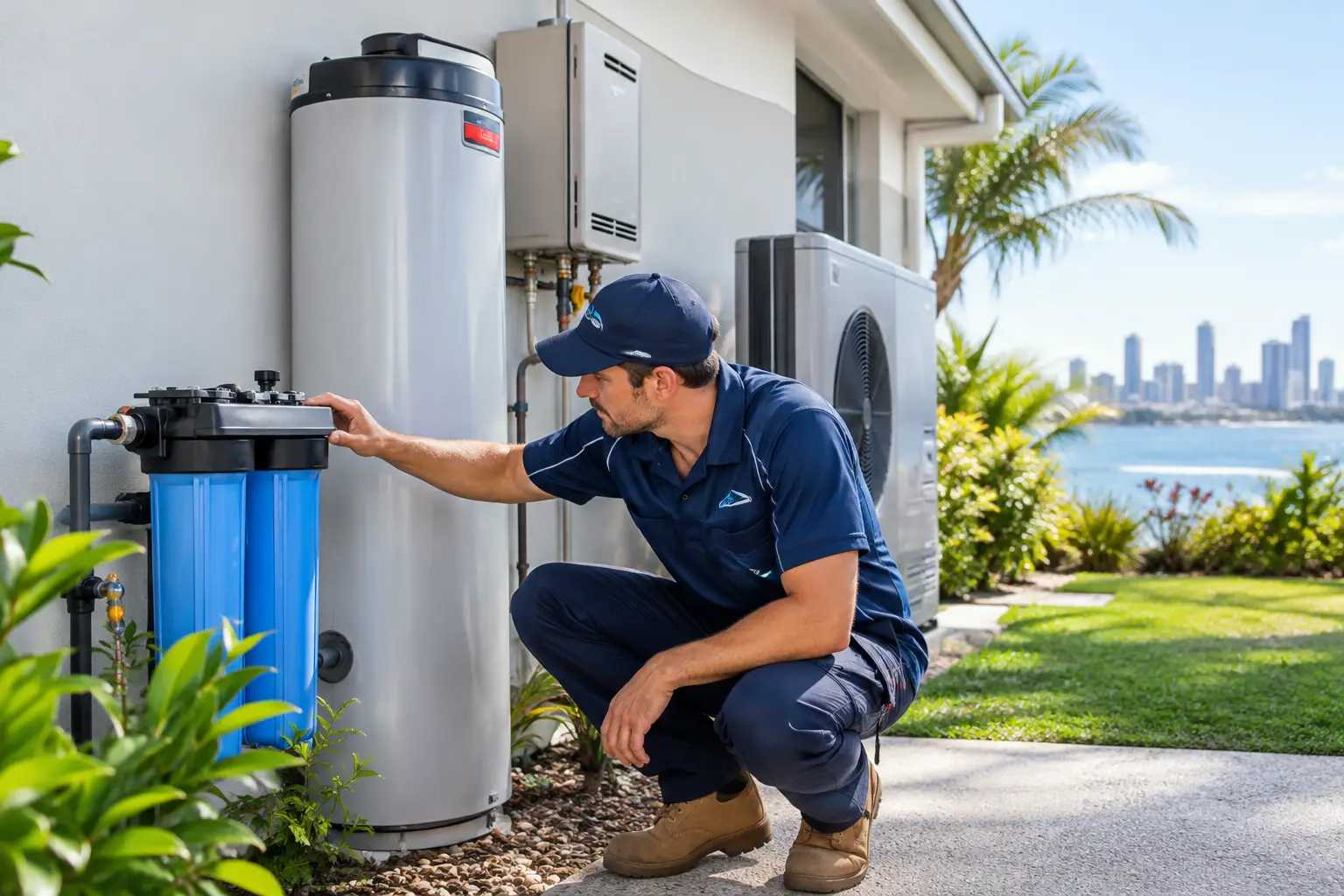
When cold water is strong but hot water is poor at every tap, look to the hot water system. A partially closed tempering valve, blocked inlet filter, failing valve or sediment build-up can restrict the hot water line. Older storage systems can develop internal issues that need professional diagnosis.
If your hot water is also inconsistent, rusty, discoloured or making unusual noises, arrange an inspection rather than waiting for it to stop altogether. Hot water systems involve plumbing, temperature control and, depending on the unit, electrical or gas connections. They should be assessed by appropriately licensed trades.
Leaks in the pipework
A hidden leak can reduce available water pressure, particularly if the change was sudden. Watch for damp patches, mouldy smells, a water meter that continues moving when every tap is off, or an unexpectedly high water bill.
Not every leak is visible under a vanity or behind a washing machine. Pipes can run under slabs, through walls and in ceilings. Fast attention limits water damage and avoids paying for water that never reaches your taps.
Supply interruptions or peak demand
Sometimes the issue sits outside your property. Planned works, a local main break, maintenance or high neighbourhood demand can temporarily affect pressure. If the problem started suddenly and several nearby homes are experiencing it, check with your water provider before arranging repairs.
Peak demand can also expose limitations in older pipework. For example, a home may cope well most of the day but struggle when showers, a dishwasher and washing machine run together. A plumber can assess whether pipe size, fittings or system layout are creating a bottleneck.
What you can safely check yourself
There are a few sensible checks that do not involve dismantling plumbing. First, see whether the issue affects hot, cold or both. Next, try fixtures individually and note whether pressure falls when another tap or appliance is running. Finally, inspect accessible hoses and cabinets for obvious drips, moisture or corrosion.
Avoid removing pipe connections, altering pressure valves or taking apart a hot water system. A small mistake can become a leak, a scalding risk or a much bigger repair. If you have no water at all, a major leak, water near electrical equipment, or an issue with your hot water system, treat it as urgent.
When a licensed plumber is the right call
Call a plumber when low pressure affects multiple fixtures, appears suddenly, comes with a leak, or is limited to the hot water throughout the home. It is also worth booking help if you have already cleaned a shower head or changed a filter and the problem remains.
A proper assessment should identify the cause before work begins. That might involve checking supply pressure, testing the pressure limiting valve, inspecting the hot water system and looking for leaks. The best repair is not always the biggest one. Sometimes it is a straightforward valve or cartridge replacement; other times, ageing pipework or a poorly configured system needs a longer-term solution.
For homeowners across the Gold Coast, Southern Brisbane and Tweed Heads, No Hassle Homes can help take the guesswork out of plumbing and hot water issues. You get clear advice, qualified service and a practical path forward instead of being left to chase separate trades.
Preventing pressure issues from returning
A little maintenance goes a long way. Keep water filter changes on schedule, clean shower heads before build-up becomes severe and have ageing hot water systems serviced before they fail at the worst possible time. If you are renovating, replacing tapware or installing a new appliance, ask whether your existing pressure and pipework suit the new setup.
Do not put up with a weak shower or inconsistent hot water for months. A quick check of where and when the issue occurs gives your plumber useful information and helps get your home back to normal faster.