


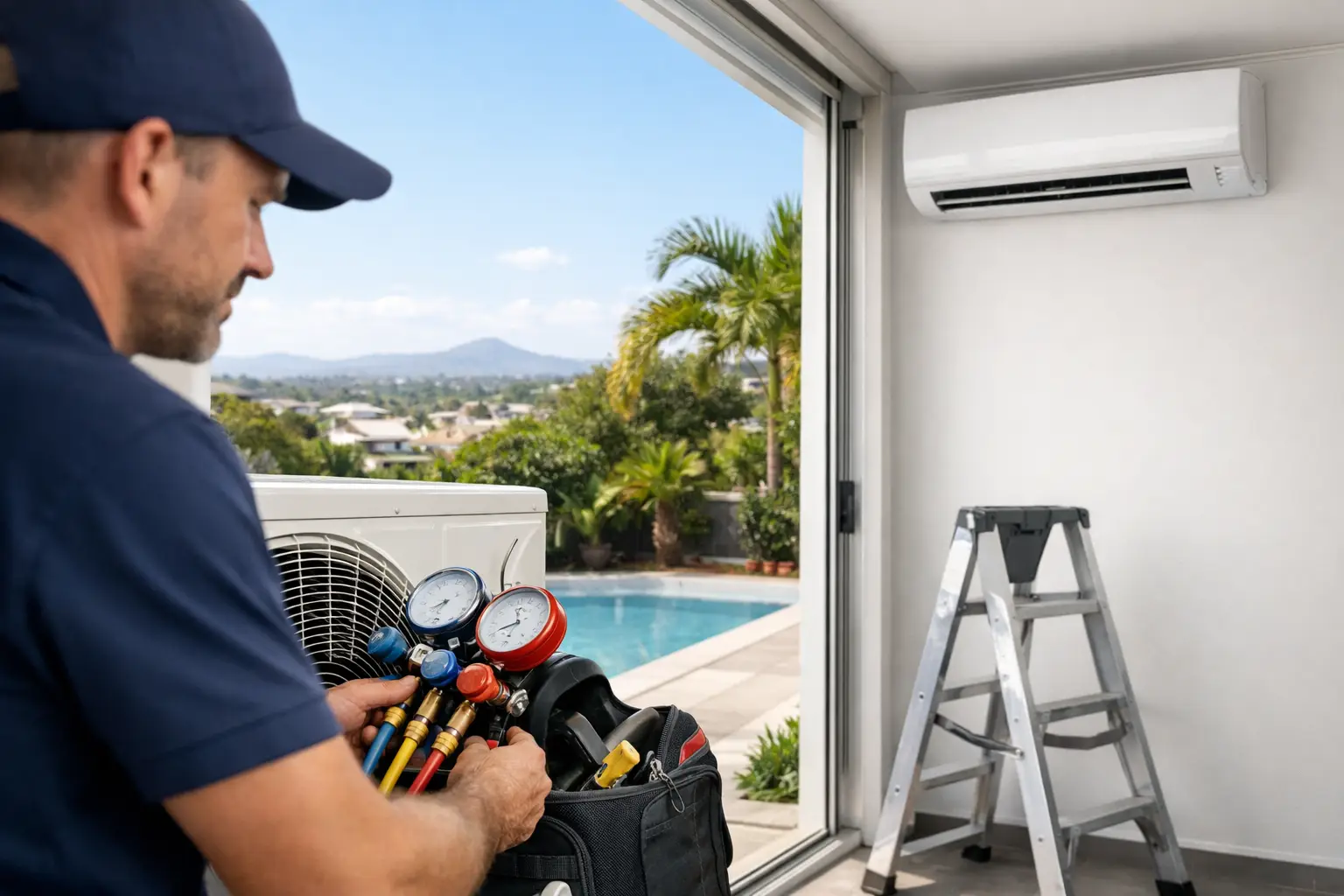
If you have ever been quoted one price over the phone and another after a site visit, you already know why air conditioning installation cost can feel harder to pin down than it should be. For homeowners across the Gold Coast, Southern Brisbane and Tweed Heads, the real answer is simple – it depends on the system, the property, and how much work is needed to do the job safely and properly.
That does not mean it should be vague. A good installer should be able to explain what is driving the price, what is included, and where extra costs can appear before work starts. If you are comparing quotes or planning a new system, here is what actually affects the final number.
What affects air conditioning installation cost?
The biggest factor is the type of system you are installing. A standard split system for a bedroom is a very different job from a multi-head setup cooling several rooms, and both are much simpler than a ducted system running through the whole home.
With a split system, the installer needs to mount the indoor unit, position the outdoor condenser, run pipework and cabling between the two, connect drainage, and complete the electrical work. If those components can be placed close together with easy access, labour stays lower. If the home has a tricky layout, limited roof space, a long pipe run or difficult wall access, installation becomes more involved.
Ducted air conditioning usually costs more because the job is larger from the start. It involves ceiling space assessment, duct layout, outlet placement, return air design, zoning controls and more labour overall. The unit itself is more expensive, but the installation work is also more complex.
Electrical work matters too. Some homes can handle a new system with minimal upgrades. Others need a dedicated circuit, switchboard adjustments or compliance work to bring things up to standard. That is not an optional extra. It is part of making sure the system is safe and legal.
Typical price ranges homeowners can expect
There is no single flat rate that fits every property, but broad ranges can help set expectations.
For a small to mid-sized split system, installation-only pricing often starts in the hundreds and can move into the low thousands depending on access, pipe length and electrical requirements. Once you include the unit itself, many homeowners end up somewhere from around $1,800 to $4,000 for a straightforward split system supply and install job.
For larger split systems, premium brands, difficult access or longer runs, the total can go higher. Multi-split systems, where one outdoor unit serves multiple indoor units, also tend to cost more because the design and installation are more involved.
Ducted systems usually sit in a higher bracket. Supply and installation often begin around the mid-thousands and can climb well beyond that depending on house size, zoning, brand, energy efficiency and roof access. In larger homes, totals of $8,000 to $15,000 or more are not unusual.
These are general guide numbers, not fixed promises. The useful part is understanding why one quote sits at the lower end while another comes in much higher.
Why two quotes can be very different
Not all quotes are built the same way. One installer may include everything needed for a complete job, while another may advertise a lower starting price and then add extras once work begins.
The difference often comes down to what is actually included. A proper quote should make clear whether it covers standard back-to-back installation, wall brackets, roof work, electrical upgrades, condensate pumps, trunking, removal of an old unit and commissioning. If those details are missing, the cheapest quote can quickly become the more expensive one.
Brand and system quality also change the equation. Some homeowners only look at the unit price, but reliability, energy use, noise levels and warranty support all affect long-term value. Paying less up front can make sense in some cases, but not if the system struggles through summer, drives up your power bill or needs early repairs.
Air conditioning installation cost by home type
A newer single-storey home is usually easier and cheaper to work with than an older property with limited access. If the installer can get to the right areas without cutting into walls or dealing with outdated wiring, labour stays more predictable.
Double-storey homes often involve extra time and materials, especially if the indoor and outdoor units cannot be positioned close together. Apartments and townhouses can have body corporate restrictions, tighter access, and more complicated outdoor unit placement. Even a simple job can take longer when parking, lifting and compliance are part of the process.
Older Queensland homes bring their own considerations. They may have charm, but they can also have switchboards that need upgrading, wall types that complicate mounting, or layouts that make drainage harder to manage. None of that means installation is a bad idea. It just means the quote needs to reflect the real work involved.
The hidden costs to ask about upfront
If you want fewer surprises, ask a few direct questions before booking. Does the quote include electrical work? Is there a limit on pipe run length? Will patching or making good be required? Is removal of the old system included? Are there extra charges for difficult access or after-hours work?
A trustworthy installer will answer those clearly. They should also explain whether the quoted system size is genuinely suited to the room. An undersized unit might be cheaper to install, but it can cost more to run and leave you uncomfortable on the hottest days.
There is also the question of location. Coastal homes around the Gold Coast can benefit from equipment suited to humid conditions and salty air. That may affect brand choice and total cost, but it can also improve lifespan and performance.
Is a cheaper install worth it?
Sometimes yes, sometimes no. If the quote is lower because the job is straightforward and the company runs efficiently, that can be good value. If it is lower because key work has been excluded or corners are being cut, it usually becomes expensive later.
Air conditioning is not just about getting cold air out of the wall. It needs correct sizing, compliant electrical work, proper drainage, secure mounting and careful commissioning. A rushed installation can lead to poor airflow, water leaks, nuisance faults and higher running costs.
For most homeowners, the better question is not who is cheapest. It is who offers a fair price, no hidden fees, and a clear scope of work. That is where confidence comes from.
How to keep installation costs under control
The simplest way to reduce air conditioning installation cost is to choose a system that matches the space and your actual usage. Bigger is not always better, and more expensive is not always smarter. A good installer should ask how the room is used, how much sun it gets, whether insulation is in place and what comfort level you want.
Timing can help as well. If your system has already failed in the middle of a heatwave, your options may be narrower. Replacing an ageing unit before peak summer can give you more time to compare solutions and avoid a rushed decision.
It also helps to deal with one provider that can manage the job from quote to installation without passing you between trades. When electrical, appliance and home service experience sit under one roof, the process tends to be quicker and easier to coordinate. That matters when you just want the job done properly and without the usual run-around.
Getting a quote that is actually useful
A useful quote is specific. It should identify the system being installed, the areas it will serve, what labour includes, what electrical work is covered, and whether any assumptions have been made about access or existing wiring. If something may change after inspection, that should be stated upfront.
For local homeowners, this is where working with a service-focused team makes a difference. No Hassle Homes is built around straightforward quoting, licensed installation and fast turnaround, which is exactly what most households want when the weather turns and the old system is no longer cutting it.
A fair quote does not have to be the lowest one on the page. It just needs to be honest, complete and matched to your home. When you know what is included and why it costs what it does, you can make the call with a lot more confidence – and a lot less hassle.