


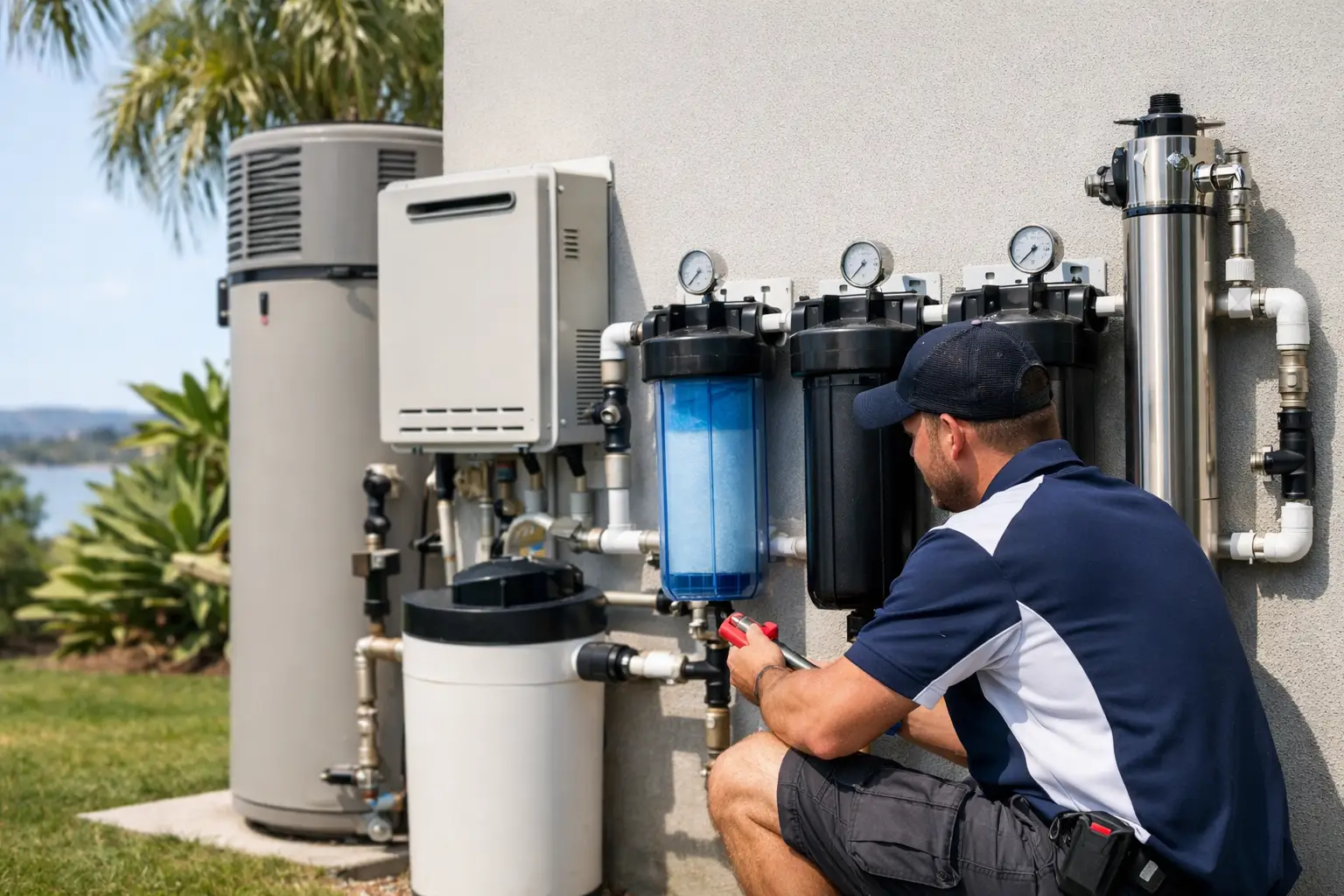
If your shower screen keeps spotting up, your kettle scales over fast, or the tap water has a chlorine smell you can’t ignore, you’re probably not chasing a fancy add-on. You’re trying to fix a whole-home problem properly. That’s why more homeowners start by asking about the best whole house water filters, not just a small unit under the sink.
A whole house system filters water as it enters your home, so the water going to your bathrooms, laundry, kitchen and hot water system is treated before you use it. That matters if you want better-tasting water, less sediment, reduced chlorine, and a bit more protection for taps, appliances and pipework. But the right setup depends on what’s actually in your water, how much water your household uses, and how much maintenance you’re happy to deal with.
What makes the best whole house water filters?
The short answer is this: the best system is the one matched to your water supply and your home. A filter that works well for one property can be the wrong choice for the place next door.
If you’re on town water, the common concerns are usually chlorine taste and smell, sediment, and general water quality for bathing and cleaning. If you’re on tank water, the conversation changes. You may need better sediment handling, protection against organic matter, and sometimes extra treatment depending on how the tank is maintained.
Flow rate is another big factor people overlook. A filter might look great on paper, but if it can’t keep up when someone’s in the shower, the washing machine’s running and the kitchen tap is on, it won’t feel like a good investment for long. The best whole house water filters for family homes need to balance filtration quality with enough water pressure for normal day-to-day use.
Then there’s servicing. Some systems are simple cartridge-change setups. Others need more involved maintenance, extra monitoring or replacement media at different intervals. There’s no point buying a system that sounds impressive if it becomes a hassle every six months.
The main types of whole house filters
Sediment filters
These are designed to catch physical particles such as sand, rust, dirt and debris. They’re often the first stage in a multi-stage system rather than a complete solution on their own.
If your water has visible particles or your plumbing copes with regular sediment build-up, this stage does a lot of heavy lifting. It can also help protect downstream filters so they last longer. On its own, though, it won’t usually deal with chlorine, taste, odour or dissolved contaminants.
Carbon filters
Carbon is one of the most common options in whole house filtration because it’s effective at reducing chlorine taste and smell. For many homes on treated mains water, this is the feature people notice most quickly. Showers smell better, drinking water is more pleasant, and some people find it gentler on skin and hair.
The trade-off is that carbon filters need proper sizing. If the system is too small for your household’s water demand, contact time can be reduced and performance may drop off. Cartridge quality also varies, so not all carbon systems perform the same.
Multi-stage systems
These combine different filter types, often starting with sediment removal and then moving to carbon or finer filtration. For many households, this is the most practical setup because it tackles several common issues at once without getting overly complex.
A well-designed multi-stage system is often where the best whole house water filters sit for everyday residential use. You get broader treatment, better protection for the home, and a setup that can be tailored to your water conditions.
UV and specialised treatment
Some homes need more than basic filtration. UV treatment may be recommended where microbial control is a concern, especially with tank water. There are also specialised systems for specific water quality problems, but these should be selected based on testing, not guesswork.
This is where a lot of homeowners can overspend. If your water doesn’t need a particular treatment stage, you’re better off putting your budget into a correctly sized, properly installed system rather than extra features you won’t benefit from.
How to choose the right system for your home
Start with the actual problem you want solved. If the main complaint is chlorine smell and taste, your ideal setup may be very different from a property dealing with sediment or tank water quality issues.
Next, think about household size. A smaller home with one bathroom and low water use doesn’t need the same flow capacity as a busy family household. Oversizing can cost more than necessary, but undersizing tends to show up fast in poor pressure or frequent maintenance.
Installation location matters too. A whole house filter needs enough space, proper pipe access and a layout that allows servicing without making life difficult later. This is one reason professional installation is worth it. It’s not just about connecting pipes. It’s about making sure the system is accessible, safe and practical to maintain.
You should also ask what replacement filters cost and how often they need changing. The upfront price only tells part of the story. A cheaper unit with expensive cartridges or short service intervals can end up costing more over time than a better-quality system installed from the start.
Best whole house water filters for common home needs
For chlorine taste and smell
A carbon-based whole house system is often the strongest option for homes on mains water that want better water quality throughout the house. This suits households that notice water odour in showers, laundry or drinking water and want a broad improvement without adding separate filters at every tap.
For sediment and older pipework concerns
If your water carries grit, rust or visible particles, a sediment-focused setup is a smart first step, often paired with another stage after it. This can be especially useful where plumbing fixtures are copping wear or aerators clog regularly.
For tank water homes
Tank water usually needs a more tailored approach. Sediment removal is often essential, and UV or additional treatment may be worth considering depending on tank condition and water quality. There’s no one-size-fits-all answer here, which is why proper advice matters.
For families wanting low-fuss maintenance
A straightforward multi-stage system with easy cartridge replacement often gives the best balance between performance and convenience. If the goal is safer, cleaner-feeling water without creating another ongoing headache, simple usually wins.
Common mistakes people make
One of the biggest mistakes is buying based on marketing claims instead of water conditions. Terms like high performance or premium don’t mean much if the system isn’t suited to your supply.
Another is focusing only on drinking water. A whole house system affects far more than what comes out of the kitchen tap. Showers, hot water systems, washing machines and bathroom fittings all benefit when water quality issues are managed at the entry point.
DIY selection can also backfire. Even if the filter itself is decent, poor sizing or awkward installation can lead to pressure problems, leaks or costly servicing later. For a system connected to your home’s main water line, getting the setup right from day one saves stress.
Is a whole house filter worth it?
For many homes, yes, but it depends on what you expect from it. If you want every tap in the house treated, want to reduce chlorine exposure during bathing, or want to protect fixtures and appliances from sediment, a whole house system makes sense.
If your only goal is improving drinking water at the kitchen sink, a smaller point-of-use system may be enough. But if you’re dealing with water quality issues across the whole property, patching the problem one tap at a time usually becomes frustrating and more expensive than expected.
For homeowners across the Gold Coast and nearby areas, the practical question is usually less about whether filtration works and more about choosing a system that suits the home without turning into another thing to manage. That’s where experienced advice and proper installation make a real difference.
A good filtration system should make your home feel easier to live in, not more complicated. If you’re comparing options, focus on water quality, flow rate, maintenance and installation quality before brand names or sales language. The right choice is the one that fits your house, your water and your day-to-day life – and that’s usually the one you’ll be happy with long after the install is done.