


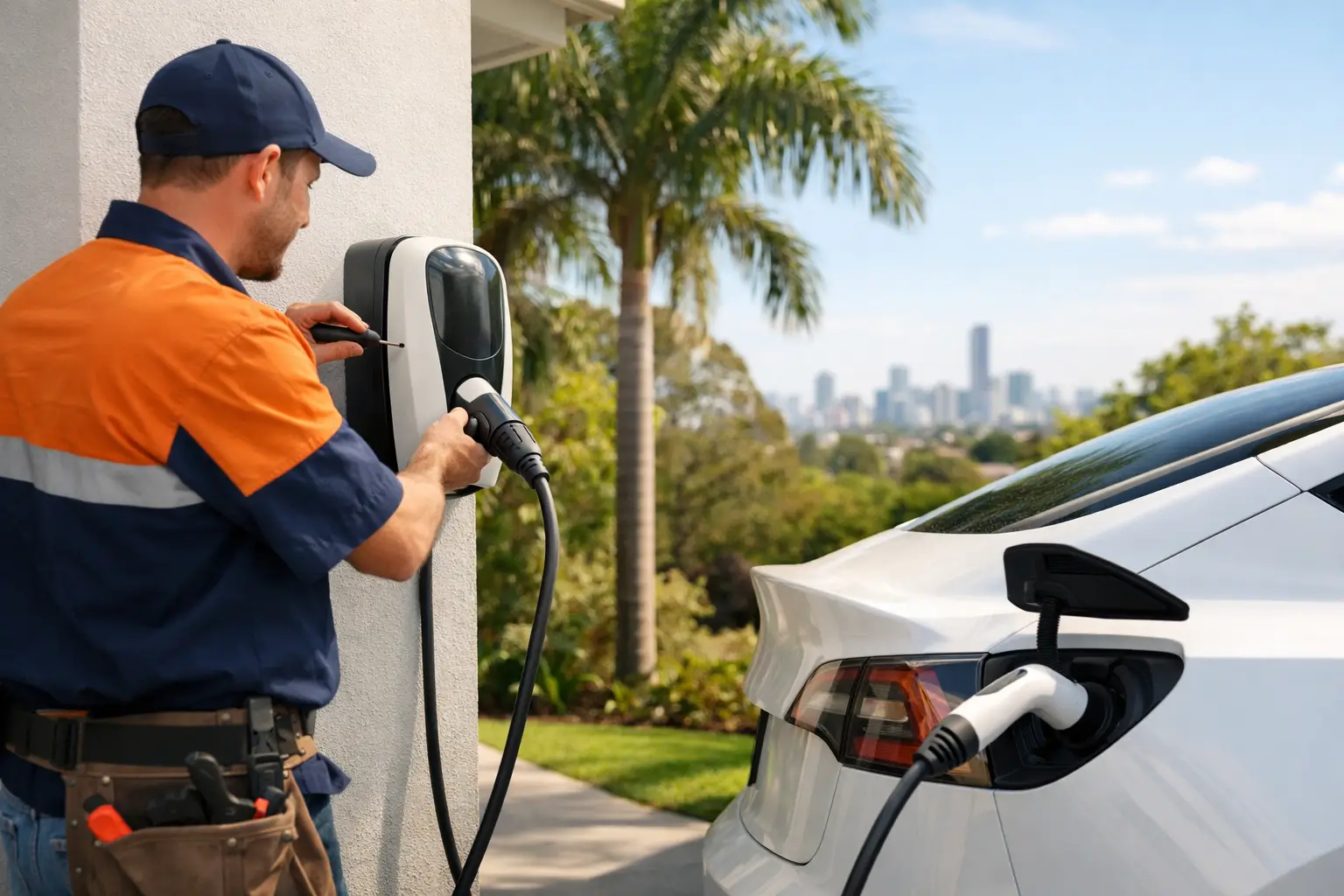
You have bought the EV, picked the parking spot, and now the obvious question lands – can any electrician install EV charger equipment at home? The short answer is no, not always. A licensed electrician is essential, but EV charger installation also needs the right experience, the right checks at your switchboard, and the right approach to compliance and load management.
That matters more than most homeowners expect. An EV charger is not just another appliance plugged into the wall. It can draw a high, sustained load for hours at a time, which means your home’s electrical system needs to be assessed properly before anything is installed. If that step is rushed, you can end up with nuisance tripping, poor charging performance, extra upgrade costs later, or worst of all, a setup that is not safe.
Can any electrician install EV charger systems?
A general electrician may be legally licensed to carry out electrical work, but that does not automatically mean they are the best person to install an EV charger. The better question is whether the electrician has specific experience with EV charging systems, residential switchboards, circuit protection, and the local requirements that apply in your area.
In practical terms, many electricians can install an EV charger, but not every electrician should do it without first checking the site properly. EV charging is a specialised part of domestic electrical work because it often involves dedicated circuits, protection devices, cable sizing, load calculations and, in some homes, switchboard upgrades. If your property has solar, battery storage, an older meter box, or limited spare capacity, the job becomes more than a straightforward fit-off.
For homeowners, the safest path is simple. Choose a licensed electrician who regularly installs EV chargers and can explain what your home needs in plain English.
What a qualified EV charger installer should check
A proper installation starts well before the charger goes on the wall. The installer should assess how much capacity your home has available and whether the charger can be added without overloading existing circuits.
That usually includes looking at your switchboard, the available supply, the distance from the board to the charger location, and whether your chosen charger needs single-phase or three-phase power. They should also check where the charger will be mounted, how the cable run will work, and whether weather protection or extra hardware is required if the charger is outside.
This is also where experience shows. A good installer will flag issues early, not after the work has started. If your switchboard needs an upgrade, if the cable route is more complex than expected, or if a load management device would make the setup smarter and safer, you want to know that before booking the job.
Why EV chargers are not the same as a standard power point
Some homeowners assume charging an EV is no different from installing a new outlet in the garage. It is a fair assumption, but it is not quite right.
A dedicated EV charger is designed to deliver a stable, continuous electrical load over long periods. That puts more demand on your electrical system than many household appliances. A kettle or toaster may use a lot of power, but only for a few minutes. An EV charger can run for hours overnight. That changes how circuits need to be designed and protected.
There are also product-specific requirements. Different chargers have different built-in safety features, communication settings and installation instructions. The electrician needs to understand those details and install the unit in line with both the manufacturer’s requirements and Australian standards.
When a standard electrician may not be enough
There are plenty of straightforward homes where a qualified electrician with EV experience can complete the job quickly and cleanly. But some properties need a bit more planning.
Older homes are a common example. If the switchboard is outdated or already crowded, there may not be room for the required protection devices. Homes with large air conditioning systems, electric hot water, induction cooking, pool equipment or home batteries can also create load constraints. In those cases, the installer needs to work out whether the charger can operate safely alongside everything else.
Then there is future planning. If you are likely to add a second EV, install solar later, or upgrade from a slower charger to a faster one, it can make sense to size parts of the installation with that in mind. That does not always cost much more upfront, but it can save a second round of work down the track.
Questions worth asking before you book
If you are comparing installers, ask direct questions. Are they licensed and insured? Have they installed this charger model before? Will they inspect the switchboard first? Do they provide a fixed quote, or could the price change once the job starts?
It is also worth asking what is included. Some quotes cover the charger installation only under basic conditions, while extras like long cable runs, trenching, switchboard upgrades or protection upgrades are added later. Clear quoting matters because EV charger jobs can look simple on the surface and become more involved once the site is assessed.
A dependable installer will not dodge these questions. They should be able to explain the job clearly, outline any likely variables, and tell you if your home needs more than a standard install.
The compliance side homeowners should not ignore
EV charger installation is not a job for shortcuts. In Australia, electrical work must meet current standards and local network requirements. That includes using the correct protection devices, installing the charger on a suitable dedicated circuit, and ensuring the system is tested properly before handover.
For homeowners, compliance is not just paperwork. It affects safety, insurance, and long-term reliability. If a charger is installed incorrectly and causes damage, you do not want to find out later that the work was not compliant. That is one reason the cheapest quote is not always the best quote.
The right installer will treat compliance as part of the service, not an optional extra.
Can any electrician install EV charger units if you have solar?
This is where the answer becomes even more dependent on the property. If you have solar, battery storage, or plans to add them soon, your EV charger should be considered as part of the whole home energy setup.
A charger can be configured in different ways. Some households simply want reliable overnight charging. Others want to use excess solar generation during the day. Some want a balance, with smart charging that avoids pushing the house over its available capacity. Those options are worthwhile, but only if the installer understands how the charger interacts with your broader system.
That does not mean every solar home is complicated. It just means the electrician should know what to look for and how to set the system up to suit the way you actually live.
Fast installation matters, but so does getting it right
Most homeowners are not looking for a technical lecture. They want to know who to call, what it will cost, and how soon it can be done. Fair enough.
Speed is valuable, especially when you have already taken delivery of the car and are relying on slower charging in the meantime. But the best EV charger installs are not rushed. They are efficient because the installer knows what to check, spots issues early, and gives you a clear path from quote to completion.
That is where working with a local, service-focused team can make life easier. You want someone who turns up when they say they will, explains the job in plain language, and handles the whole process without the usual tradie runaround.
How to tell you are choosing the right installer
A good EV charger installer will make the process feel straightforward. They will ask sensible questions about your vehicle, charger preference, parking location and existing electrical setup. They will explain whether your home is ready as-is or whether it needs upgrades first. Most importantly, they will give you confidence that the installation will be safe, compliant and suited to your household.
That confidence matters because EV charging is something you will use every week, often every day. It is not a one-off appliance you forget about. If it is installed well, it simply works. If it is installed poorly, it becomes a recurring headache.
So, can any electrician install EV charger equipment? Not every electrician is the right fit. For a safe and hassle-free result, you want a licensed professional with real EV charger experience, clear quoting, and the ability to assess your home properly before the work begins.
If you are booking installation, look for the option that saves you time without cutting corners. Your charger should fit your home as neatly as it fits your car.