


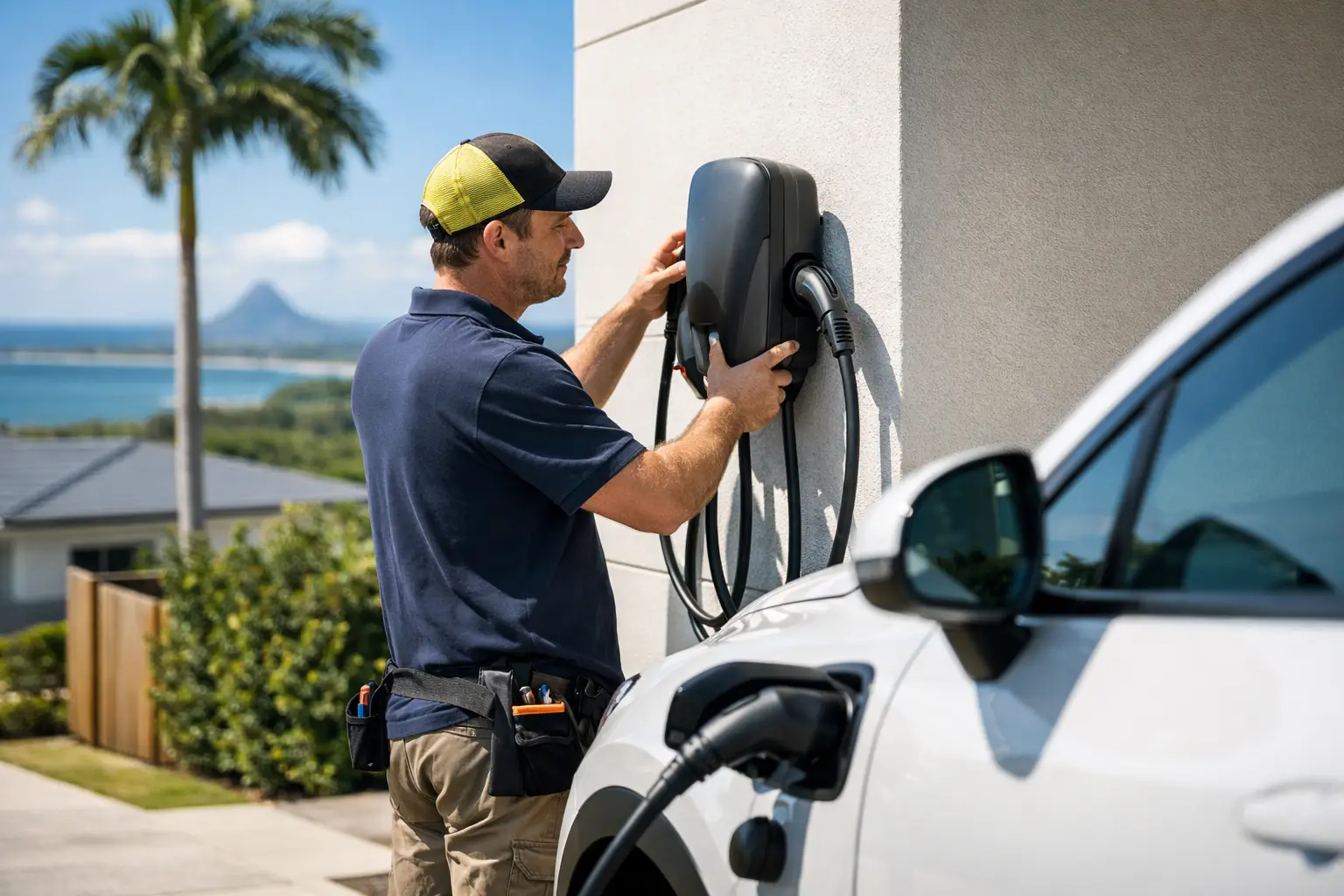
That first week with an electric vehicle often comes with one quick realisation – charging from a standard powerpoint is fine until it isn’t. If you drive most days, share the car with family, or simply want the convenience of reliable overnight charging, EV charger installation usually moves from “maybe later” to “let’s sort this properly”.
For homeowners across the Gold Coast, Southern Brisbane and Tweed Heads, the main question is not whether a charger is worth having. It’s how to get the right one installed safely, at a fair price, and without chasing three different trades just to get a straight answer.
Why EV charger installation is worth doing properly
A dedicated home charger gives you faster charging, more predictable performance and a safer setup than relying on a general-use powerpoint every night. That matters more than many people expect. A car battery is one of the biggest electrical loads most homes will ever use for long periods, so the installation needs to suit both the charger and the home’s existing electrical system.
Done properly, EV charger installation should feel simple from the homeowner’s side. You choose the charging solution that suits your driving habits, your switchboard is checked, the cable run is planned, and the charger is installed and tested by a licensed electrician. You get confidence that the charger is safe, compliant and ready to use, rather than hoping a shortcut will hold up over time.
There is also the everyday convenience factor. Instead of planning trips around public charging stations, you plug in at home and wake up with the car ready to go. For busy households, that matters just as much as charging speed.
What type of home EV charger do you actually need?
This is where a lot of homeowners get stuck, because the answer depends on the car, the property and how you use both.
Most residential installs are based around AC charging, commonly with a wall-mounted unit in the garage, carport or along an exterior wall near the parking area. For many homes, a 7kW single-phase charger is the practical sweet spot. It offers a solid jump in charging speed over a standard powerpoint without pushing into more complex territory than most households need.
That said, not every home is the same. Some properties can support higher-capacity charging, while others may need switchboard upgrades or a different charging approach to avoid overloading the existing electrical setup. If you have solar, off-street parking limitations, multiple EVs, or plans to add battery storage later, those details can change the best option.
The right charger is not always the most powerful one on paper. It’s the one that fits your home safely, matches your daily kilometres, and won’t create headaches later.
What happens during EV charger installation?
A straightforward residential install is usually quite manageable when the site is suitable. The charger location is assessed first, along with the parking position of the vehicle, the distance from the switchboard, and whether the cable route can be kept neat and protected.
The electrician will also check the switchboard capacity, circuit protection requirements and whether any upgrades are needed before the charger can be connected. In some homes, installation is simple because the board has room and the charger can go close by. In others, extra work is needed because the switchboard is older, the charger location is far from the board, or the home’s load profile needs closer attention.
Once the plan is confirmed, the charger is mounted, cabling is run, the dedicated circuit is installed, and the system is tested. Good installation is not just about making it work on the day. It’s about making sure it remains safe and reliable through daily use, hot weather, storms and the normal wear of family life.
How long does installation usually take?
For a standard home setup, EV charger installation can often be completed in a single visit. If the charger location is close to the switchboard and no major upgrades are required, the job can move quickly.
Where timing stretches out is usually in the prep work rather than the charger itself. An older switchboard, a long cable run, difficult access, or additional electrical upgrades can add time and cost. That is why fixed-quote booking and a clear site assessment matter. Homeowners want to know what they are getting into before work starts, not halfway through.
For most people, speed matters because once the EV is in the driveway, charging becomes part of the household routine straight away. A fast turnaround is not just convenient – it helps the vehicle fit into everyday life from day one.
What affects the cost of EV charger installation?
This is the part many homeowners are most cautious about, and fair enough. Electrical work can vary a lot depending on the home.
The main cost factors are the charger itself, the distance from the switchboard to the installation point, whether the switchboard needs upgrading, and how straightforward the cable route is. Exterior mounting, trenching, difficult wall access and smart charging features can also affect the quote.
There is no single flat price that suits every home, because one property may need a tidy garage wall install while another needs extra protection, a longer run or board modifications. What matters is getting transparent pricing up front. A proper quote should explain what is included and flag any known variables clearly.
Cheaper is not always better here. If a quote seems unusually low, it is worth checking whether testing, protection devices, switchboard work and commissioning are actually included. A lower headline price can quickly lose its appeal if corners are cut or extra charges appear later.
Safety matters more than speed
Homeowners are often balancing convenience, budget and urgency, but safety should stay at the centre of the decision. EV charger installation is not a handyman job and it is not something to trial with improvised adaptors or extension leads.
A dedicated charger draws sustained power over long periods. If the circuit is not designed correctly, or if the switchboard is not suitable, you increase the risk of faults, nuisance tripping and potential damage to the charger or the home’s electrical system. That is why licensed installation is essential.
There is also a practical side to safety. A charger installed in the wrong spot can be awkward to use every day. Cables can become trip hazards, weather exposure can be poorly managed, and what looked fine on paper can become frustrating in real life. A good installer thinks about how the household will actually use the charger, not just where it can technically fit.
Choosing the right location at home
The best charger position is usually the one that makes daily charging easy while keeping the installation neat and protected. Garages are often the simplest option, but many homes use carports or external walls just as effectively.
The ideal spot gives you practical cable reach without stretching across walkways or forcing awkward parking. It should also consider weather exposure, wall strength, vehicle position and future flexibility. If you change cars later, the charger should still be usable without needing to rework the whole setup.
This is another area where local experience helps. Homes across the Gold Coast and surrounding suburbs vary a lot, from newer builds with modern boards to older properties with less straightforward layouts. A local installer is more likely to spot site issues early and recommend a setup that works for the property you actually have.
Should you plan for solar or a second EV?
If you already have solar, or think you might add another EV to the household later, it is worth raising that before installation. You may not need a more complex system now, but it can make sense to choose a charger or cabling arrangement that leaves room to grow.
The same goes for renovations, battery storage or switchboard upgrades you are already considering. One of the benefits of working with a home services provider rather than juggling separate contractors is that the wider picture can be taken into account. If your home’s electrical needs are changing, those decisions should work together rather than being handled one by one in isolation.
For many households, the best result is not the fanciest setup. It is a charger that meets today’s needs, is installed cleanly, and does not box you into expensive changes later.
What to look for in an installer
A good EV charger installer should be licensed, clear in their communication and upfront about pricing, timing and site requirements. They should explain whether your current electrical setup is suitable, what needs to happen if it is not, and what charger options make sense for your home.
Just as important, they should make the process easy. Homeowners do not want vague arrival windows, patchy follow-up or hidden extras. They want a reliable booking, a fair quote and a job completed properly. That is exactly why many families prefer dealing with one dependable local provider for electrical, gas and other essential home services instead of starting from scratch with a new tradie every time.
If you are ready to make home charging easier, the smartest next step is simple: get clear advice based on your home, your vehicle and how you actually live. A well-planned charger install should feel like one less thing to think about every day.