


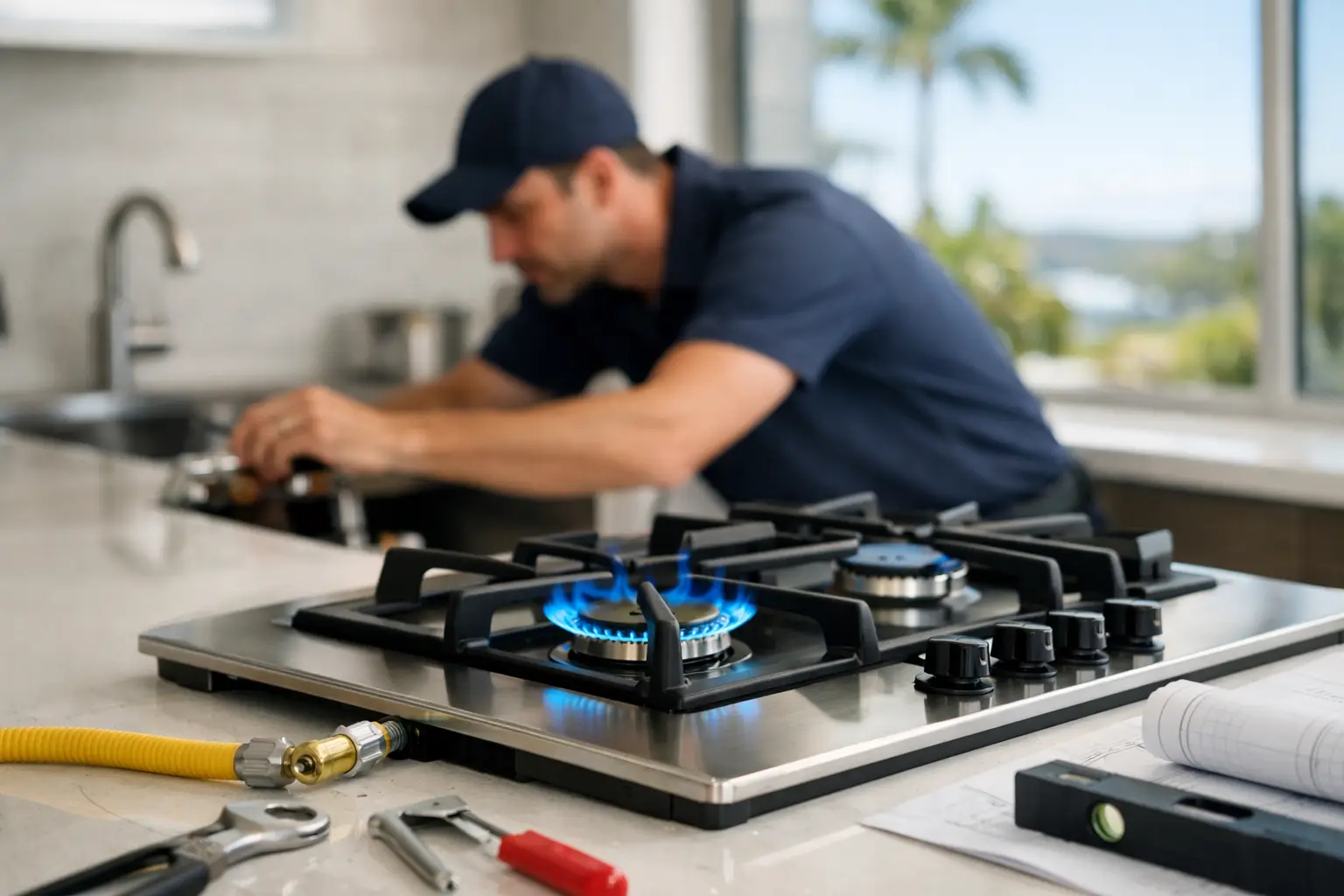
That new cooktop might look like a simple swap, but gas cooktop installation requirements are not a DIY job and they are not something to guess your way through. One wrong connection, poor ventilation, or the wrong clearance to nearby surfaces can turn a kitchen upgrade into a safety risk. If you are replacing an older unit or fitting out a renovated kitchen, knowing what is required before installation saves time, avoids rework, and helps keep your home compliant.
What gas cooktop installation requirements usually cover
At a practical level, gas cooktop installation requirements are about safety, compliance, and making sure the appliance works as it should in your kitchen. That means the cooktop has to suit the available gas type, fit the bench cut-out correctly, maintain safe distances from cupboards and splashbacks, and be connected by a licensed gas fitter.
It also means checking the surrounding services. In many homes, cooktop installation is not just a gas job. There may be electrical isolation requirements for ignition systems, cabinetry adjustments, and ventilation considerations. If the old appliance is coming out and a different size or brand is going in, the install can quickly become more involved than homeowners expect.
Licensing is not optional
In Australia, gas appliance installation must be carried out by a licensed gas fitter. That is one of the most important requirements, and for good reason. Gas work is regulated because leaks, incomplete combustion, and poor connections can create serious risks for your household.
A licensed installer will know the relevant standards, the manufacturer instructions, and the local compliance expectations. They will also pressure test the connection, confirm the appliance is operating properly, and provide the appropriate compliance documentation where required. If someone offers to “just hook it up” without the proper licence, that is a hard no.
For homeowners, this matters beyond safety alone. Insurance issues, warranty claims, and future property sales can all become more complicated if an appliance was installed outside the rules.
The cooktop must match the gas supply
Not every cooktop is ready for every home. One of the basic gas cooktop installation requirements is making sure the appliance is set up for the gas type available at the property, usually natural gas or LPG. Using the wrong injectors or incorrect regulator settings can affect performance and safety.
This catches people out more often than you might think, especially when they buy an appliance online or move one from another property. A cooktop that worked fine in one home may need conversion work before it can be safely installed in another.
If your home uses LPG bottles, the installer needs to check that the appliance is suitable for LPG and configured correctly. That small detail is not minor. It affects flame quality, gas consumption, and how safely the burners operate day to day.
Bench cut-out and appliance fit matter more than they seem
A cooktop is not just dropped into a hole and connected. The bench cut-out needs to match the appliance specifications closely. If it is too small, the unit will not fit. If it is too large, the appliance may not sit securely or seal properly.
This is where manufacturer instructions become part of the installation requirements. Each model has its own dimensions, support needs, and clearance rules. Even two 60 cm cooktops can have slightly different cut-out sizes.
In kitchen upgrades, this often becomes the point where delays happen. A homeowner removes an old cooktop assuming the new one is the same size, only to find the opening needs trimming or the cabinet underneath does not provide the required support. A proper pre-install check helps avoid that last-minute scramble.
Clearance requirements protect cabinets and surfaces
One of the biggest safety issues around cooktops is heat exposure to surrounding materials. Gas cooktop installation requirements include minimum clearances to overhead cupboards, rangehoods, splashbacks, side walls, and any combustible surfaces near the burners.
These distances vary by appliance and kitchen layout, so there is no one-size-fits-all figure that suits every home. The installer needs to look at the manufacturer instructions and assess the actual space. If overhead cabinetry is too low or side panels are too close, installation may need to pause until the kitchen setup is adjusted.
This is especially relevant in older homes where the existing layout may not meet the current appliance requirements. Just because there was a cooktop there before does not automatically mean the new one can be installed in exactly the same way.
Ventilation is part of safe operation
Gas appliances produce heat and combustion by-products, so ventilation matters. In many homes, that means having an effective rangehood or suitable natural ventilation in the kitchen area. The right setup depends on the room size, the appliance, and how enclosed the space is.
Not every install turns into a major ventilation project, but it is still something a professional should assess. In tightly sealed homes or recently renovated kitchens, poor airflow can affect comfort and safety. If the cooktop is going into a room with limited ventilation, that may need attention before the appliance is signed off.
Good ventilation also helps with day-to-day use. It keeps cooking fumes under control, reduces heat build-up, and makes the kitchen a better space to work in.
Gas shut-off access and connection points
A compliant installation needs an accessible shut-off valve and a suitable connection point. The gas line has to be correctly sized and positioned for the new appliance, and the connection method must meet current requirements.
If you are replacing like-for-like, the existing point may be fine. If you are moving the cooktop to an island bench, changing kitchen layout, or upgrading from a different style of appliance, new pipework may be needed. That can affect both timing and cost.
This is where fixed quoting is helpful. A proper quote should factor in whether the existing setup is usable or whether extra gas work is needed to make the installation safe and compliant.
Electrical requirements still apply
Even though it is a gas cooktop, many models have electric ignition and may need an accessible power point nearby. Some installations also involve isolation requirements or coordination with other appliances in the kitchen.
That means gas cooktop installation requirements can overlap with electrical work. If there is no suitable power supply in the right location, the install may need a licensed electrician as part of the job. For homeowners, this is another reason to deal with a service provider that can coordinate multiple trades instead of leaving you to chase them separately.
What happens during a proper installation
A professional installation usually starts with confirming the appliance details, gas type, bench suitability, and existing service connections. The old cooktop is disconnected and removed safely if required. The new unit is then fitted according to the manufacturer specifications, connected to the gas supply, and tested.
Testing is not a box-ticking exercise. The installer checks for leaks, burner performance, ignition, flame stability, and correct operation under normal use. They also make sure the clearances and surrounding conditions are suitable. If something in the kitchen does not meet the required standard, the safe option may be to stop and explain what needs to be corrected first.
That can feel frustrating in the moment, but it is far better than forcing an unsafe install.
Common issues that delay installation
The most common hold-ups are surprisingly ordinary. The new cooktop does not suit the existing cut-out. The appliance is configured for the wrong gas type. There is no compliant power point nearby. The overhead clearance is too tight. The shut-off valve is inaccessible, or the existing connection is not up to standard.
None of these problems are unusual, and none of them mean the project is impossible. They simply mean the installation needs to be done properly, not rushed. A good installer will identify these issues early, explain the options clearly, and help you avoid hidden surprises.
For households across the Gold Coast, Southern Brisbane, and Tweed Heads, speed matters, but safe work matters more. The best result is a cooktop that is installed quickly and correctly the first time.
Before you book, what should you have ready?
It helps to have the cooktop model number, the installation manual if available, details of your gas type, and clear photos of the existing kitchen setup. If the bench has already been cut, measure it carefully. If you are still choosing an appliance, check its dimensions and clearance requirements before you buy.
This small bit of preparation can save a second visit and make quoting more accurate. It also gives the installer a better chance of spotting issues before they become your problem on installation day.
A new gas cooktop should make life easier, not create extra stress. When the installation is planned properly, licensed correctly, and checked for compliance, you get the outcome you actually want – safe cooking, reliable performance, and one less thing to worry about at home.