


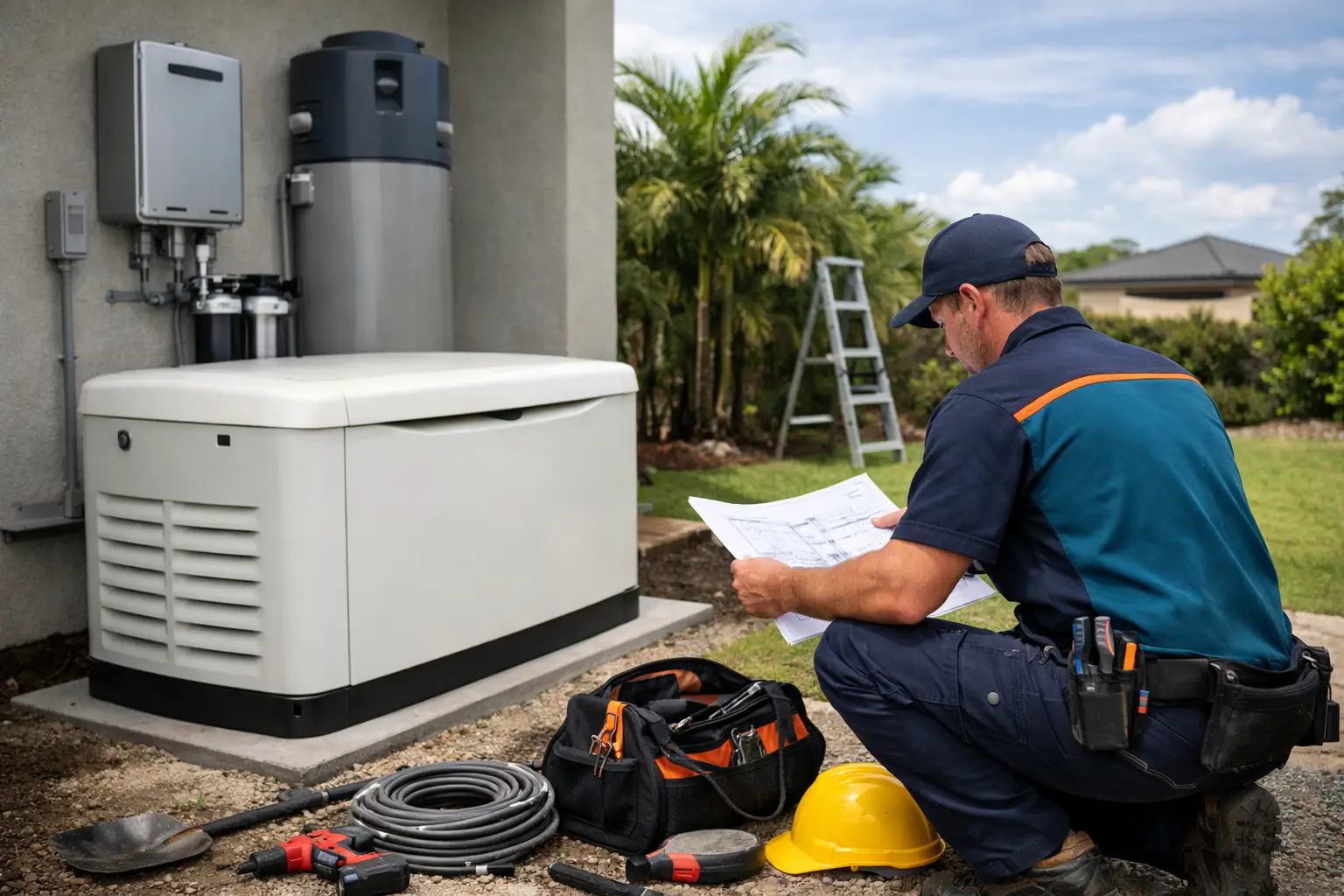
Power usually goes out at the worst possible time – during a storm, on a hot night, or right when you need the fridge, lights and internet to keep the house running. If you’re looking into backup power, knowing how to prepare for generator installation can save time, avoid delays and make the install day far more straightforward.
A generator is not a plug-and-play appliance. It needs the right location, safe electrical connections, proper fuel planning and enough space for licenced trades to do the job properly. The good news is that most of the preparation is simple once you know what matters.
How to prepare for generator installation before quoting
The first step is understanding what you want the generator to do. Some homeowners want whole-home backup. Others only want to keep essentials running, like the fridge, lights, modem, garage door, a few power points and maybe air conditioning in one zone. That decision affects generator size, switchboard work and installation cost.
It also helps to think about how often outages happen at your property and how long they usually last. If blackouts are short and occasional, a smaller setup for essential circuits may be enough. If your area loses power regularly or you work from home and can’t afford downtime, you may need a larger standby system with more coverage.
Before anyone arrives to quote, make a rough list of the appliances and circuits you want backed up. You do not need to calculate every watt yourself, but it gives the installer a clearer starting point. It also helps avoid the common mistake of choosing a generator based on guesswork rather than actual household demand.
Choose the right location early
Where the generator goes matters more than many homeowners expect. It needs to sit in a safe, compliant position outside the home, with enough clearance for ventilation, servicing and access. It also has to be practical for cabling and, if relevant, gas supply.
A good location is usually reasonably close to the switchboard, easy for technicians to access and far enough from windows, doors and neighbouring boundaries to meet safety requirements. The final position depends on your block, the model being installed and local rules, so this is one of those areas where it really does depend.
If you are preparing the site in advance, clear away anything that could get in the way. Move bins, outdoor furniture, stored materials and overgrown plants. If the proposed area is muddy, unstable or difficult to reach, mention that upfront. Some homes need a pad or base prepared before installation can go ahead.
Noise is another practical consideration. Modern generators are quieter than many people expect, but they are not silent. Placing the unit where it has some distance from bedrooms and outdoor entertaining areas can make a big difference to daily comfort if it ever runs for an extended period.
Check your switchboard and existing electrical setup
A generator installation usually involves more than dropping a unit beside the house. In most cases, the electrical side includes an isolation method and a changeover arrangement so the home can switch safely between mains power and backup power. That may mean switchboard upgrades or extra electrical work if the current setup is older or undersized.
If your switchboard is hard to access, blocked by storage or located in a tight corner, clear the area before the site visit. The installer will need to inspect it properly. If you know the home has had previous electrical issues, renovations or patch-up work over the years, say so early. It is always better to identify complications before the installation date than halfway through the job.
Homes with solar also need special attention. A generator and solar system can work together, but only when designed correctly. The same applies if you have battery storage, a pool setup, electric gates or other major loads. None of this is a problem, but it does mean the installation plan needs to be tailored to your property rather than treated as a standard job.
Plan the fuel supply properly
One of the biggest decisions is how the generator will be fuelled. For many homes, gas is a practical option because it offers reliable storage and can suit permanent standby systems well. The right setup depends on generator size, expected runtime and whether the property already has an appropriate gas supply arrangement.
This is not the stage for rough estimates. Fuel planning needs to match the generator’s consumption and the household’s expectations during an outage. If you want long backup coverage, the supply has to support that. If your home already uses gas for hot water, cooking or heating, it may be possible to coordinate the setup more efficiently, but it still needs proper assessment.
This is where using one provider with gas and installation capability can make life easier. Instead of juggling separate trades and hoping everyone agrees on the same plan, you can get a clearer answer on what the generator needs and whether your current gas arrangement is suitable.
Make access easy for installation day
A delayed installation is often caused by very ordinary problems – locked side gates, tight access paths, dogs in the yard, parked cars in the way or no clear route for equipment. A little preparation here goes a long way.
Walk the path from the street to the proposed installation area and ask yourself whether a technician carrying tools and materials can move through easily. Trim back shrubs if needed, unlock gates and keep pets secured. If access is shared, narrow or steep, mention it in advance. It may affect how the team schedules the job or what equipment they bring.
If you live in a townhouse, duplex or managed estate, check whether there are any access restrictions, body corporate rules or noise limitations that could affect the work. It is much easier to sort approvals early than to rebook a licenced team because someone could not get on site.
Understand permits, approvals and compliance
Homeowners often ask whether generator installation needs approvals. The answer depends on the property, the equipment and the type of work involved. Electrical compliance is non-negotiable, and depending on the system, there may also be gas compliance requirements, placement rules and local considerations.
The key point is this: don’t try to shortcut the process. A properly installed generator is about safety first, not just convenience. Backfeeding, poor ventilation, incorrect clearances and DIY connections can create serious risks for your household and for utility workers.
A licenced installer should talk you through what is required for your setup. If approvals are needed, ask who is handling them and what, if anything, you need to provide. That simple conversation can prevent confusion later.
Prepare the household for a short disruption
Even when everything runs on time, installation day can involve brief interruptions to power or access around the home. If someone is working from home, studying online or relying on medical equipment, plan around that in advance.
Charge mobiles and laptops, save any important work and let the installer know if there are critical appliances that need special consideration. If the team needs to isolate circuits while completing switchboard work, being prepared avoids frustration.
It is also worth thinking ahead about what you want the handover to cover. Ask the installer to show you how the system operates, what normal running sounds like, how maintenance works and what to do if the generator activates during an outage. A good install is not just about fitting the equipment. It is about making sure you feel confident using it.
How to prepare for generator installation without overcomplicating it
The easiest way to approach this is to focus on four things: what you want powered, where the generator can go, whether your switchboard is ready and how the fuel supply will work. Once those pieces are clear, the rest tends to fall into place.
You do not need to become an expert in electrical load calculations or gas consumption charts. You just need to give accurate information, provide good site access and work with licenced professionals who can assess the home properly. That keeps the process faster, safer and a lot less stressful.
For homeowners across the Gold Coast and surrounding areas, that practical approach matters. Most people are not looking for a complicated project. They just want backup power sorted by people who show up, explain things clearly and do the job right.
If you’re getting ready for a generator install, the best preparation is not doing more. It’s doing the right things early so the day runs exactly as it should.