


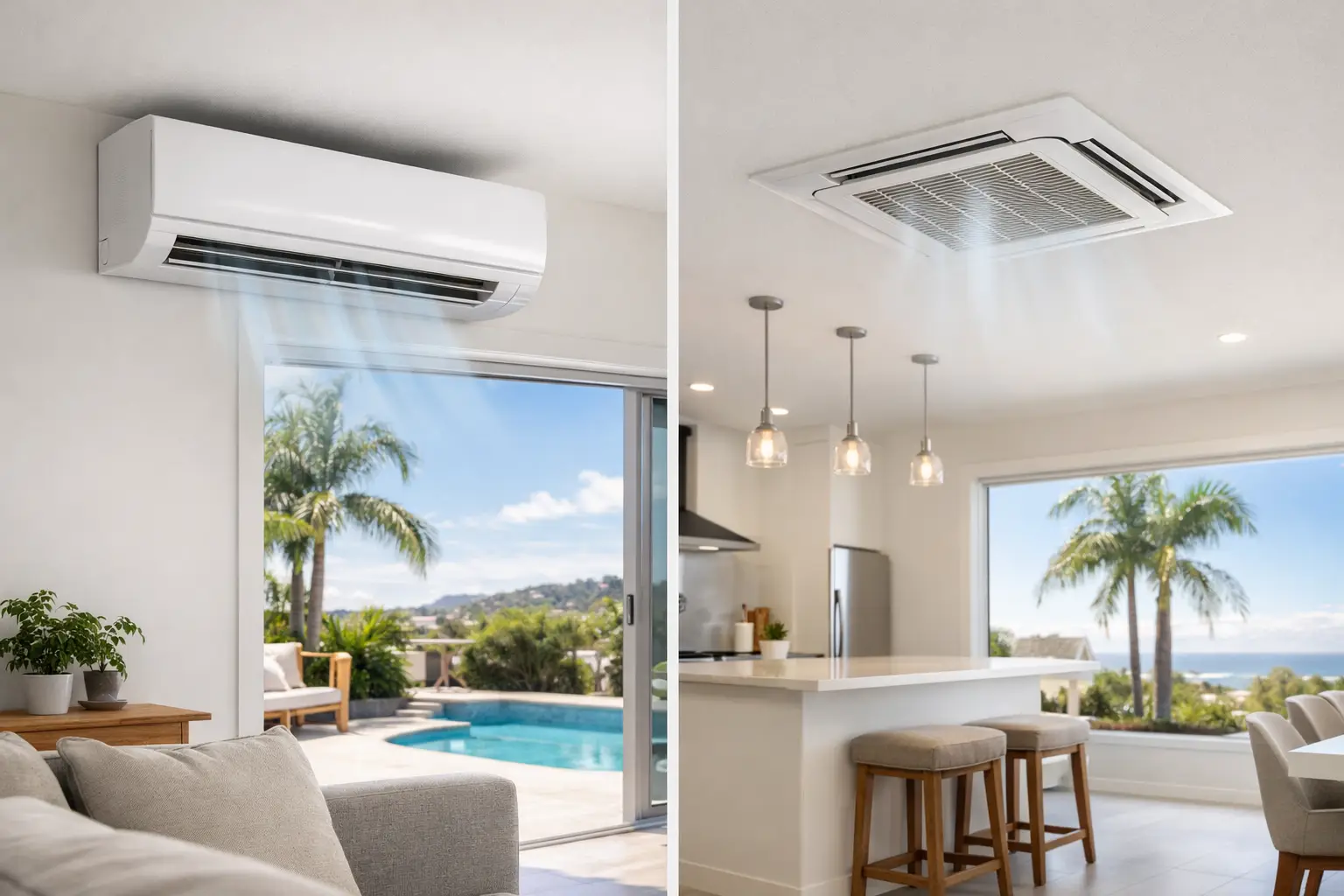
A lot of homeowners start comparing split system vs ducted cooling right after the first run of sticky nights, when one bedroom is too warm, the living room never quite cools down, and the power bill is already on your mind. That is usually the point where the question stops being theoretical and becomes practical – what will actually keep your home comfortable without turning installation into a drawn-out headache?
The honest answer is that both systems can work well. The better choice depends on your home layout, how many rooms you want to cool, how often you use air conditioning, and how much you want to spend upfront. If you are trying to get it right the first time, it helps to look past brochure promises and focus on how your household actually lives.
Split system vs ducted cooling: the core difference
A split system cools a specific area or room. You have an indoor unit mounted on the wall and an outdoor compressor connected to it. Some homes install one unit in the main living area. Others add separate units to bedrooms or home offices over time.
Ducted cooling works as a whole-home system. Air is pushed through ducts in the ceiling or underfloor space and delivered through vents in multiple rooms. It is designed to cool the house more evenly, with a central controller managing temperature and, in many cases, zones.
That basic difference matters because it shapes everything else – the installation cost, how the system looks, the way it feels day to day, and the kind of control you get.
When a split system makes more sense
For many homes, a split system is the simpler and more cost-effective option. If you mostly spend time in one part of the house during the day and move to one bedroom at night, there is no real benefit in paying to cool every room all at once.
This is especially true in smaller homes, units, granny flats, and houses where only a few areas need reliable cooling. A well-sized split system can do an excellent job in open-plan living spaces, and adding a second or third unit later can still be more affordable than installing full ducted cooling from the start.
There is also less disruption during installation. In many cases, split systems are quicker to fit, which matters when the weather is already uncomfortable and you do not want a lengthy project dragging on. If your roof space is tight or your home is not well suited to ducting, split systems can avoid a lot of complexity.
That said, the room-by-room approach is both the strength and the limitation. If you want every bedroom, hallway and living space cooled evenly, multiple wall-mounted units can start to feel patchy and cluttered.
The real advantages of split systems
Split systems usually win on upfront price. They are often cheaper to buy and install, particularly if you only need one or two units. They can also be efficient because you are only cooling the rooms you are using.
They suit households that want flexibility too. If one family member likes the bedroom cooler than everyone else, separate systems can give you more control over specific spaces. And if your budget is tight, you can stage the setup over time instead of committing to one larger installation.
Where split systems can fall short
The biggest drawback is coverage. One unit does not magically cool a whole house, even if the door is left open and the fan is doing its best. Airflow has limits, and homes with long hallways, closed bedrooms or multiple storeys often end up with hot spots.
There is also the visual side of it. Some homeowners do not mind the indoor wall units. Others would rather keep the look of the home cleaner and less equipment-heavy. Once you install several split systems, maintenance and appearance can become bigger factors.
When ducted cooling is the better fit
Ducted cooling tends to suit larger homes, families using multiple rooms at once, and homeowners who want a neater whole-home result. If your goal is consistent comfort across the house, ducted systems are hard to beat.
This can be a strong option in newer homes, homes with suitable ceiling space, and properties where aesthetics matter. Instead of seeing indoor units on the wall, you just have discreet vents and a central control system. For many people, that cleaner finish is a genuine selling point, not a minor extra.
It also makes everyday life easier in busy households. If the lounge, kitchen and bedrooms are all in use, ducted cooling can handle that more smoothly than trying to manage several separate systems.
The strengths of ducted systems
Comfort is the big one. Ducted cooling gives a more even result throughout the home, especially when it is properly designed for the layout. Zoned systems can improve efficiency too, letting you cool only certain sections of the house rather than running the entire system full tilt.
There is a convenience factor as well. One integrated system can feel simpler to use than juggling multiple remotes and settings. For homeowners planning to stay long term, that whole-home comfort can justify the higher upfront spend.
The trade-offs with ducted cooling
The main barrier is cost. Ducted systems generally cost more to install, and that gap can be significant depending on home size, access, electrical requirements and the complexity of the ducting layout.
Installation can also be more involved. Not every home is a straightforward candidate, and older properties sometimes need more work to make the system fit properly. If you are after the fastest, least disruptive solution, ducted may not always be it.
Then there is running cost. A well-zoned ducted system can be efficient, but if you regularly cool large areas you are not using, your power bills can climb. This is where a lot of homeowners get caught out – buying for the idea of whole-home comfort, then paying to condition space that sits empty most of the day.
Split system vs ducted cooling on running costs
This is the part most people really care about, and the answer is not as simple as saying one is always cheaper.
If you only cool one or two rooms regularly, split systems are often cheaper to run because they target smaller spaces. That suits couples, retirees, shift workers, and households where people are not all using the same rooms at once.
If you want broad coverage and your ducted system has good zoning, the gap can narrow. In a busy family home where several rooms are occupied every afternoon and evening, a ducted setup may feel more practical and not dramatically different to running multiple split systems together.
Efficiency comes down to design, sizing and usage. An oversized or poorly placed split system will not perform properly. The same goes for a ducted system with weak zoning or poorly planned ducts. That is why the right recommendation should start with the house itself, not a one-size-fits-all sales pitch.
What works best for Gold Coast homes?
In the Gold Coast, Southern Brisbane and Tweed Heads corridor, humidity is part of the equation. Cooling is not just about dropping the temperature. It is about making the home feel less sticky and more comfortable through long warm seasons.
For smaller coastal homes, townhouses and units, split systems are often enough. They are practical, quick to install and well suited to cooling the spaces people actually use most.
For larger family homes with multiple bedrooms, open-plan living and regular all-day occupancy, ducted cooling can make daily comfort much easier to manage. If everyone is spread across the house, one-room cooling rarely feels like enough.
It also depends on the age and layout of the property. A newer build with ceiling space and sensible zoning options may suit ducted nicely. An older home with layout limitations may get better value from strategically placed split systems.
How to choose without overcomplicating it
If your priority is lower upfront cost, faster installation and cooling key rooms well, split systems are usually the smarter choice. If your priority is whole-home comfort, cleaner aesthetics and centralised control, ducted cooling is often worth serious consideration.
The key is being honest about how you live. Do you spend most of your time in two rooms, or is the whole house active every day? Are you solving a comfort problem in one area, or planning for a long-term upgrade? Do you want the cheapest workable option, or the most integrated result?
A dependable installer should talk you through those questions clearly, explain the trade-offs, and give you a fixed quote without the run-around. That is the difference between buying an air conditioner and getting the right cooling setup for your home.
For homeowners who want straightforward advice and a hassle-free installation process, that local guidance matters just as much as the brand of unit. The best system on paper is only the best choice if it suits your house, your routine and your budget. Get that part right, and summer becomes a lot easier to live with.