


Cloudy ice cubes, a chlorine smell at the kitchen tap, or limescale building up faster than it should – these are usually the signs that push homeowners to look into water filtration system installation. For most households, the goal is simple: better-tasting water, less wear on appliances, and one less thing to worry about. The tricky part is choosing a system that actually suits the home and having it installed properly the first time.
Why water quality issues are not all the same
A lot of people assume every filter does the same job. It does not. Some systems are designed to improve taste and odour by reducing chlorine. Others target sediment, heavy minerals, or specific contaminants. That matters because a unit that works well in one suburb may not be the right fit for another, even within the same region.
For homes across the Gold Coast, Southern Brisbane and Tweed Heads, the right answer often depends on where the water is coming from, how the household uses it, and what problem you are actually trying to solve. If your main complaint is drinking water taste, an under sink system may be enough. If you want filtered water throughout the house for showers, laundry and appliances, a whole house setup makes more sense.
That is where many installations go wrong. People buy based on a broad promise on the box, not on what the property needs.
Choosing the right water filtration system installation
The best water filtration system installation starts with the outcome you want. That sounds obvious, but it is often skipped. A busy family may want clean drinking water on demand with minimal maintenance. A retiree may be more concerned about protecting plumbing fixtures and reducing sediment. A property owner preparing a rental might want a dependable, low-fuss option that adds value without creating ongoing headaches.
Under sink systems
These are a popular option for homeowners who mainly want better water from the kitchen tap. They are generally more affordable than whole house systems and can be a smart choice if drinking and cooking water are the priority. They also tend to be less disruptive to install.
The trade-off is coverage. An under sink filter will not improve water quality in bathrooms, laundry taps or outdoor outlets. If you are hoping to reduce scale through the whole home or want filtered shower water as well, this setup will feel limited.
Whole house systems
A whole house filtration system treats water as it enters the property. That means every tap, shower and appliance benefits from the filtration process. For larger households, homes with newer fixtures to protect, or anyone chasing a more consistent result across the property, this can be the better long-term option.
It does cost more upfront, and installation needs to be planned properly. Space, pipe layout, water pressure and access all come into play. But for the right home, it can be the most practical fix because it deals with the issue at the source.
Filter type matters too
Carbon filters, sediment filters and multi-stage systems all serve different purposes. Reverse osmosis can be effective in some situations, but it is not automatically the best choice for every household. It can involve slower flow rates, more components and more maintenance. Sometimes a simpler setup is the better fit.
A good installer will explain the trade-offs clearly instead of pushing the most expensive unit.
What to expect during water filtration system installation
If you have never arranged this kind of work before, the process is usually more straightforward than people expect. The first step is confirming what system suits the home, where it will be installed, and whether any plumbing upgrades are needed.
For an under sink system, the installer checks cabinet space, tap configuration and access to the existing pipework. In some kitchens, tight cabinetry or older fittings can make the job a little more involved. For whole house systems, the installer needs to inspect the incoming water line, available mounting space and whether the system can be placed somewhere protected and easy to service.
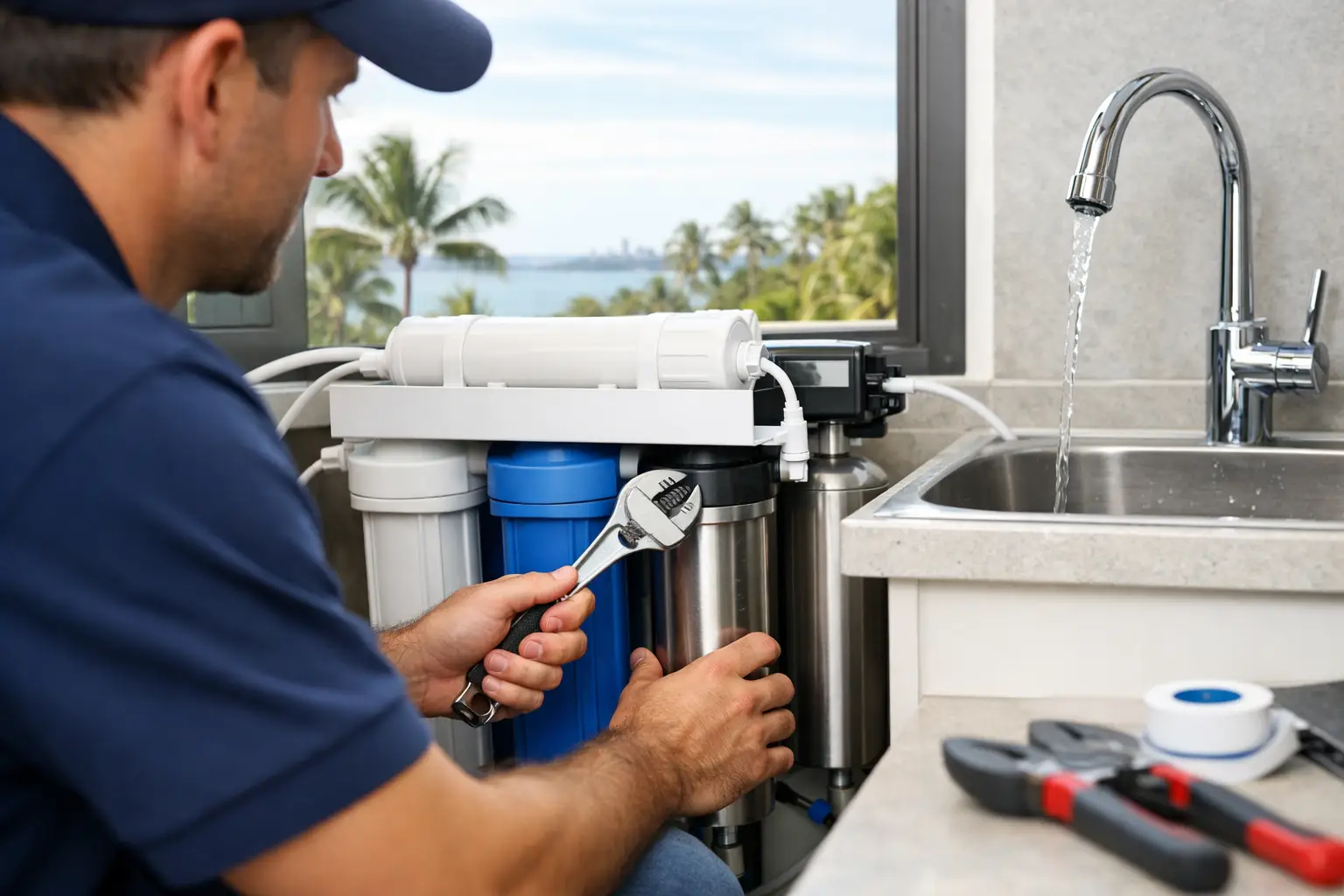
On installation day, the job typically includes isolating the water supply, fitting the unit, connecting the filtration components, testing for leaks and checking flow performance. If the system includes a dedicated filtered water tap, that is installed and tested as well. The final step should always be a proper run-through of the system, including maintenance timing and what signs to watch for if a filter change is due.
A clean, professional installation is not just about neat pipework. It is about making sure the system is accessible, secure and fitted in a way that does not create future problems.
Why professional installation is worth it
There is a reason many homeowners would rather book one qualified team and get it sorted properly. Water filtration systems connect directly into your plumbing, and small mistakes can turn into bigger issues later. A poor connection, the wrong location or a badly matched system can lead to leaks, pressure problems or disappointing performance.
Professional installation also saves time on the parts most people do not want to deal with – compatibility checks, fittings, shut-off points, flush procedures and testing. It is the difference between hoping it works and knowing it has been installed safely and correctly.
This is especially important if you are already coordinating other home upgrades. One dependable provider who understands plumbing and related household systems can make the whole process far easier than juggling separate trades.
The most common mistakes homeowners make
One of the biggest mistakes is choosing a system based only on price. Cheap can look appealing until the replacement filters are costly, the flow rate is poor, or the unit does not solve the actual problem. Value is not just the purchase price. It is how well the system performs and how easy it is to maintain.
Another common issue is underestimating servicing. Every filtration system needs ongoing maintenance. Filters have to be changed at the right intervals or performance drops off. In some cases, old filters can make water quality worse rather than better. A system should fit your routine, not add another annoying task that gets forgotten.
There is also the question of placement. A unit installed in an awkward spot might technically work, but it can become a pain when servicing time comes around. Good installation considers the next twelve months, not just the next twelve minutes.
How to know which setup suits your home
If you are weighing up your options, start with three practical questions. What problem are you trying to fix? Which taps or fixtures do you want filtered? And how much maintenance are you realistically happy to keep up with?
If the answer is better-tasting water at the kitchen sink and nothing more, an under sink unit may be the right fit. If you want a broader solution that supports the whole household, a whole house system is likely the smarter choice. If your water pressure is already low or your plumbing is older, that should be factored in before any recommendation is made.
The size of the household matters too. A system that works for a couple may feel underdone in a busy family home where water use is much higher. This is why fixed advice rarely helps. The right system depends on the property, the people using it and the result you want day to day.
A smoother way to get it done
Most homeowners are not looking for a long technical lesson. They want straight answers, fair pricing and a clear booking process. That is why a service-led approach matters. When the quote is upfront, the installer turns up on time, and the work is completed without fuss, the whole decision becomes much easier.
For local households, that reliability counts just as much as the filter itself. Whether you are upgrading a family home, replacing an older system or fitting out an investment property, the best result is one that feels easy from booking through to final testing. That is the thinking behind how No Hassle Homes approaches water filtration installation – fast, safe and without the usual run-around.
Good water should not be something you have to think about every day. When the right system is chosen and installed properly, you notice it less, not more – and that is usually the sign it was done right.