


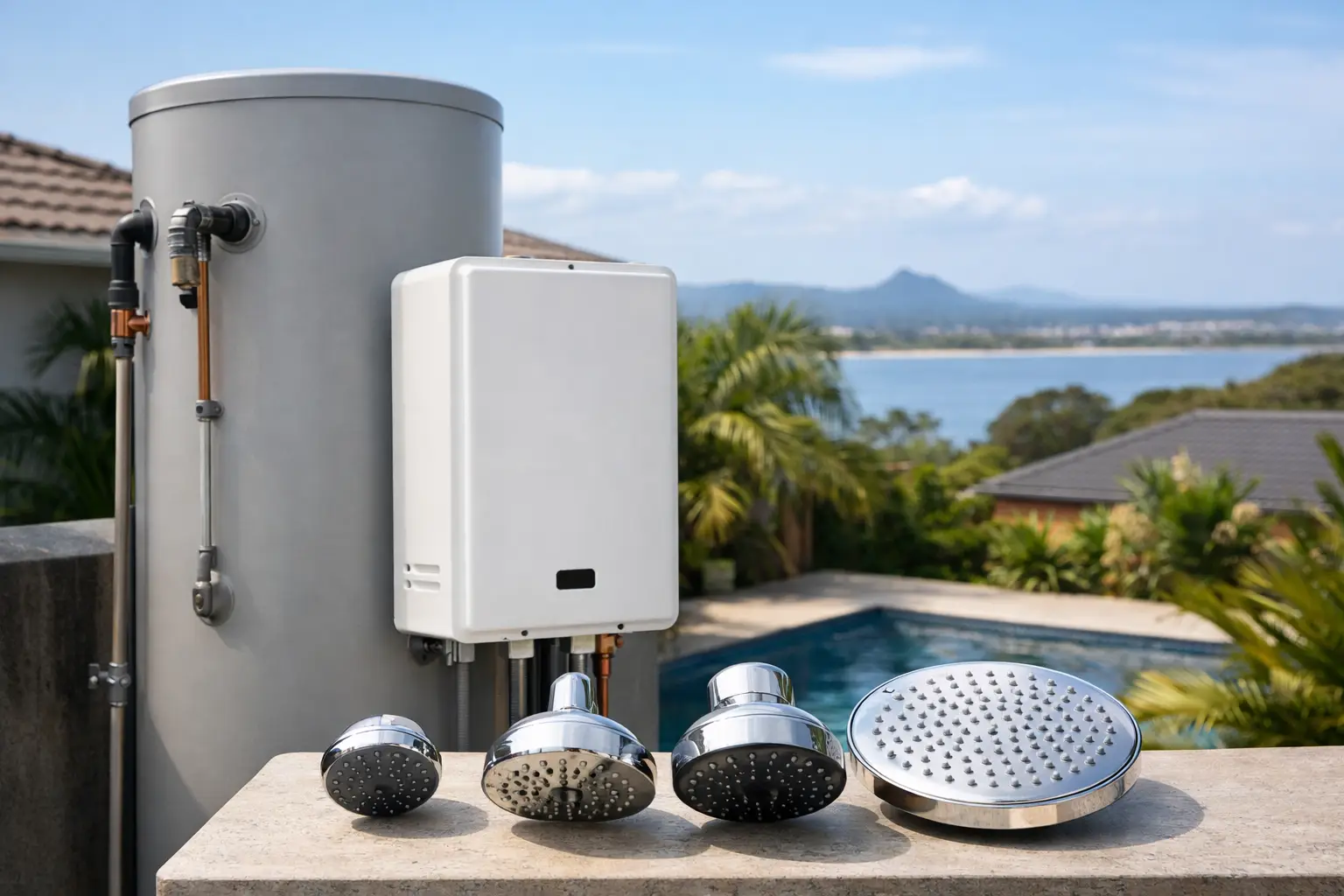
That morning shower goes cold halfway through, and suddenly the question becomes urgent: what size hot water system do you actually need? Go too small and your household runs out of hot water when you need it most. Go too big and you can end up paying more than necessary to buy and run a system that doesn’t suit your home.
The right size depends on more than just how many people live under your roof. Your shower habits, whether you use petrol or electric, how many bathrooms you have, and when your household uses hot water all matter. A couple in a two-bathroom home can easily use more hot water than a family of four with quick showers and efficient appliances.
What size hot water system is right for your home?
For most households, sizing starts with daily usage. As a rough guide, a 1 to 2 person home often suits a 90L to 160L storage system, 2 to 4 people usually need around 160L to 250L, and larger families often need 250L to 400L or more. But those numbers are only a starting point.
If your home has teenagers, a big bath, back-to-back showers in the morning, or a dishwasher and washing machine both pulling hot water, you may need to size up. If you live alone, work long hours, and rarely use more than one hot outlet at a time, you may be fine with less.
That’s why the best answer to what size hot water system works for your household is not just based on headcount. It’s based on how your home actually runs day to day.
The biggest factors that affect hot water system size
How many people use hot water
This is the obvious one, but it still matters. More people generally means more showers, more washing up, and more laundry. A family of five will usually need a larger system than a couple, especially if everyone is home during the same peak periods.
Still, usage patterns can shift the answer. Two adults with long showers and a large spa bath can place more demand on a system than three adults who keep things fairly modest.
Peak usage times
Most homes do not use hot water evenly across the day. There is usually a morning rush, then another burst at night. If several people shower within an hour, your system has to keep up during that peak, not just across the full day.
This is where some undersized systems struggle. On paper, they may have enough total capacity. In real life, they may not recover quickly enough when everyone wants hot water at once.
Storage or continuous flow
A storage hot water system keeps a set amount of hot water ready in a tank. A continuous flow system heats water as you need it. That means sizing works differently.
With storage systems, you’re choosing tank capacity and recovery rate. With continuous flow, you’re looking at flow rate, meaning how much hot water can be delivered at one time. If two showers and a kitchen tap are likely to run together, the unit needs to handle that demand without a drop in performance.
Petrol continuous flow systems can be an excellent option for homes that want reliable hot water without storing a large volume in a tank. They are especially handy where space is tight or usage varies from day to day.
Number of bathrooms and appliances
A one-bathroom home with one or two occupants has very different needs from a larger family home with an ensuite, dishwasher, washing machine and frequent laundry use. More outlets mean more potential for simultaneous demand.
It’s not just about how many fixtures you have. It’s about how often they are used together. That’s where proper sizing saves a lot of frustration.
A practical guide to common household sizes
For a 1 person household, a smaller storage tank or compact continuous flow unit is usually enough. If you live alone and use hot water conservatively, there is no real benefit in paying for a large system.
For 2 people, a mid-sized system often makes sense. If both of you shower at different times and your appliances are water-efficient, you may not need anything oversized. If you both shower one after the other and use hot water in the kitchen at the same time, a little extra capacity helps.
For 3 to 4 people, this is where sizing becomes more important. Many homes in this range do well with a larger storage system or a properly selected continuous flow petrol unit. The wrong size here often shows up in the morning rush.
For 5 or more people, especially in busy family homes, it usually pays to look carefully at recovery rate and simultaneous usage. Bigger households often benefit from systems that can deliver steady hot water across several outlets without compromise.
Storage tank size versus running costs
It can be tempting to go larger just to be safe. Sometimes that works. Sometimes it means spending more upfront and more over time heating water you don’t actually use.
An oversized storage system can lead to higher running costs, especially if hot water demand is fairly modest. On the other hand, a system that is too small can cost you in a different way through inconvenience, poor performance and an earlier replacement if it is constantly pushed too hard.
The sweet spot is matching the system to real household demand. That’s where professional advice makes a difference, because sizing is about balancing comfort, efficiency and budget.
What size hot water system for petrol homes?
If your home already uses petrol, or you’re considering switching, petrol hot water can be a very practical option. Petrol storage and petrol continuous flow systems both offer strong performance, but they suit different households.
A petrol storage system can work well where you want a ready supply of stored hot water and your usage is predictable. A petrol continuous flow system is often ideal if you want hot water on demand and strong efficiency, particularly in homes where usage changes across the week.
For larger households, petrol continuous flow units are often chosen because they can deliver consistent hot water without waiting for a tank to reheat. That said, the unit still needs to be sized properly to match how many taps, showers and appliances may run together.
Signs your current system is the wrong size
If you’re replacing an older unit, your existing system can tell you a lot. If hot water regularly runs out, takes too long to recover, or struggles when more than one outlet is in use, it may be too small.
If your bills seem high and your hot water use is fairly low, the system may be larger than you need or simply inefficient due to age. Older systems can also lose performance over time, so what feels like a sizing problem may partly be a worn-out unit.
This is why replacement is not just about buying the same size again. Your household may have changed, and newer systems often perform differently from older models.
Why professional sizing saves headaches
Hot water sizing is one of those jobs that looks simple until you are living with the wrong choice. A quick online estimate can help, but it won’t always account for your layout, your peak demand, your energy source or how your household actually uses hot water.
A licensed installer can assess the details that matter, including available space, existing plumbing, petrol supply, electrical requirements and your likely usage. That helps avoid the common mistake of choosing based on price alone.
For homeowners across the Gold Coast, Southern Brisbane and Tweed Heads, that local knowledge matters too. The right system for your home should be reliable, efficient and straightforward to live with, not another thing that needs constant workarounds.
The best way to decide
If you are asking what size hot water system you need, start with your busiest hour, not just your household size. Think about how many showers happen back-to-back, whether multiple bathrooms are used at once, and how often your dishwasher or washing machine runs during those same times.
Then consider the type of system that suits your home. Storage systems are familiar and can work very well when sized correctly. Continuous flow systems are a strong option when you want hot water on demand and better flexibility around changing usage.
If you are unsure, it is worth getting advice before you install anything. A good installer will talk you through the trade-offs, recommend a system that fits your home, and give you a clear quote without the run-around.
Hot water should be one of the easiest parts of home life. Get the size right, and it simply works when you need it.