


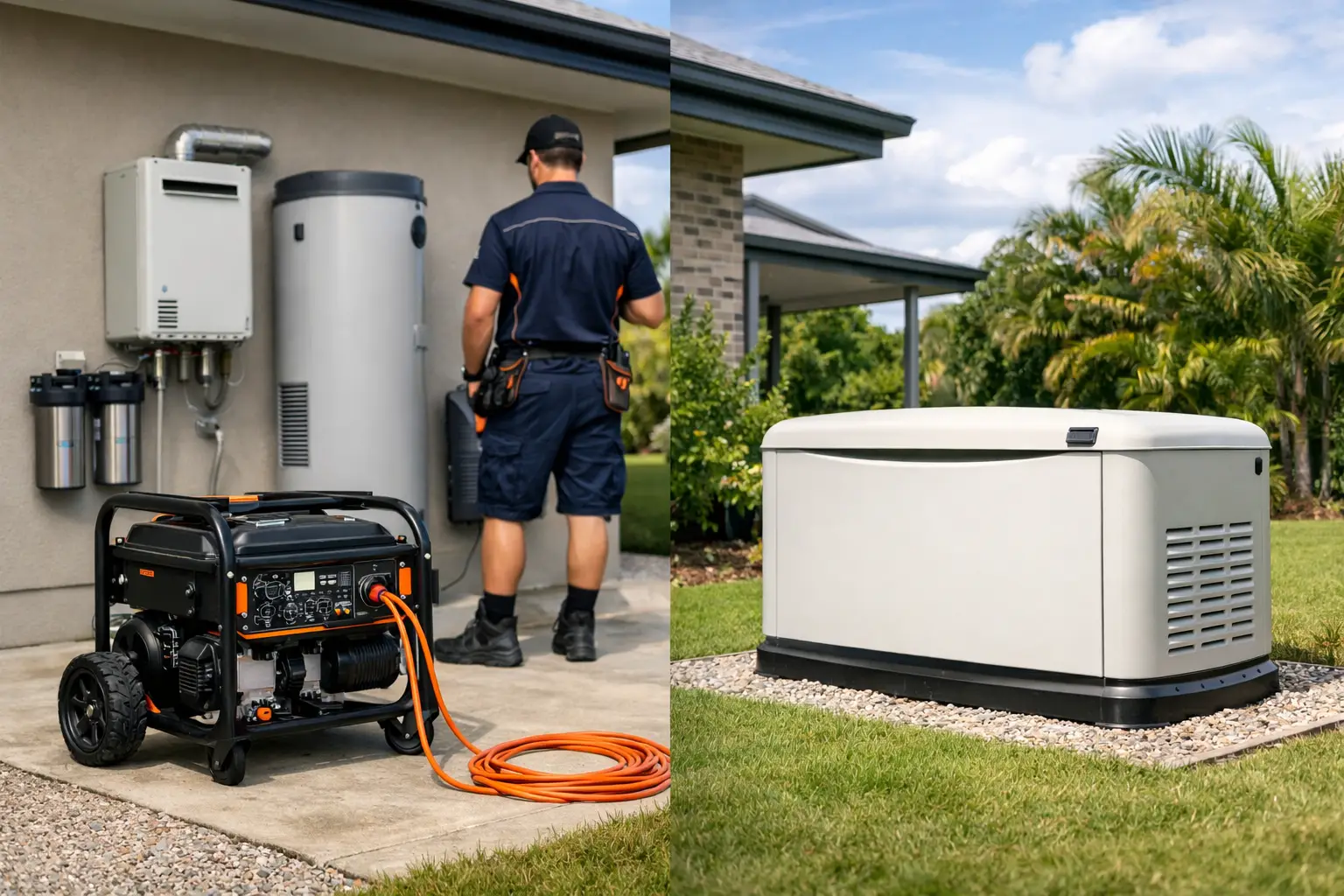
When the power drops out at dinner time and the fridge, lights and Wi-Fi all go with it, the question gets real fast: portable vs standby home generator – which one actually suits your home, budget and the way you live?
For some households, a portable generator is a sensible backup for the basics. For others, a standby system is the only option that feels practical, especially if you work from home, rely on medical equipment, or just want the house to keep running without dragging extension leads through the garage. The right choice depends less on marketing claims and more on what you need powered, how often outages happen, and how much convenience matters to you.
Portable vs standby home generator: the basic difference
A portable generator is a separate unit you move into position when needed. It usually powers selected appliances or circuits rather than the whole home. You start it manually, connect it correctly, and manage refuelling while it runs.
A standby generator is a fixed system installed outside the home and connected into your electrical setup through the proper switchgear. It is designed to start automatically when mains power fails and stop when supply returns. In simple terms, portable is hands-on backup power. Standby is built-in backup power.
That one difference shapes almost everything else – upfront cost, installation, ease of use, safety and long-term value.
Cost matters, but so does what you are paying for
Portable generators are usually the cheaper entry point. If your goal is to keep the fridge cold, charge mobiles, run a few lights and maybe keep a small appliance going, a portable unit can do that without the larger investment of a permanent system.
But the lower purchase price is only one part of the story. You still need a safe way to use it. That may include a compliant connection setup, electrical work, safe outdoor placement and a clear plan for operation during bad weather. If the unit is bought as a quick fix and used with makeshift leads or overloaded circuits, the cheap option can become the risky one.
Standby generators cost more because they are more than just a machine. You are paying for a system – generator, installation, integration with your home, automatic transfer gear, commissioning and ongoing servicing. For households that lose power regularly or cannot afford disruption, that extra spend often buys genuine peace of mind rather than just more kilowatts.
Convenience is where standby systems pull ahead
The biggest advantage of a standby generator is not just power output. It is what you do not have to do.
You do not need to wheel it out, check where to place it, connect cords, start it manually or head outside in wind and rain to refuel or restart. If the power goes off overnight or while you are away from home, the system can respond automatically.
That matters more than many people expect. A backup power solution only helps if it is easy enough to use when you are tired, stressed or not even home. Families with young kids, older homeowners and busy households often lean towards standby systems for exactly that reason. They want the backup there when they need it, without extra steps.
Portable generators still suit plenty of homes, especially if outages are occasional and short. But they ask more of the owner every time there is a blackout.
What do you actually need to run?
This is where plenty of homeowners either overspend or underbuy.
If you only need to protect food in the fridge and freezer, keep a few lights on, charge mobiles and maybe run the internet, a portable generator may be enough. If you want the air conditioning, hot water controls, kitchen appliances, security systems, pool equipment and more to keep working as normal, you are moving into standby territory.
The smart approach is to work backwards from your real needs. Think about what has to stay on, what is nice to have, and what can wait until mains power returns. A lot of people say they want backup for the whole house, but once they price that option, they realise they really want backup for essential circuits only. Others start small and then realise the inconvenience of choosing between appliances every time the power fails.
A proper load assessment makes the decision much clearer. That is especially true if your home already has major electrical demand from ducted air, pumps, induction cooking or EV charging.
Safety is not the place to cut corners
Any generator needs to be installed and used correctly. That is not sales talk. It is basic home safety.
Portable generators can be perfectly suitable when they are used properly, but they do create more room for human error. Incorrect placement, weather exposure, overloaded leads, poor ventilation and dodgy connection methods are all avoidable problems – if the setup is planned properly from the start.
Standby generators reduce some of that risk because they are permanently installed, professionally connected and designed to operate as part of the home’s electrical system. They are not a DIY weekend job. They need the right location, correct clearances, compliant electrical work and proper commissioning.
If your home uses gas appliances or you are considering a gas-powered backup solution, it also makes sense to work with a provider that understands both the generator side and the wider home services picture. That can save time and confusion when the job involves electrical, gas and installation requirements together.
Maintenance is different for each option
Portable generators are often treated like something you buy once and forget. That is fine until the next outage arrives and the unit will not start, has stale fuel issues, or has not been tested in months.
A portable unit needs regular checks, proper storage and a simple routine so it is ready when required. If you are organised, that is manageable. If you know you are likely to leave it in the shed untouched for two years, be honest about that before buying.
Standby systems also need servicing, but the approach is more structured. Because they are fixed assets protecting the home, they are usually maintained on a scheduled basis. That tends to suit homeowners who would rather have the system looked after properly than remember to do it themselves.
Noise, space and street appeal
Portable generators are generally more visible when in use. You bring them out, position them, and work around cords and access. Depending on the model, they can also be fairly noisy, which may be fine during an emergency but less appealing if outages are frequent.
Standby generators live in a fixed outdoor position and are chosen with installation space, ventilation and access in mind. They are still noticeable pieces of equipment, but they are usually easier to accommodate neatly because they are planned into the property rather than improvised each time.
This can matter on smaller suburban blocks where space is already tight.
Portable vs standby home generator for Gold Coast area homes
For homes across the Gold Coast, Southern Brisbane and nearby Tweed areas, the right generator choice often comes down to storm season realities and lifestyle. If outages are rare in your pocket and you just want a backup option for the basics, portable can be the practical answer.
If your area sees repeated weather-related interruptions, or your household depends on reliable power for work, comfort or essential equipment, standby starts to make more sense. It is also worth considering how your property is set up. Larger homes with more electrical demand usually get more value from an integrated solution than from a portable unit trying to cover too much.
So which one is better?
Neither is automatically better. Better for your home is the real question.
A portable generator is often the better fit if you want a lower upfront cost, only need selected essentials powered, and are comfortable setting it up manually when the power goes out. It suits homeowners who want a practical backup without turning the house into a major installation project.
A standby generator is usually the better fit if you want automatic operation, stronger whole-of-home support or essential circuit backup, and less hassle during outages. It suits homeowners who value convenience, safety and continuity enough to invest in a permanent system.
If you are still weighing it up, the best next step is not guessing from online specs. It is working out what your home actually needs, what level of disruption you are willing to tolerate, and whether you want backup power that you manage yourself or backup power that simply gets on with the job.
The right generator should make life easier when things go wrong – not give you another problem to manage in the dark.