


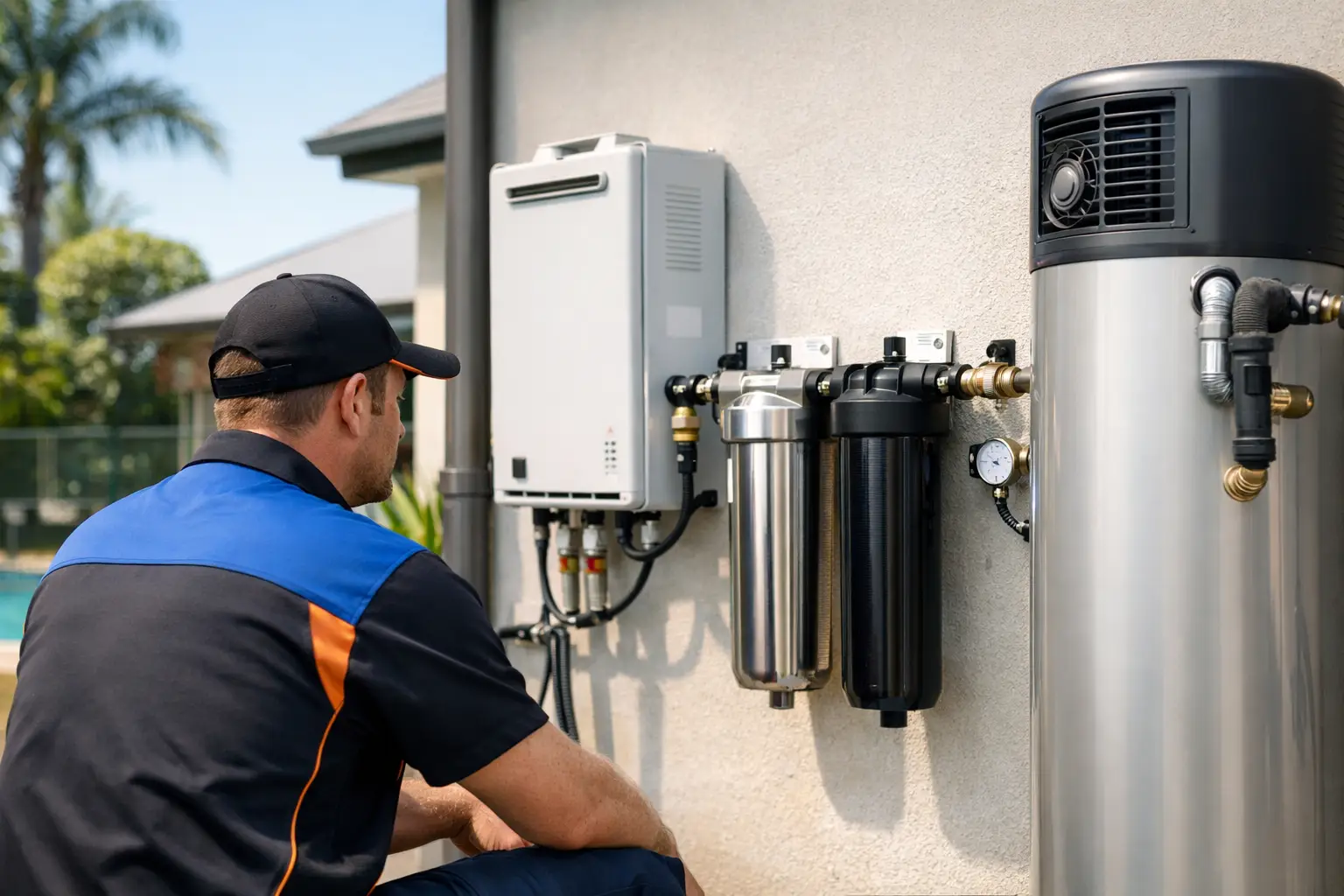
If you have ever noticed cloudy tap water, a chlorine smell in the shower, or scale building up on taps and appliances, you have probably asked yourself: do whole house filters work? The short answer is yes, they can work very well – but only when the system matches the water problem you actually have.
That is where plenty of homeowners get stuck. A whole house filter is not one single product with one fixed result. It is a category of systems designed to treat water as it enters your home, before it reaches your kitchen, bathrooms, laundry, hot water system, and appliances. Whether it is worth it comes down to what is in your water, what you want removed, and how the system is installed and maintained.
Do whole house filters work for every home?
Not in the exact same way, and not for every issue.
A whole house filtration system is designed to improve water quality across the entire property. That means every shower, every tap, every toilet, and every appliance using mains water gets the benefit. If your main concern is chlorine smell, sediment, rust, or general water quality throughout the house, that broad coverage can make a real difference.
But if your concern is something very specific, like drinking water taste at the kitchen sink only, a smaller point-of-use filter might be enough. On the other hand, if your home has hard water, heavy sediment, or ageing pipework, a properly selected whole house system can help protect plumbing fixtures and reduce wear on things like hot water systems, dishwashers, and washing machines.
So yes, whole house filters do work. The better question is what do you need them to do?
What a whole house filter can actually remove
This is where expectations need to be realistic. Different media and system designs remove different contaminants.
A standard whole house filter can often reduce sediment, dirt, rust particles, and chlorine. In many homes, that means cleaner-smelling water, less grit in taps, and a better shower experience. Some systems are also set up to reduce certain chemicals or improve taste and odour.
Other issues need different treatment. Hard water minerals usually require a water softening solution rather than a basic cartridge filter. Bacteria concerns may need UV treatment or another targeted system. If the water has unusual contamination, a general filter alone may not be enough.
This is why one homeowner might rave about their system, while another says it did not change much. If the system was built for sediment and chlorine, it will not magically fix hard water spotting or every possible water quality issue.
Why some people swear by them and others do not
A lot of the mixed opinions come down to mismatch.
If someone installs an entry-level filter hoping it will solve every water complaint in the house, they may be disappointed. If another homeowner installs a system specifically chosen for their water supply and household needs, they are more likely to notice the benefit straight away.
Installation also matters. A quality filter installed badly can lead to pressure issues, leaks, awkward maintenance access, or poor performance. A properly installed system should be sized for your home’s flow rate, placed correctly on the incoming water line, and set up so servicing is straightforward.
Maintenance matters too. Filters are not set-and-forget forever. Cartridges and media need replacement at the right intervals, or the system can lose effectiveness. In some cases, neglected filters can reduce pressure and become more trouble than they are worth.
The real benefits of a whole house system
For many households, the biggest benefit is consistency. Instead of filtering one tap only, you improve water quality across the home.
That can mean nicer showers, less chlorine smell in bathroom water, and less sediment reaching appliances and fixtures. If you have ever cleaned out aerators full of grit or dealt with staining and build-up, reducing particles before they spread through the plumbing can help.
There is also a practical value many people overlook. Appliances and water-using systems tend to perform better when they are not constantly dealing with sediment or other unwanted material. That does not mean a filter replaces servicing, but it can reduce the strain on your home infrastructure.
For families, there is a convenience factor as well. You are not relying on individual jugs, bench-top units, or separate filters at every tap. The treatment happens at the entry point, which keeps things simple.
Where whole house filters have limits
A good installer should be upfront about this. Whole house filters are useful, but they are not a cure-all.
They will not fix damaged internal plumbing. They will not automatically make every water source identical in quality. They will not remove everything unless the system has been specifically designed to do so. And they do not eliminate the need for regular servicing.
There can also be an upfront cost. Between equipment, installation, and future maintenance, a whole house system is more of an investment than a small under-sink unit. For some homes, that cost is easy to justify because the issue affects the entire property. For others, a smaller targeted solution may be better value.
Water pressure is another point worth mentioning. A properly sized and installed system should maintain suitable flow, but poor product choice or overdue filter changes can affect performance. That is one reason professional advice matters.
How to know if a whole house filter is worth it
The best place to start is with the symptoms you are already seeing.
If multiple taps have a chlorine smell, if showers leave your skin feeling dry, if sediment shows up regularly, or if appliances and fixtures are getting more build-up than they should, a whole house filter may be worth serious consideration. These are house-wide problems, so a house-wide solution makes sense.
If the issue is only drinking water taste at the kitchen sink, the answer may be different. In that case, a point-of-use system could solve the problem at a lower cost.
It also depends on how long you plan to stay in the home. If this is your long-term place, investing in better water quality and extra protection for your plumbing can be worthwhile. If you are making a short-term fix, you may prefer a simpler setup.
Do whole house filters work in Australian homes?
They can, especially when chosen for local water conditions and household demand.
In many Australian homes, mains water is treated and generally safe, but that does not mean it is free from chlorine taste, odour, sediment, or mineral-related issues. Local infrastructure, pipe condition, and the age of the property can all influence what comes out of the tap by the time it reaches your home.
That is why local knowledge helps. A system that works well in one suburb or one property type may not be the ideal fit elsewhere. Homes with larger families, multiple bathrooms, or high water usage need a system that can keep up without affecting flow.
For homeowners on the Gold Coast and nearby areas, it often makes sense to speak with a licensed installer who understands both the water side and the plumbing side. That way, you are not just buying a filter box – you are getting a system that is suitable for your home and installed properly.
What to ask before you install one
Before going ahead, ask what problem the system is meant to solve, what it removes, how often it needs servicing, and whether it is sized correctly for your property. Those questions matter more than flashy claims on packaging.
You should also ask about access for maintenance and any effect on flow rate. A filter that is hard to service or poorly matched to household demand can become frustrating quickly.
Most importantly, ask for plain-English advice. You should be able to understand what you are paying for and what result to expect.
The honest answer
Do whole house filters work? Yes – when they are selected for the right reason, installed properly, and maintained as they should be. They are especially useful when the water issue affects the whole home, not just one tap.
If you are weighing up whether one is worth it, think less about marketing promises and more about your day-to-day experience with the water in your home. If the problem shows up in the shower, the laundry, the kitchen, and the hot water system, a whole house solution is often the practical one. And if you are not sure what type of system makes sense, getting straightforward advice from a local professional can save you money and hassle later.