


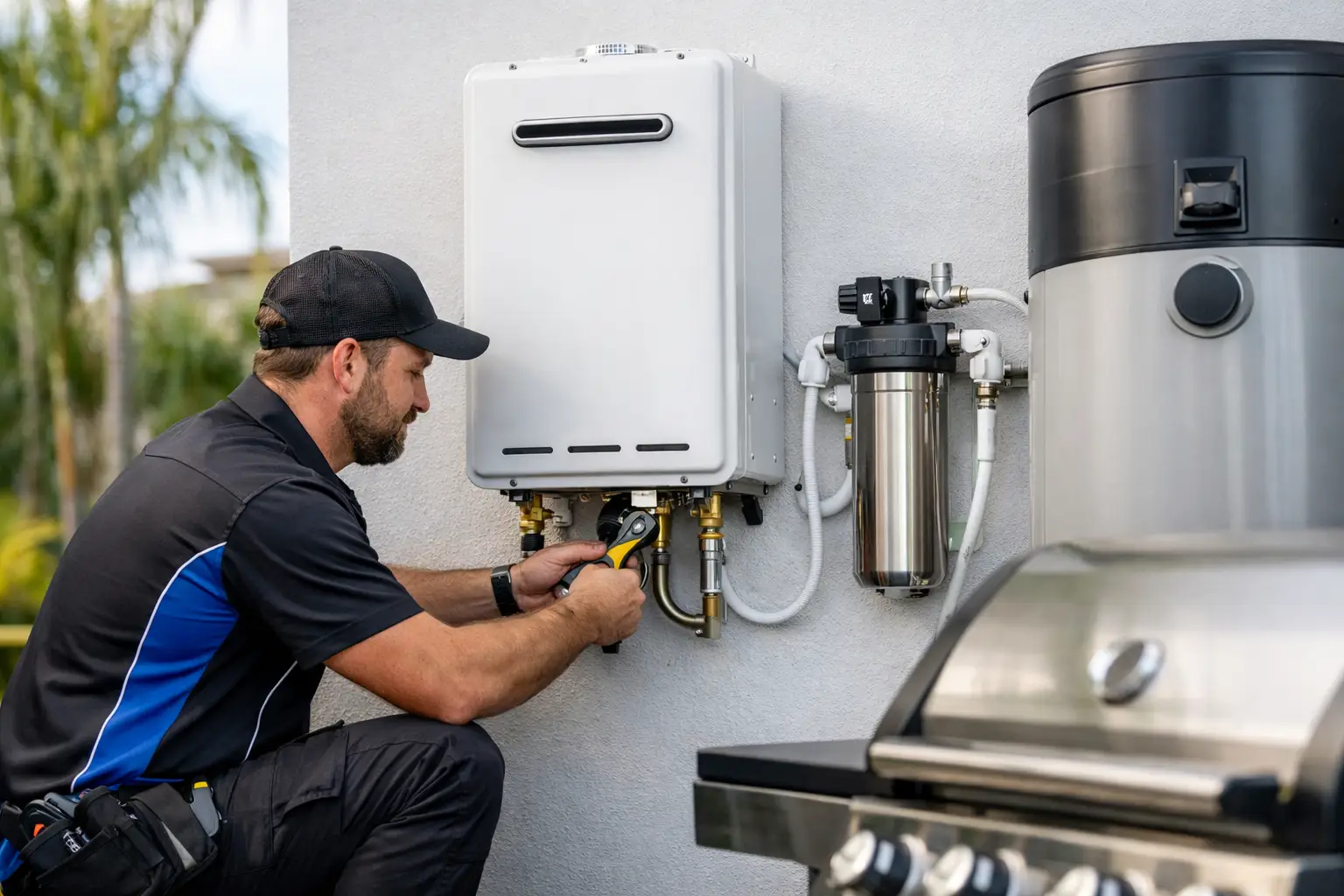
A hot shower that suddenly runs cold, a cooktop that will not light, or the smell of gas near an appliance can turn an ordinary day into a problem that needs proper attention. Licensed gas fitting services give homeowners a safe, practical way to install, repair and maintain LPG equipment without guessing, cutting corners or waiting around for multiple trades.
For homes across the Gold Coast, Southern Brisbane and Tweed Heads, LPG often keeps the essentials running: hot water, cooking and gas fires. When something is not right, the goal is not just to get the appliance working again. It is to make sure the gas supply, connections and appliance are safe, compliant and suited to how your household uses them.
What licensed gas fitting services cover
A licensed gas fitter is qualified to work on gas systems and appliances. That includes the work between your LPG bottles and the appliances they serve, as well as installing or repairing approved equipment. The exact scope depends on the licence held and the requirements in your state, but professional gas fitting commonly covers gas bottle connections, regulators, pipework, bayonet points, cooktops, hot water systems and gas fires.
This matters because gas work is more than connecting a hose or replacing a part. Pipe sizing, ventilation, clearances, appliance type, gas pressure and leak testing all affect the finished job. A setup can look fine from the outside while still having a fault that needs attention.
For a new installation, a qualified fitter assesses the location first. They can confirm whether the appliance is appropriate for the space, whether the existing gas supply can support it and what changes are needed before installation. Once the work is complete, they test the system and provide the required compliance documentation where applicable.
That process protects you if you sell your home, make an insurance claim or need future repairs. More importantly, it gives you confidence that the job has been completed properly from the start.
When to call a licensed gas fitter
Not every appliance issue means there is a gas fault. A cooktop may have a flat battery in its ignition, for example, and hot water problems can sometimes be related to water flow rather than gas supply. But some signs should never be ignored or handled as a DIY job.
Call for help if you notice a gas smell, hissing near a connection, yellow or uneven flames, soot around an appliance, repeated pilot light failures or an appliance that has stopped working after a gas bottle change. You should also arrange an inspection when moving into a home with unfamiliar LPG equipment, replacing an old appliance or adding a new gas outlet.
If you smell gas, turn off the appliance if it is safe to do so, avoid flames and sparks, keep people away from the area and contact a qualified professional. Do not try to locate a leak with a naked flame or attempt a repair yourself.
Gas bottles are another common source of confusion. A delivery can restore your supply quickly, but it does not fix damaged hoses, worn regulators or appliance faults. A gas fitter who delivers LPG can spot an issue on site and, where appropriate, carry out repairs without leaving you with a separate job to organise. That can make a real difference when hot water or cooking is off the agenda until the problem is fixed.
Installation is where the details matter most
Installing a new cooktop or hot water system can feel straightforward when an old unit is already in place. In reality, changing appliances can introduce new requirements. The replacement may have a different gas consumption rating, need different clearances or require adjustments to pipework and connections.
Gas cooktops
A gas cooktop needs more than a bench cut-out and a nearby gas point. The fitter needs to check the appliance is approved for LPG, that there is suitable ventilation and that the connection, isolation valve and surrounding clearances meet the relevant requirements. They will also test the burners after installation so the flame is stable and correctly adjusted.
This is especially useful during a kitchen refresh. Organising cabinetry, benchtops, electrical work and appliances is already enough to manage. Booking the gas installation with a dependable local team reduces one more point of uncertainty.
LPG hot water systems
Hot water is usually the appliance homeowners notice first when it fails. An experienced gas fitter can help determine whether a repair is sensible or whether replacement is the better value option. The answer depends on the unit’s age, condition, parts availability, household size and the cost of ongoing repairs.
A replacement system should be matched to how your household actually uses hot water. A smaller household may not need the same capacity as a family with several morning showers, while a high-demand household may benefit from a system designed to keep up at busy times. Correct installation also involves water connections and drainage considerations, so it pays to use a provider that understands both gas and home plumbing requirements.
Gas fires and outdoor appliances
Gas fires and outdoor cooking appliances add comfort and convenience, but they still need the correct supply, connection and clearances. Before adding a bayonet point or connecting an appliance, a licensed fitter can confirm whether the existing system has enough capacity and whether the proposed location is suitable.
Why DIY gas work is not worth the risk
Homeowners are rightly comfortable changing a light globe, cleaning a filter or checking an appliance manual. Gas fitting is different. Even a small error can create a leak, damage an appliance or leave a system non-compliant.
DIY work can also make later repairs more difficult. A technician may need to trace undocumented alterations before they can safely work on the system. What looked like a quick saving can become a longer, more expensive call-out.
Using a licensed professional means the job is checked, tested and documented. It also means you have someone to call if an issue is found, rather than trying to work out whether the problem sits with the appliance, the bottle, the regulator or the pipework.
Choosing a gas fitter without the run-around
The best choice is not always the cheapest quote on the first call. Price matters, but so do the details behind it. Ask whether the quote includes labour, materials, testing and compliance paperwork, and whether there could be extra charges if the existing setup needs repairs.
A clear provider will explain what they have found in plain language and give you options where there is a genuine choice. For example, a regulator replacement may be all that is needed, while an older hot water unit with several faults may be better replaced than repeatedly repaired. There is no one answer for every home.
It also helps to choose a team that can support the whole job. No Hassle Homes combines LPG delivery with licensed gas fitting and related home services, so homeowners do not need to coordinate separate suppliers when a bottle change reveals a regulator issue or an appliance needs attention. With 24/7 phone access, online ordering and delivery days you can choose, help is easier to organise around a busy household.
Before booking, look for these practical signs of a service you can rely on:
- Clear, fixed-price quoting before work begins, with any potential extras explained upfront.
- Licensed, qualified technicians who test their work and provide required documentation.
- A realistic appointment time and straightforward communication if the job needs more investigation.
- The ability to assist with LPG supply, hot water, cooktops and gas fires rather than passing you between providers.
Keep your LPG system working reliably
Most gas issues do not need to become an emergency. Keeping bottles accessible, watching for changes in appliance performance and arranging repairs early can prevent inconvenient downtime. It is also worth planning ahead when an appliance is ageing, particularly before winter or before hosting family and friends.
If your bottles run empty, choose a supplier that makes delivery simple and does not add rental fees to the gas you are buying. But if an appliance is performing poorly or a connection does not look right, treat that as a fitting issue rather than a delivery issue.
A safe, well-installed LPG system should fade into the background of home life: hot water when you need it, reliable cooking when the family is hungry and no uncertainty about who to call when something changes. When it does need attention, a licensed gas fitter is the sensible first call.