


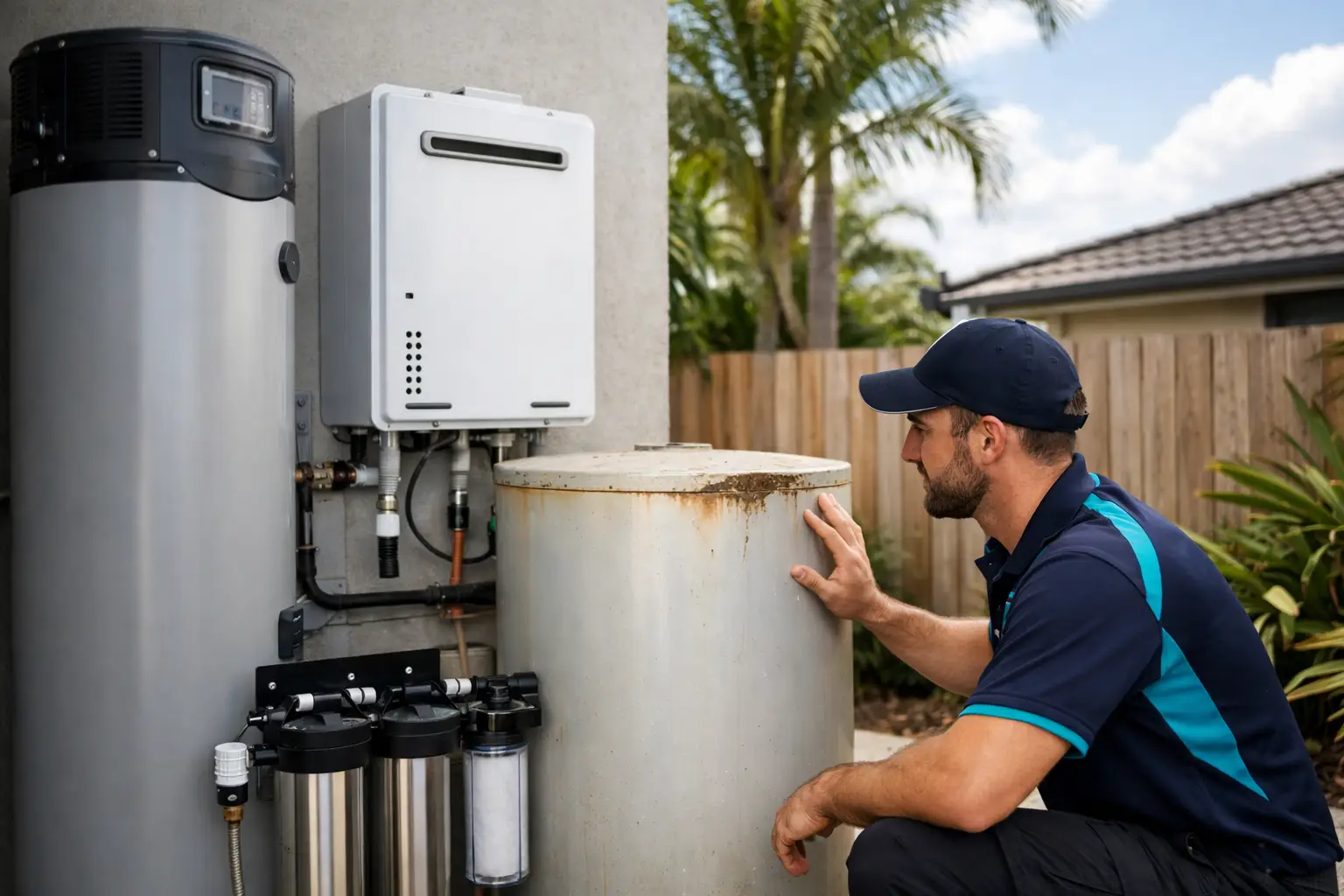
A hot shower that suddenly turns lukewarm is more than an inconvenience when everyone is trying to get ready for work or school. If you are starting to wonder whether to replace an old hot water unit, acting before it fails can save you from cold showers, water damage and an urgent scramble to find a qualified installer.
For homes across the Gold Coast, Southern Brisbane and Tweed area, hot water systems work hard year-round. Age, household demand, local water conditions and the type of system all affect how long yours will last. The right replacement is not always the biggest unit or the cheapest upfront option. It is the system that safely suits your household, energy source and daily routine.
Signs It Is Time to Replace an Old Hot Water Unit
Most hot water units give some warning before they stop working altogether. A system that is nearing the end of its life may still produce hot water, but it can become less efficient and more likely to leak or fail without much notice.
Look out for these common signs:
- Hot water runs out faster than it used to, even when household habits have not changed.
- Water around the base of the tank, corrosion on fittings or rust-coloured water appears at taps.
- The unit makes rumbling, popping or banging noises as it heats.
- Temperatures are inconsistent, or the water takes far too long to heat.
- Repairs are becoming regular, costly or only providing a short-term fix.
A storage hot water unit commonly lasts around 8 to 12 years, although this can vary considerably with maintenance, water quality and usage. An instantaneous system can last longer, but its components still need attention over time. If your unit is approaching this age range and has started showing symptoms, replacement is usually worth discussing before a complete breakdown forces the decision.
A leak should never be ignored. Sometimes it comes from a valve or connection that can be repaired. But a leak from the tank itself usually means the tank has deteriorated and needs replacing. Catching this early can help avoid damage to flooring, cupboards, walls or nearby belongings.
Choose the Right Replacement for Your Home
Before selecting a new system, think about how your household actually uses hot water. A couple with one bathroom has very different needs from a family with teenagers, multiple bathrooms and back-to-back showers in the morning.
The main choices are storage systems and continuous-flow, or instantaneous, systems. A storage unit heats and holds a set amount of water ready for use. It can be a sensible option where several people need hot water at similar times. The trade-off is that once the stored supply is used, you may need to wait for the unit to recover.
A continuous-flow gas system heats water as it passes through the unit. It does not store a tank of hot water, so it can provide a long supply when correctly sized. This can work particularly well for busy households, although output depends on the system capacity and how many taps or showers are running at once. A properly sized unit matters more than simply choosing the highest-rated model.
Electric storage units remain a practical choice for some properties, especially where an existing electric setup is already in place. Heat pump systems can reduce running costs in suitable circumstances, but they need the right location and can have a higher purchase price. Solar hot water may also suit certain homes, depending on roof space, budget and energy use.
If your property uses LPG gas, a gas hot water replacement may offer fast recovery or continuous hot water without relying solely on stored electric heating. Your installer can check whether the existing gas supply, pipework, water pressure and ventilation arrangements are appropriate for the new unit.
Capacity Is About More Than the Number of Bedrooms
Choosing capacity by bedroom count alone can lead to frustration. What matters is the number of people in the home, how many bathrooms are used at the same time, and whether you use water-hungry appliances such as a large spa bath.
For example, a household of four may manage well with a moderate storage system if showers are spaced out. The same household could need a larger unit or higher-flow continuous system if two showers run at once while someone uses hot water in the kitchen. Visitors, growing families and work-from-home routines can also change demand.
It helps to tell your installer about peak use, not just average use. Morning showers, evening bath time and weekend laundry are the moments that reveal whether a hot water system is truly keeping up.
Do Not Assume Your Current Size Is Correct
Replacing like-for-like is sometimes the easiest option, but it is not automatically the best one. Your old unit may have been undersized from the start, or it may be much larger than your household now needs. A good assessment considers where the unit sits, available services, drainage, access for installation and the hot water requirements of the people living in the home now.
This is also the time to consider future plans. If you are adding a bathroom, installing a larger shower, converting a garage or preparing a property for tenants, choosing a system with suitable capacity now can prevent another replacement conversation too soon.
Why Professional Installation Matters
Hot water replacement involves more than lifting out an old tank and connecting a new one. Depending on the system, the work may involve water pipework, gas connections, electrical connections, safety valves, tempering valves, drainage and correct placement. Gas work and electrical work must be completed by appropriately licensed professionals.
A safe installation protects your household and helps your new system perform as intended. It also reduces the risk of poor water temperature control, inadequate gas supply, leaks or a unit that cannot meet demand. For gas systems, correct commissioning and testing are essential.
There can be practical surprises once the old unit is removed. Corroded pipework, outdated valves or non-compliant clearances may need attention before the replacement can be completed properly. This is not a reason to put the job off. It is a reason to choose a provider that explains the work clearly and gives you straightforward options rather than rushing through a poor-quality fix.
Plan the Change Before Your System Fails
Waiting until there is no hot water can limit your choices. You may need to accept whatever unit is available immediately, rather than selecting the system that best suits your budget and household. Planning ahead gives you time to compare running costs, consider fuel type and organise installation at a convenient time.
Start by checking the compliance plate on your existing unit. Note the brand, model, capacity, energy source and installation date if shown. Take a quick look for leaks or corrosion, and think about whether the system has struggled at peak times. These details make it easier for a qualified technician to recommend a suitable replacement.
Ask for a clear, fixed quote that identifies the unit, installation work and any likely additional requirements. Price matters, but so does knowing what is included. A lower initial figure can become less attractive if it does not cover essential valves, removal of the old unit, required upgrades or correct commissioning.
No Hassle Homes can help homeowners organise hot water replacement with licensed installation, clear communication and the convenience of dealing with one local home services team. If your unit is leaking, unreliable or simply getting old, arranging an assessment now can keep hot water available when your household needs it most.
A planned replacement is one of those household jobs that rarely feels urgent until it is. Taking a few minutes to check your unit’s age and performance today can spare your family a cold, stressful morning later.