


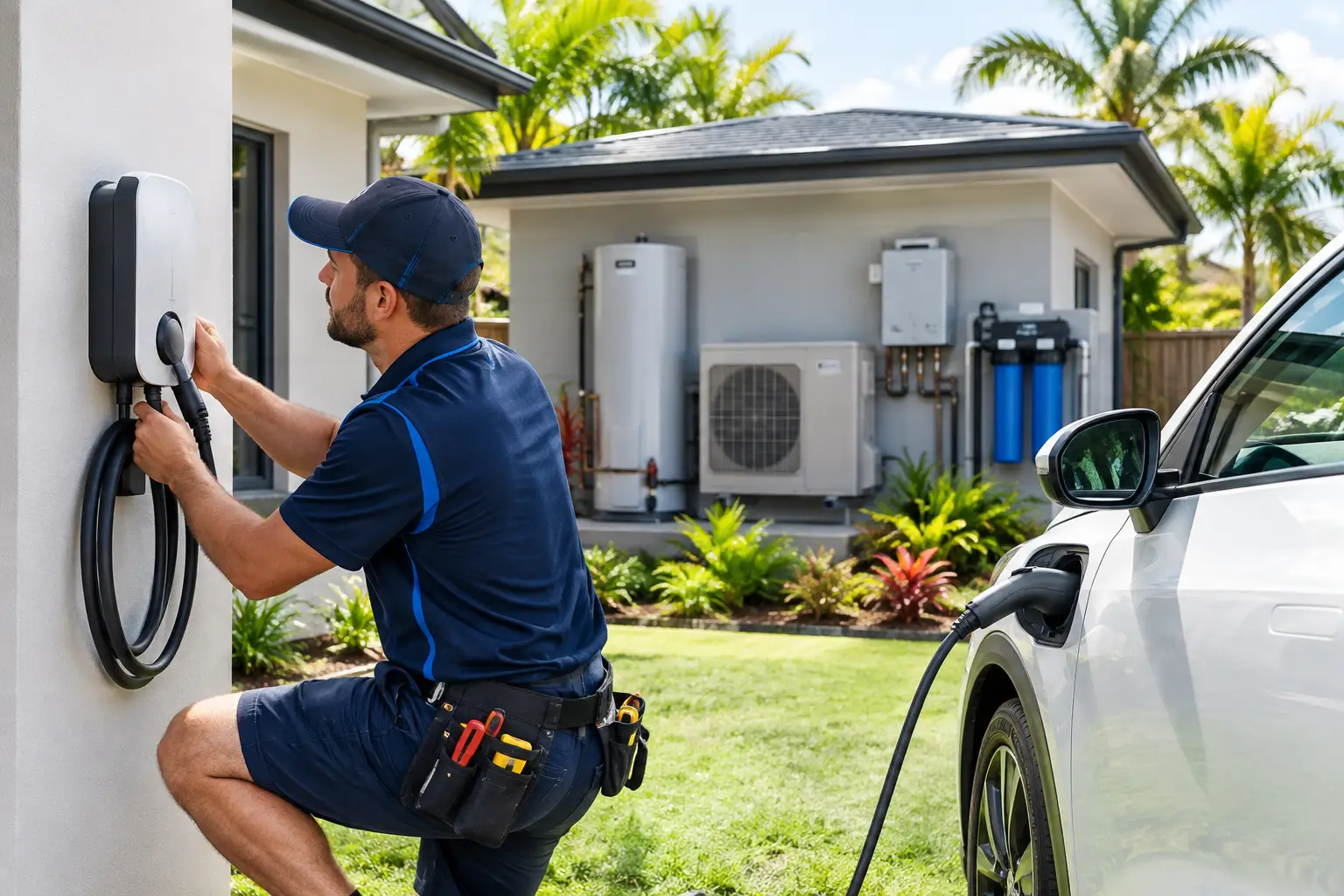
Your driveway is usually the most convenient place to charge an electric vehicle, but installing an outdoor EV charger is not as simple as mounting a unit beside the garage. The right location, a properly assessed electrical supply and a licensed installation all make a real difference to daily charging, safety and the long-term value of the job.
For Gold Coast, Southern Brisbane and Tweed Heads homeowners, weather also deserves proper attention. Heat, heavy rain, coastal air and occasional storm conditions mean outdoor equipment needs to be selected and installed for the conditions it will actually face.
Where should an outdoor EV charger go?
The best spot is the one that makes charging easy without creating hazards. In many homes, that is inside the garage or carport. When that is not possible, an external garage wall, driveway-side wall or purpose-built post can work well.
Think about where the charging port sits on your vehicle and where it is likely to be parked most nights. The charging cable should reach comfortably, without being stretched across a walkway, hanging into a garden bed or becoming a trip hazard. A short, tidy cable run is also generally easier to protect and manage.
Your installer will look at the distance from the switchboard, access for cabling and whether the mounting surface is sound. Brick, masonry and suitable structural posts are usually straightforward. Lightweight cladding, old timber or a shared boundary wall may need a different approach.
A practical location also leaves enough room to open car doors, unload shopping and move around the vehicle. It is easy to focus on where the charger fits on the wall, then realise the cable lands exactly where the family walks to the front door.
Keep it clear of damage and water build-up
An outdoor charger should be positioned away from areas where it can be knocked by a car, trailer, bins or lawn equipment. If it must sit near a parking bay, protective bollards or wheel stops may be worth considering.
Avoid low points where stormwater collects. The charger itself may be rated for outdoor use, but standing water, mud and repeated splashing are not conditions to invite. It is also sensible to keep the unit away from irrigation sprinklers and places where a hose is regularly used.
Covered is often preferable, but a cover is not a substitute for choosing the right equipment. A carport or eave can reduce sun exposure and make plugging in more pleasant during wet weather. The charger still needs an appropriate weatherproof rating for its installed position.
Installing an outdoor EV charger safely in Australian conditions
Outdoor charging equipment must be suitable for outdoor use and installed in line with applicable Australian electrical requirements. That includes using equipment with an appropriate IP rating, which indicates its resistance to dust and water ingress.
The exact rating needed depends on exposure. A charger tucked under a deep carport has different demands from one mounted on an open driveway wall that receives wind-driven rain. Near the coast, the installer should also consider corrosion resistance for fixings, enclosures and cable protection.
The electrical connection matters just as much as the box on the wall. A dedicated circuit, correctly sized cabling, suitable circuit protection and safe isolation are part of a professional installation. A licensed electrician will assess these details rather than simply connecting a charger to the nearest available power point.
Using an ordinary household socket as a permanent charging solution can be tempting, particularly when you first bring an EV home. It may suit occasional or temporary charging where the manufacturer allows it, but it is not the same as a dedicated charger designed for regular use. Repeated high electrical load can expose weaknesses in old outlets or wiring.
Can your switchboard handle an EV charger?
This is one of the first questions worth answering. An EV charger adds a significant electrical load to a home, particularly if you want faster charging or already run ducted air conditioning, an electric hot water system, pool equipment, induction cooking or a home battery.
A licensed electrician should complete a load assessment before recommending charger size. Some homes can support a charger with minimal changes. Others may need switchboard work, a supply upgrade or a charger with load management.
Load management is useful because it allows the charger to reduce or pause its draw when the home is using a lot of power. For example, it can avoid placing unnecessary pressure on the supply while the oven, air conditioner and pool pump are all running. When household demand falls, charging can increase again.
Single-phase or three-phase charging
Many homes have single-phase power, while some newer or larger properties have three-phase supply. Both can charge an EV effectively, but the available charging speed and suitable charger options can differ.
Three-phase charging can offer faster home charging for compatible vehicles and properties, but faster is not automatically better. If the vehicle is parked overnight, a lower charging rate may still fully cover everyday driving needs. The best choice depends on your vehicle, electricity supply, driving routine and budget.
It also pays to plan ahead. If you expect to change vehicles, install solar, add a battery or renovate the home in the next few years, mention it during the quote. Allowing for future capacity while cabling is accessible can save disruption later.
Choosing the right charger features
A good charger should suit your car and how your household uses energy. Some owners want the simple certainty of plug in, charge overnight and leave in the morning. Others want app controls, scheduled charging or solar-aware functions.
Scheduled charging can be particularly useful if your electricity plan offers lower off-peak rates. Solar integration may help you use more of the energy generated at home, although the result depends on daylight parking, household consumption and the charger’s settings. If your car is away during the day, overnight charging may still be the more practical routine.
Built-in cable storage is worth considering for outdoor locations. It keeps the lead off the ground, reduces clutter and helps prevent damage. Choose a cable length that reaches the vehicle without excess cable trailing across the driveway.
Smart features are helpful when they solve a real problem, not just because they sound impressive. A dependable charger that is easy to use, correctly installed and matched to your electrical supply is usually a better outcome than paying for functions your household will never use.
What happens during the installation?
A straightforward outdoor EV charger installation begins with a site assessment and a clear fixed quote. The electrician checks the switchboard, supply capacity, proposed charger location, cable route and any obstacles before confirming the scope of work.
On installation day, the charger is securely mounted and connected on its own protected circuit. Cables are routed and protected appropriately, whether they run through the roof space, along a wall or underground to a freestanding post. The electrician then tests the installation and confirms the charger is operating as it should.
You should also receive a simple handover. This includes how to start and stop charging, how to use any app or scheduling settings, what the indicator lights mean and what to do if the charger trips or shows a fault. Keep the charger instructions and electrical paperwork somewhere accessible with your other home records.
For homeowners who prefer one dependable team for electrical work and other essential home services, No Hassle Homes can supply and install an EV charger with licensed local support and a clear booking process.
Common mistakes to avoid
The biggest mistake is choosing a charger location before considering the electrical route. A spot might look neat from the driveway but require extensive cabling, difficult excavation or an awkward path through the home. A site check helps identify this early.
Another is buying a charger based only on its maximum speed. Your property supply, vehicle capability and normal parking time should guide the decision. Paying for more capacity than the home or vehicle can use does not improve the charging experience.
Finally, do not overlook property rules. If you live in a townhouse, apartment or managed complex, body corporate approval may be needed before work begins. Rental properties require the owner’s consent. Heritage considerations, shared driveways and boundary locations can also affect where equipment can be installed.
A charger that fits how you live
The best outdoor EV charger installation is rarely the most complicated one. It is the one that lets you arrive home, plug in safely and wake up ready to go without cables across the footpath, pressure on the switchboard or uncertainty when the weather turns.
Start with a proper site assessment, choose equipment suited to your vehicle and exposure, and have a licensed electrician complete the work. That little bit of planning makes everyday charging feel exactly as it should: simple.