


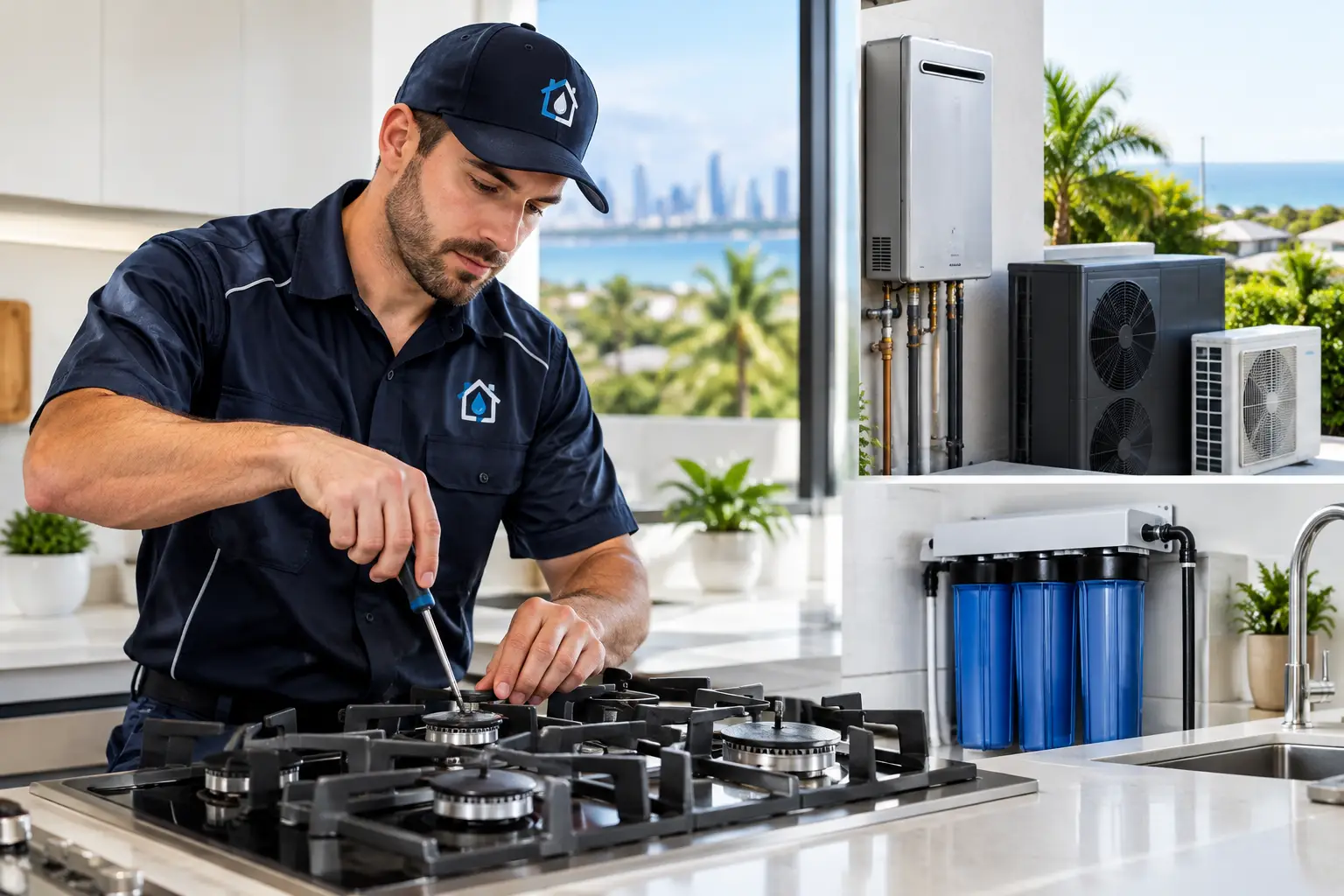
A blue flame under the pan is easy to take for granted – until it will not light, starts burning yellow, or you catch an unfamiliar gas smell. Good gas cooktop safety is not about worrying every time you cook. It is about knowing the few checks and habits that keep everyday cooking safe, efficient and stress-free.
For households using LPG, the safest approach is simple: use the cooktop as intended, keep it clean and well ventilated, and call a licensed gas fitter when something does not look, sound or smell right.
Start with a safe cooking setup
A gas cooktop needs clear space, clean burners and fresh air to work properly. Before cooking, check that burner caps are sitting flat and correctly positioned. If a cap is crooked or the burner is wet after cleaning, the flame may light unevenly, take longer to ignite or burn poorly.
Keep tea towels, paper towel, oven mitts, food packaging and plastic utensils away from the burners. It only takes a loose sleeve or a towel left near the edge of the bench to create a dangerous moment. Turn saucepan handles inward, especially when children are nearby, and use a pan that suits the burner size. A small pot over a large flame wastes gas and can send heat up the sides of the pan.
Rangehoods and kitchen ventilation matter too. Turn on the rangehood or open suitable windows when cooking, particularly when several burners are running or you are cooking for a crowd. Ventilation helps remove heat, moisture and cooking fumes from the room.
What a healthy gas flame should look like
Most LPG cooktops should produce a steady, mainly blue flame. It should sit neatly around the burner rather than lifting away, roaring loudly or spreading far beyond the base of the pan.
A flame that is persistently yellow, orange, weak, uneven or difficult to light deserves attention. It can be caused by food spills, a blocked burner port, a poorly fitted burner cap or a problem with the gas supply or appliance. Do not try to adjust gas components yourself. Turn the appliance off, let it cool, and arrange for a licensed gas fitter to inspect it if cleaning and correctly refitting the removable burner parts does not resolve the issue.
Soot on the bottom of pots is another sign not to ignore. Aside from making a mess, it may indicate incomplete combustion. That is a job for a professional, not a quick do-it-yourself fix.
Clean burners make gas cooktop safety easier
Spills are part of family cooking, but burnt-on food and grease can block the small ports where gas exits the burner. This affects ignition and flame quality. Let the cooktop cool completely before cleaning it, then remove the burner caps and other parts only as the manufacturer allows.
Use warm soapy water and a soft cloth or brush for routine cleaning. Make sure every removable piece is completely dry before putting it back. Avoid pushing sharp objects, pins or wire into burner ports, as this can damage them or make the blockage worse.
Pay attention to the ignition points as well. If they are greasy or damp, the burner may click repeatedly or fail to light. A gentle wipe with a dry cloth once the cooktop is cold is usually enough. If the igniter continues clicking when everything is dry and clean, book a repair rather than putting up with it.
Never leave a lit cooktop unattended
Most cooktop incidents start with ordinary distractions: a delivery at the door, a child calling from another room, a mobile ringing, or a quick trip outside. A saucepan can boil dry faster than expected, oil can overheat, and food can spill onto the flame.
Stay in the kitchen when you are frying, grilling or simmering on the cooktop. If you need to step away, turn the burner off. It is a small habit that makes a real difference.
Take extra care with oil. If oil catches fire, do not use water. Turn off the gas only if it is safe to reach the controls, then cover the pan with a metal lid or fire blanket if you can do so without putting yourself at risk. Move away and call 000 if the fire is not immediately controlled. Never carry a burning pan outside.
Gas cooktop safety around children and pets
Children learn by copying what adults do, so cooktop rules are worth making clear early. Keep young children out of the kitchen work zone while cooking and avoid holding a child while using hot pans. Older children can help with preparation, but they should understand that cooktop controls are not toys.
Where available, use child locks or removable knob covers. They can be useful in homes with toddlers, although they do not replace supervision. Pets can also brush against controls or knock items onto the cooktop, so keep bench edges clear and check that every control is off after meals.
A simple end-of-cooking routine helps: turn off each burner, check that flames are out, remove pans from the cooktop, and make sure the area is clear before leaving the kitchen.
If you smell gas, act calmly and safely
LPG has a distinctive odour added so leaks can be detected. If you smell gas near your cooktop, do not assume it will disappear on its own. Treat it seriously, even if the smell seems faint.
Do not light matches, smoke, use the cooktop, or operate electrical switches and appliances nearby. If it is safe to do so, turn off the appliance controls and the gas supply at the cylinder or isolation valve. Open doors and windows to ventilate the area, leave the building, and keep others away.
Call for help from a safe location away from the suspected leak. If there is a fire, a strong gas smell, or an immediate risk to people or property, call 000. A licensed gas fitter can locate the cause, repair the fault and test the system properly before it is used again.
Never test a suspected leak with a flame. A qualified professional has the right equipment and knows how to test the appliance, connections and gas line safely.
Leave installation and repairs to licensed professionals
A cooktop may look straightforward, but its installation involves more than connecting a hose and turning on the gas. Clearances from walls and cupboards, ventilation, correct regulator and gas type, secure connections, appliance commissioning and testing all need to be right.
In Queensland and New South Wales, gas fitting work must be completed by appropriately licensed professionals. This protects your household and helps ensure the work meets relevant requirements. It also matters for warranties, insurance and future property sales.
The same rule applies if you are replacing an old cooktop, moving it during a kitchen renovation, changing from natural gas to LPG, or noticing a damaged hose, loose connection or unreliable ignition. A temporary workaround can quickly become an unsafe one.
For Gold Coast households, No Hassle Homes can arrange licensed gas fitters who understand LPG systems as well as cooktop installation, servicing and repairs. Getting the right person on the job means less downtime and no guesswork around a critical household service.
Make checks part of normal home maintenance
You do not need a complicated inspection schedule to look after a gas cooktop. Each time you clean, check that the burner parts are intact, dry and sitting correctly. When you cook, notice whether the flame is steady and blue. Every so often, look around the appliance for heat damage, staining, loose knobs or signs that something has changed.
If your cooktop has become harder to ignite, flames have changed colour, or you can smell gas, book an inspection promptly. Small faults are usually easier to deal with before they interrupt dinner or become an urgent call-out.
The best safety routine is one your household can actually keep: a clear bench, a watchful cook, clean burners and a licensed professional on hand when the cooktop is not behaving as it should. That is how a daily meal stays exactly that – just dinner, with no hassle.