


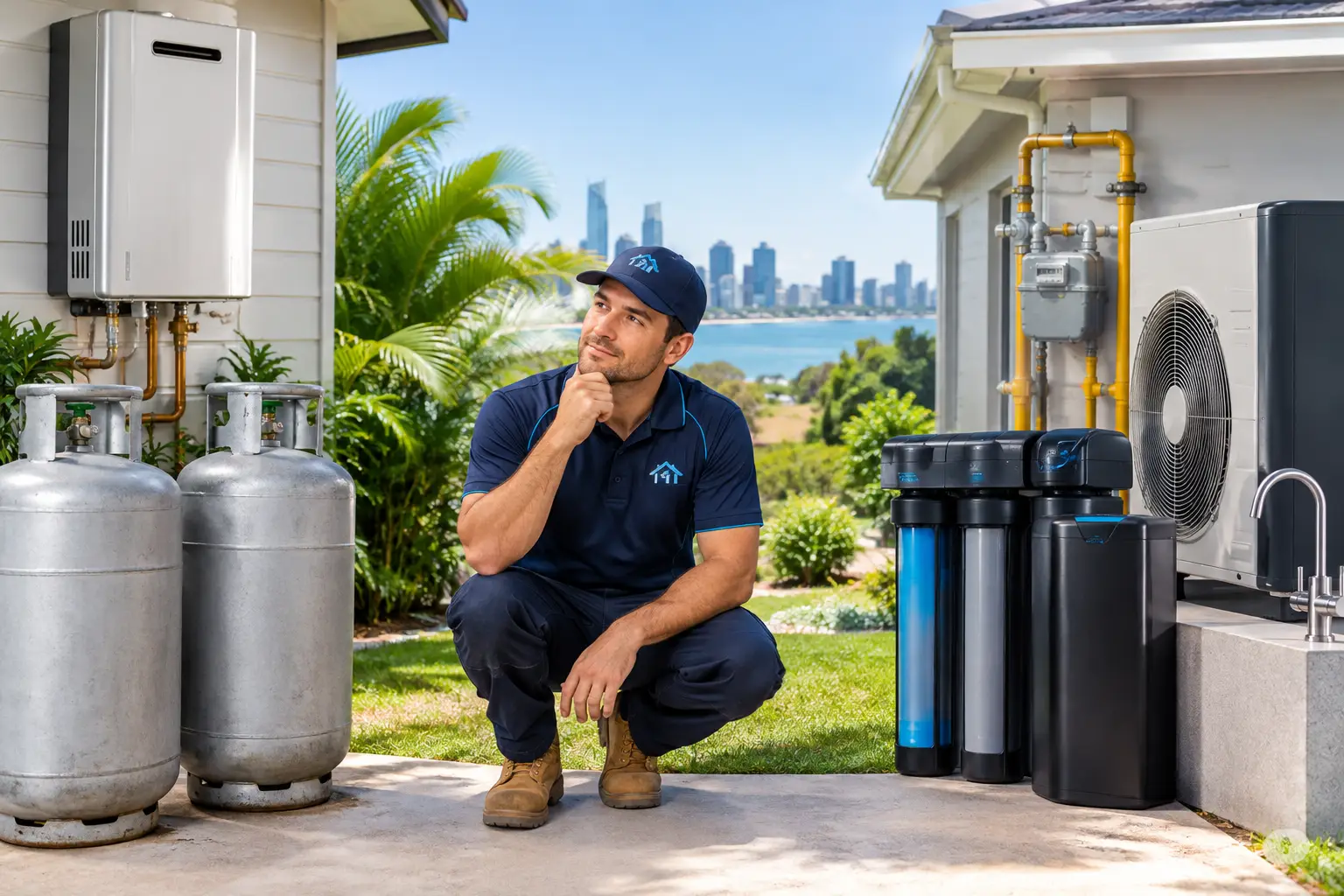
A hot shower that goes cold halfway through, an empty bottle just before dinner, or a gas bill that keeps climbing can make the choice feel urgent. When comparing bottle gas versus mains gas, the better option is not always the one your neighbour has. It comes down to where you live, how your household uses gas, the appliances you own and how much control you want over supply and costs.
For many Gold Coast, Southern Brisbane and Tweed households, bottle gas is the practical answer because mains gas is not available in every street. Where both are available, the decision deserves a closer look.
Bottle gas versus mains gas: the key difference
Bottle gas is LPG, or liquefied petroleum gas, supplied in cylinders at your home. It is commonly used for instantaneous hot water, cooktops, gas fires and outdoor heating. A delivery service replaces empty cylinders with full ones, so your home has a stored supply on site.
Mains gas is natural gas delivered through a fixed underground network. It reaches your property through a meter, much like water or electricity. If your home is connected and the network serves your area, you are billed for the gas you use rather than arranging cylinder deliveries.
Both can power the same types of household appliances, but they are different gases and operate at different pressures. That means an appliance set up for LPG is not automatically suitable for natural gas, and vice versa. Any installation, replacement or conversion should be completed by a licenced gas fitter.
Availability may make the decision for you
The first question is simple: is mains gas actually available at your property? Natural gas networks have limited coverage across many parts of South East Queensland and northern New South Wales. Even within the same suburb, one street may have access while another does not.
If mains gas is unavailable, LPG gives you a reliable gas option without waiting for network expansion. This is particularly useful for homes in semi-rural pockets, newer estates and locations where extending a gas main would be impractical or costly.
If mains gas is available, ask whether the home is already connected. A connection from the street, meter installation and internal gas line work can add upfront cost. For a home already using LPG, changing over can also involve appliance conversion or replacement. It is worth pricing the whole job, not just comparing the advertised gas rates.
Comparing ongoing costs
Mains gas bills usually include two parts: the amount of gas used and a fixed daily supply charge. The supply charge applies even during periods when you use very little gas, such as a holiday or a warm stretch when the gas heater is off.
With bottle gas, you generally pay for the gas in the cylinder and delivery arrangement rather than a network supply charge. For households with modest gas use, that can be appealing. It also makes spending easier to see – you know when a bottle has been replaced and can track how often it happens.
On the other hand, high-use households may find mains gas convenient because the supply is continuous and there is no need to monitor cylinders. A large family using gas hot water, cooking and heating can get through LPG faster than a household that only uses a cooktop.
The most useful comparison is your total annual cost. Include daily mains charges, connection costs, cylinder refills or swaps, delivery fees if applicable, and any appliance or pipework changes. Prices vary, and the lowest rate on paper is not always the lowest cost once fixed charges are included.
At No Hassle Homes, customers pay for the gas they receive, with no bottle rental fees. That is worth checking with any LPG provider, as ongoing cylinder rental can change the value of an otherwise cheap-looking offer.
Reliability: continuous supply or stored backup?
Mains gas is convenient because it arrives continuously through the pipework. You do not need to order a refill or make room for delivery access. For some households, especially those with heavy daily gas use, that simplicity is the main benefit.
Bottle gas has a different kind of reliability: your supply is sitting at home. A two-cylinder setup is common for gas hot water. When one cylinder empties, the system switches to the second bottle, giving you time to arrange a replacement rather than losing hot water straight away.
The catch is that the reserve bottle must be full, correctly connected and replaced promptly after the changeover. A dependable delivery schedule matters. Online ordering, choosing a delivery day that suits your household and weekend delivery options can remove much of the worry. For urgent issues, 24/7 phone access provides extra reassurance.
LPG also suits properties where power interruptions are a concern, provided the connected appliance does not rely on mains electricity for operation. Some modern hot water systems and heaters have electronic controls, so ask your installer how your particular appliance behaves during an outage.
Appliance choice and performance
LPG and natural gas can both provide fast, responsive heat for cooking and dependable hot water. The better fuel is often less important than choosing the right appliance size and having it installed properly.
For example, an instantaneous gas hot water system must be sized for the number of bathrooms and likely simultaneous use. A household with two showers running at once has different needs from a couple in a one-bathroom home. Similarly, a cooktop should match your cooking habits, while a gas fire needs correct room sizing, ventilation and clearances.
Never assume a new appliance can simply be connected to your existing supply. Check its gas type on the compliance plate before buying. While some models can be converted with an approved kit, others cannot. Incorrect conversion can cause poor performance and serious safety risks.
A licenced gas fitter can assess your existing regulator, cylinders or meter, pipe sizing, appliance requirements and compliance needs before installation. If an issue is found during a gas delivery or service visit, a qualified fitter may be able to identify it early and help prevent unnecessary downtime.
Safety and maintenance are non-negotiable
Whether you choose LPG or mains gas, the safety basics are much the same. Gas appliances need professional installation, suitable ventilation where required and regular attention if they show signs of trouble.
Call a licenced gas fitter if you notice a gas smell, yellow or sooty flames, difficulty lighting an appliance, unusual noises, repeated pilot light failures or hot water that is no longer reliable. Do not try to repair gas fittings yourself.
For LPG cylinders, keep bottles upright in a well-ventilated outdoor location, away from ignition sources and clear of drains or enclosed spaces. Make sure the delivery driver can safely access the cylinders. For mains gas, keep the meter area accessible and protect exposed pipework from damage during landscaping or building work.
Carbon monoxide is another reason to take servicing seriously. Poorly installed, damaged or incorrectly flued gas appliances can be dangerous. If a gas appliance is indoors, follow the manufacturer’s requirements and arrange qualified servicing when recommended.
Which option suits your home?
Bottle gas is often the better fit when mains gas is unavailable, when you want to avoid a network connection project, or when you prefer to pay for gas as it is delivered. It works well for homes with LPG hot water, cooktops, gas fires and outdoor entertaining appliances, especially with two cylinders to maintain a reserve supply.
Mains gas can suit households already connected to the network, particularly those with consistently high gas use who value a continuous supply. It may also be attractive when the appliances are already compatible and the daily supply charge makes sense for the amount of gas used.
There is no one-size-fits-all winner. Start with availability, then compare the full cost of supply, installation and appliance compatibility. Most importantly, choose a provider and installer who can give clear answers, turn up when promised and keep your home safely supplied with gas when you need it.