


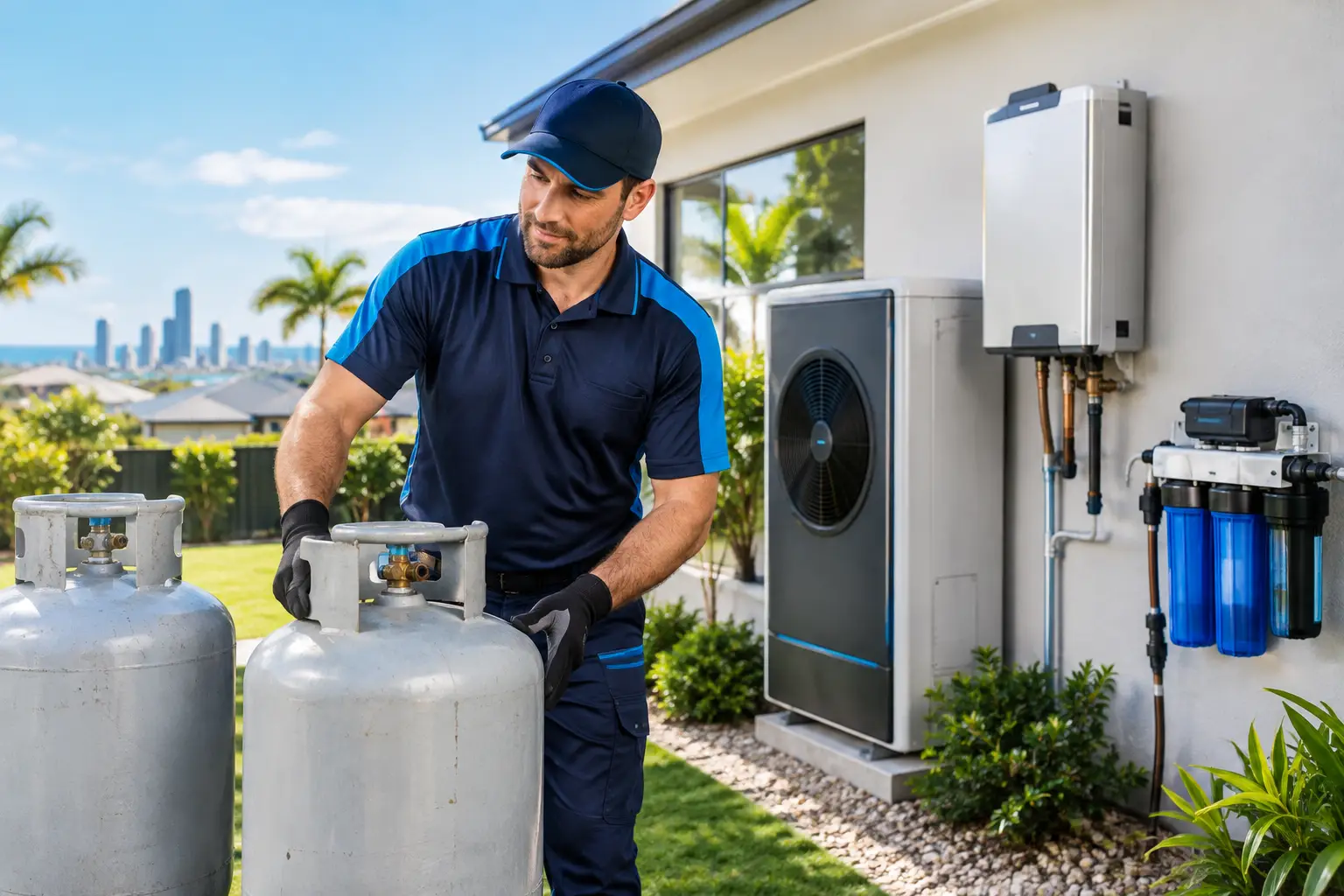
A cold shower halfway through the morning rush, a cooktop that will not light when dinner is underway, or a gas heater that stops on a chilly night – these are the usual signs that a bottle has been left a little too long. Knowing when to replace gas bottles means you can organise a swap on your schedule, rather than dealing with a household interruption.
For most homes, the right time is before the bottle is completely empty. How far ahead depends on what the gas supplies, how many bottles you have connected and how predictable your household usage is. A little planning goes a long way, especially if your LPG runs hot water as well as cooking or heating.
When to replace gas bottles: the simple answer
Replace or order a gas bottle when your current supply is getting low, not only after the gas has stopped. If you have two bottles connected through an automatic changeover valve, arrange a replacement as soon as one bottle empties and the system switches to the reserve. Your home still has gas, but you are now relying on the second bottle. That is your prompt to book the swap.
With a single bottle, it is harder to judge the exact moment. If it supplies essential appliances such as instant gas hot water, it pays to keep a spare bottle ready or order as soon as you notice low-gas signs. Running completely out may mean no hot water, no cooking or no heating until a replacement arrives.
There is no fixed number of weeks or months that applies to every household. A couple using gas only for cooking may get many months from a bottle. A busy family using LPG for continuous-flow hot water, a cooktop and an outdoor heater will use much more. Winter can also increase consumption where gas heating is in regular use.
The signs your gas bottle is running low
LPG is stored as a liquid in the bottle, so appliances can work normally right up until the remaining gas is nearly gone. That is why a low bottle can catch people out. Still, there are a few practical clues to watch for.
A gas cooktop may take longer to ignite, produce a weaker flame or have flames that reduce noticeably when more than one burner is used. A gas hot water system can cut out or fail to stay running. You may also hear the automatic changeover regulator indicate that it has moved to the reserve bottle, often through a coloured indicator.
These signs do not always mean the bottle is empty. A faulty regulator, appliance issue, blocked burner or supply connection can cause similar problems. Never try to diagnose a gas fault by taking fittings apart yourself. If the bottle is not the issue, a licensed gas fitter should check it. A gas fitter delivering your bottles can often identify obvious issues on the spot, helping avoid unnecessary downtime.
A simple way to stay ahead is to note the delivery date and how long the bottle usually lasts. After two or three replacements, most households have a reliable pattern. If you have visitors staying, a new baby at home, extra people in the household or a spell of colder weather, allow for the gas to run out sooner than usual.
What changes the life of an LPG gas bottle?
Bottle size matters, but household habits matter more. LPG used only for a cooktop tends to last far longer than LPG supplying hot water. Continuous-flow systems heat water on demand, so long showers, multiple bathrooms in use and frequent laundry loads can all increase gas use.
Your appliances also influence consumption. Older equipment may not be as efficient as a well-maintained newer model. A gas fireplace or portable gas heater can use a meaningful amount of gas during a cold snap, while frequent entertaining can add plenty of cooktop and barbecue use.
The most practical approach is to treat previous usage as a guide, rather than a guarantee. If one 45 kg bottle normally lasts three months, do not wait until the three-month mark to think about it. Arrange the next delivery with enough buffer for busy periods and changing routines.
Do not confuse an empty bottle with a bottle that needs testing
There are two different reasons a gas bottle might need replacing. The first is straightforward: the bottle is empty or low on LPG and needs a full bottle supplied. The second relates to the condition and certification of the cylinder itself.
In Australia, refillable LPG cylinders require periodic inspection and testing. For common household cylinders, this is generally every 10 years, although the stamped markings on the cylinder and the supplier’s requirements are what matter. A cylinder that is out of test should not be refilled until it has been properly inspected and certified.
The good news is that a swap service removes much of that worry. The supplier takes away the empty bottle and provides a filled, compliant bottle. You pay for the gas you receive, rather than carrying an ongoing rental fee for the cylinder. If you own a bottle outright and are unsure about its test date or condition, ask before arranging a refill.
Safe checks before ordering a replacement
If your gas has stopped, first make sure the bottle valve is open and, where fitted, check whether the changeover valve has moved to the other bottle. Do not use a flame to check for gas, and do not attempt to transfer LPG between bottles.
Look around the bottle area for damage, corrosion, a strong gas smell or a hissing sound. LPG has an added odour so leaks are easier to detect. If you smell gas, turn off the gas at the bottle only if it is safe to do so, keep flames and electrical switches away from the area, ventilate if possible, and call for qualified help. Do not keep trying to relight appliances.
Gas bottles should remain upright in a well-ventilated outdoor location, with clear access for delivery and servicing. Keep the area free from stored boxes, garden clutter and anything that could damage the regulator or hose. A bottle that looks damaged, heavily corroded or has been exposed to fire should be assessed by a professional, even if it still appears to work.
Single bottle or two-bottle setup?
For homes that depend on LPG hot water, two bottles with an automatic changeover system are often the easier option. When one bottle empties, supply switches to the second bottle. You can arrange a replacement without losing hot water or waiting until the cooktop will not ignite.
A single bottle setup can suit lower-use homes, particularly where LPG is used only for cooking. The trade-off is that there is no backup if it empties unexpectedly. Keeping an approved spare bottle may help, but it must be stored correctly and safely. For many households, a second connected bottle is the simpler way to reduce the risk of running out.
If you are considering changing your setup, have a licensed gas fitter assess your appliances, gas demand, bottle location and existing pipework. The right arrangement should be safe, compliant and practical for how your household actually uses gas.
Plan deliveries around your household, not the other way around
Replacing gas bottles does not need to become a last-minute job. Online ordering makes it easier to choose a delivery day that works around work, school runs and family plans. Weekend delivery availability can be especially helpful when weekdays are full, and split-shift delivery runs help households that run out later in the day.
For homeowners across the Gold Coast and nearby areas, No Hassle Homes provides LPG bottle delivery backed by licensed gas fitters. That means a delivery is not just a bottle left at the gate. If an issue is noticed with the bottle connection, regulator or basic gas setup, there is qualified help available to assess it safely.
When you order, make sure the bottle location is accessible and pets are secure. If you are close to empty, say so when booking. Clear information helps the delivery team prioritise the right solution and gives you the best chance of avoiding an interruption.
The best time to replace a gas bottle is while you still have enough gas to keep the household comfortable. Watch your usage, act when the first bottle changes over, and get a qualified professional involved whenever something does not look or smell right. That small bit of forward planning is often the difference between a routine delivery and a very inconvenient cold shower.