


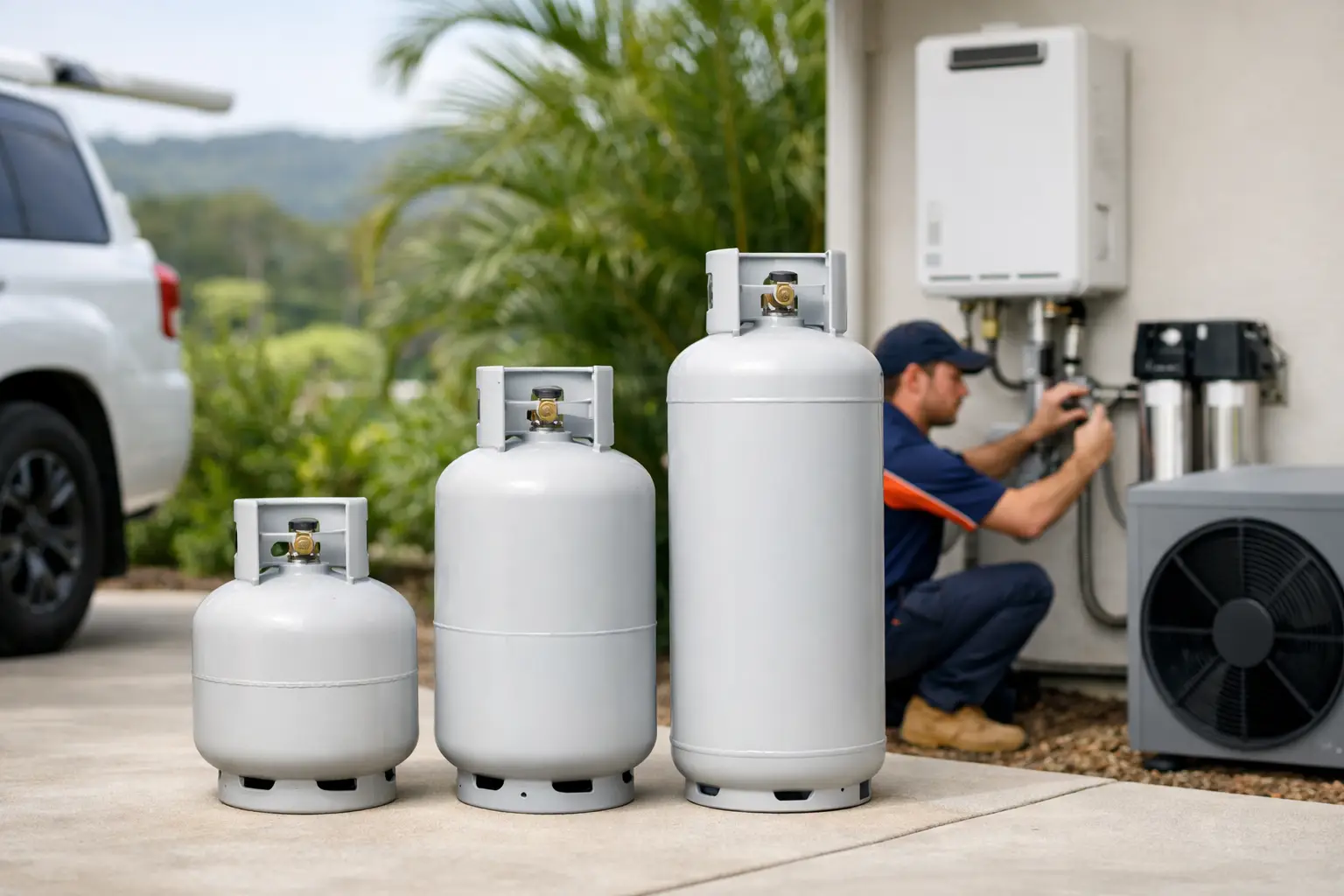
A gas bottle that is too small can mean an inconvenient run-out halfway through dinner or a cold shower. One that is far larger than your household needs can take up more space and leave you paying for capacity you rarely use. Choosing household LPG bottle sizes comes down to how you use gas, how many people live at home, and how much convenience matters to you.
For most homes, the answer is not simply “get the biggest bottle”. The right setup should give you reliable gas supply, fit safely at your property, and make deliveries easy to manage.
Choosing household LPG bottle sizes for your home
The LPG bottle size you need depends first on what it is running. A bottle supplying a small barbecue has very different demands from one supplying cooking, continuous-flow hot water and a gas fire.
In Australian households, 9 kg, 18 kg and 45 kg bottles are common options. Smaller bottles are generally suited to portable appliances and barbecues, while 45 kg bottles are the standard choice for fixed household gas supply. If you have gas connected to your cooktop, hot water system or heating, a properly installed 45 kg bottle setup is usually the practical option.
A licensed gas fitter can confirm what your appliances require and whether your current pipework, regulator and bottle location are suitable. This matters especially when replacing an older system, adding a new gas appliance or moving bottles to a different part of the property.
9 kg bottles: best for barbecues and portable use
A 9 kg bottle is compact, easy to transport and familiar to most households. It is a sensible choice for a barbecue, camping cooker or other portable gas appliance. For occasional weekend grilling, one bottle may be all you need.
The trade-off is capacity. If you barbecue often, use an outdoor kitchen several nights a week or regularly entertain family and friends, a 9 kg bottle can run out sooner than expected. Keeping a second full bottle on hand can save a last-minute trip out when the first one empties.
Check the hose and regulator before connecting a bottle, and make sure the bottle is upright on a stable surface. If you can smell gas, hear a persistent hissing sound or notice damaged fittings, turn the appliance off if safe to do so and arrange professional help. Do not try to patch hoses or force connections yourself.
18 kg bottles: useful where portability still matters
An 18 kg bottle offers more gas than a standard barbecue bottle without stepping up to a fixed 45 kg household setup. It may suit heavier outdoor cooking use, temporary arrangements or properties where a large fixed installation is not appropriate.
However, an 18 kg bottle is still not the usual answer for a home relying on gas every day for hot water, cooking or heating. It can be consumed quickly when connected to high-use appliances, creating more bottle changes and more chances of running out at an inconvenient time.
If you are considering 18 kg bottles for a permanent household appliance, get advice from a licensed gas fitter first. The correct bottle size is only one part of the job. Appliance requirements, gas consumption, ventilation, clearances and installation rules all need to be considered together.
45 kg bottles: the everyday household option
For homes with gas hot water, a cooktop, an oven, a gas fire or several gas appliances, 45 kg bottles offer the capacity and reliability most households need. They are designed for external, fixed domestic supply and should be installed upright in an approved location.
One 45 kg bottle may be enough for a low-use household with a single gas appliance. But two 45 kg bottles connected through an automatic changeover regulator is often the more convenient setup. When the first bottle empties, supply changes to the reserve bottle, giving you time to organise a replacement instead of discovering the problem when there is no hot water.
For busy families, this backup can make a real difference. Gas use tends to rise during cooler weather, school holidays, when visitors stay over, or when a gas fire gets regular use. A two-bottle setup gives you breathing room during those busier periods.
Match bottle capacity to your gas appliances
Your appliances have the biggest influence on how quickly gas is used. Cooking alone is usually relatively modest, particularly if you cook a few meals each week on a gas cooktop. Hot water can use much more over time, especially in a larger household with several showers each day.
Gas heating can change the picture again. A gas fire used regularly through winter may draw down a bottle much faster than cooking and hot water alone. The same is true for homes with outdoor heaters or frequent entertaining.
Think about your normal week rather than your quietest one. Consider how many people are in the household, how long showers tend to be, whether you work from home, how often you cook with gas, and whether heating runs for hours at a time. A home occupied by two retirees will often have a different pattern from a household with teenagers, guests and multiple daily showers.
It also depends on the appliance itself. Older appliances may not be as efficient as newer models, while the output setting of a continuous-flow hot water system can affect demand. If your gas use has suddenly increased, the bottle size may not be the real issue. A gas fitter can check for appliance faults, regulator issues or leaks.
Plan for delivery, access and run-outs
The best bottle size is one you can keep supplied without hassle. Before choosing, consider where bottles will sit, whether a delivery vehicle can access the property, and how you will know when it is time to order.
A pair of 45 kg bottles is often easier to manage than repeatedly changing smaller bottles. With automatic changeover, you can arrange delivery after the first bottle runs out while the second keeps the household going. It is a simple setup that reduces disruption.
For homeowners across the Gold Coast, Southern Brisbane and Tweed Heads, No Hassle Homes offers scheduled delivery choices, weekend delivery and 24/7 phone access when you need help. Gas fitters deliver the bottles too, so if they identify an issue with the regulator, connection or installation, there is someone qualified on hand to assess it.
When comparing suppliers, ask whether there are rental charges, delivery restrictions or unclear fees. Straightforward pricing makes it easier to budget, particularly if you have regular gas use. You should know what you are paying for before the bottle arrives.
Safe bottle placement is not optional
LPG bottles must be stored and used correctly. They need to remain upright, be kept outdoors in a well-ventilated area, and be positioned away from ignition sources, drains and unsuitable enclosed spaces. Never store a gas bottle inside the house, garage, shed or under the home.
The required clearances around a bottle installation depend on the setup and nearby features such as doors, windows, electrical equipment and drains. This is why a licensed gas fitter should install or alter fixed household gas bottle connections. They can make sure the regulator, pipework and bottle location meet the relevant requirements.
Keep access to the bottles clear for deliveries and servicing. Avoid stacking pot plants, outdoor furniture, timber or rubbish around them. It may look tidier, but blocked access can delay a bottle change and create unnecessary safety concerns.
When it is time to review your bottle size
Review your LPG setup when your household changes. A new baby, adult children moving home, a renovated kitchen, a new gas fire or a switch to gas hot water can all alter your usage. Likewise, if you are consistently running out before scheduled deliveries or your reserve bottle is rarely touched, your setup may need adjusting.
There is no prize for choosing the largest bottle arrangement, and no benefit in tolerating regular gas run-outs. The right choice is the one that safely supports your appliances and suits the rhythm of your home. A quick conversation with a qualified local gas fitter can turn an uncertain decision into a setup you barely need to think about.