


A glass of water can look perfectly clear and still leave a chlorine taste, mark your kettle with scale or make you question what is coming through the tap. The best ways to improve water quality depend on where your water comes from, the age of your plumbing and what you are trying to fix. A good solution should make daily life easier without adding unnecessary cost or maintenance.
For most homes, the right starting point is not the biggest or most expensive filter. It is understanding your water, then choosing a system that suits the way your household actually uses it.
Start by identifying the problem
Water quality is not one single issue. A filter that improves taste may not address sediment, while a system designed for rainwater safety may not be necessary for a home connected to treated mains water.
Take notice of what you can see, smell and taste. Cloudiness may point to sediment or air in the line. A strong pool-like smell is often chlorine, which is commonly used to disinfect mains water. White build-up on taps, shower screens and appliances can indicate mineral content. Brown, yellow or metallic-looking water needs more attention, particularly if it continues after running a cold tap for a few minutes.
Also consider when the issue happens. If it is only at one tap, the cause could be a worn fitting, an old flexible hose or local pipework. If every tap is affected, the issue may be with the incoming supply, a storage tank or your whole-home plumbing.
Test water before spending on treatment
Testing takes the guesswork out of choosing filtration. If you are on town water, your local supplier’s published water information can provide useful background, but it cannot tell you what is happening inside your own pipes or at a particular tap.
For ongoing concerns, use a suitable water test or arrange laboratory testing. This is especially worthwhile if you rely on rainwater, bore water or a private supply. Test results can identify concerns such as bacteria, sediment, mineral levels, pH and certain metals. If someone in the household has a weakened immune system, a young baby is using formula, or there has been a known issue with the supply, seek advice from a qualified professional rather than relying on taste or appearance alone.
A test also helps prevent a common mistake: fitting a system for a problem you do not have. More treatment is not always better. It can mean higher upfront costs, replacement filters and reduced water flow without a meaningful benefit.
The best ways to improve water quality for mains water
Most Gold Coast and nearby homes connected to mains water receive treated water that is suitable for normal household use. Even so, many households choose filtration to improve taste, reduce chlorine odour or protect appliances from particles and scale.
Use a sediment filter where particles are the issue
A sediment filter captures physical particles such as sand, rust and fine debris before they reach taps, appliances or a second-stage filter. It can be useful in homes with older pipework, after plumbing work, or where incoming water carries visible sediment.
These filters are often fitted as part of a whole-house setup. They do not remove dissolved chemicals or improve bacteria control on their own, but they can protect other filter media and help maintain better flow through the system.
Choose carbon filtration for better taste and odour
Activated carbon filters are a popular choice for drinking water because they can reduce chlorine taste and smell, along with some organic compounds. For a household that simply wants water that tastes better from the kitchen tap, an under-sink carbon filter is often the practical option.
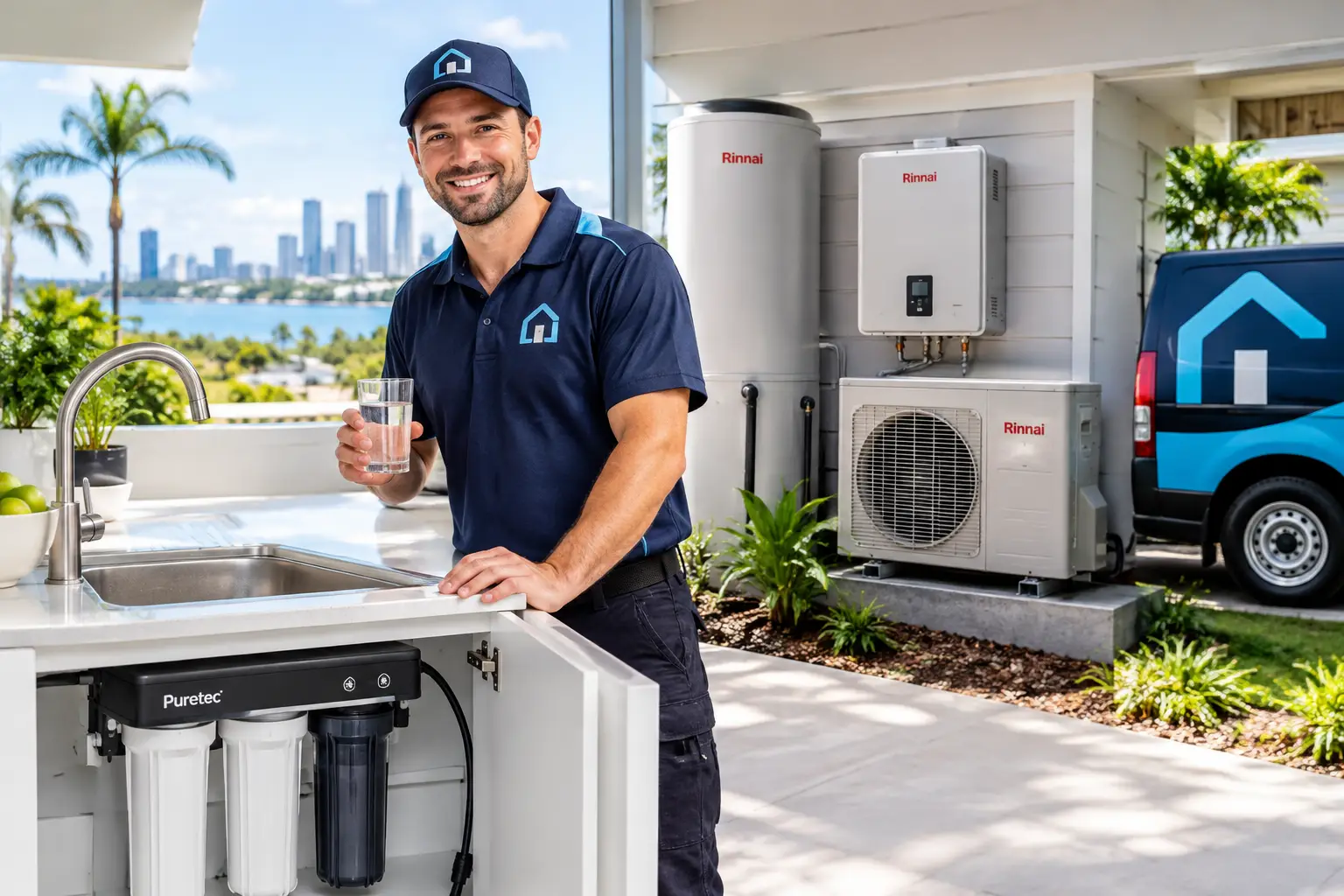
Under-sink filtration treats the water you drink and cook with, rather than filtering every litre used for showers, washing and the garden. That usually keeps installation and filter replacement costs lower. It is a sensible choice when the main concern is drinking water quality, not the entire home’s supply.
Consider whole-house filtration for broad coverage
A whole-house system is installed where water enters the home, so it treats water before it reaches bathrooms, the kitchen, laundry and appliances. It may suit families who want to reduce chlorine throughout the house, households with noticeable sediment, or property owners looking to protect fixtures and hot water equipment.
The trade-off is that whole-house systems cost more to install and need regular servicing. They must also be sized properly. A filter that is too small can reduce pressure when more than one shower, tap or appliance is running. A licensed installer can assess your water use, existing pipework and the best location for access and maintenance.
Improve rainwater quality with safe collection and treatment
Rainwater can be an excellent household supply, but the quality depends heavily on the roof, gutters, tank and maintenance routine. Leaves, bird droppings, dust and small animals can all affect water before it reaches the tank.
Keep gutters and roof catchments clean, fit and maintain leaf guards, and make sure a first-flush device is working properly. This device diverts the first portion of rainwater, which can carry a higher load of debris from the roof. Tank inlets should be screened, lids should fit securely and overflow points should be protected from insects and pests.
For drinking water, filtration is often combined with disinfection. Sediment and carbon filters may improve clarity and taste, while ultraviolet treatment can be used to control microorganisms when installed and maintained correctly. UV systems need clear water to work effectively, so pre-filtration is not optional. The lamp also needs scheduled replacement even when it still appears to be glowing.
Fix plumbing issues that affect water at the tap
Sometimes the best water-quality improvement is a plumbing repair, not a filter. Corroded pipes, old tapware, deteriorating hoses and poorly maintained storage systems can affect water after it has entered the property.
If discolouration appears after the water has been sitting overnight, run the cold tap briefly and see whether it clears. If it does, internal plumbing may be involved. Persistent discolouration, metallic taste, unusual odours or particles from one outlet should be checked by a licensed plumber. Do not use hot tap water for drinking or cooking, as hot water systems can increase the amount of metals dissolved from plumbing components.
It is also worth checking whether filters are installed in the right direction, whether bypass valves are open, and whether cartridges are overdue for replacement. A neglected filter can restrict flow and may stop delivering the result you paid for.
Maintain your system or it will not maintain your water
Every filtration system has an ongoing job to do. Cartridges fill with sediment, carbon media becomes less effective and UV lamps lose strength over time. Replacement intervals vary by system, water quality and household use, so follow the manufacturer’s guidance and keep a simple reminder in your calendar.
Watch for slower flow, a return of chlorine taste, changes in water appearance or leaks around filter housings. These are signs the system may need attention. Never force a filter housing open or attempt plumbing work if you are unsure. Water pressure and incorrect fittings can quickly turn a small maintenance job into a leak inside a cupboard or wall.
For homeowners who want the job handled properly, No Hassle Homes can assess and install water filtration systems with licensed trade support, helping make sure the setup suits the home rather than just the box it came in.
Choose the solution that matches your household
There is no single filter that is right for every home. An under-sink carbon system may be all a townhouse needs for fresh-tasting drinking water. A larger family home with sediment concerns may benefit from whole-house filtration. Rainwater properties usually need a more careful combination of roof and tank maintenance, filtration and, where appropriate, disinfection.
Start with the water you have, the problem you notice and the places you want treated. When the system is sized correctly and maintained on time, better water quality becomes one less thing to think about each day.