


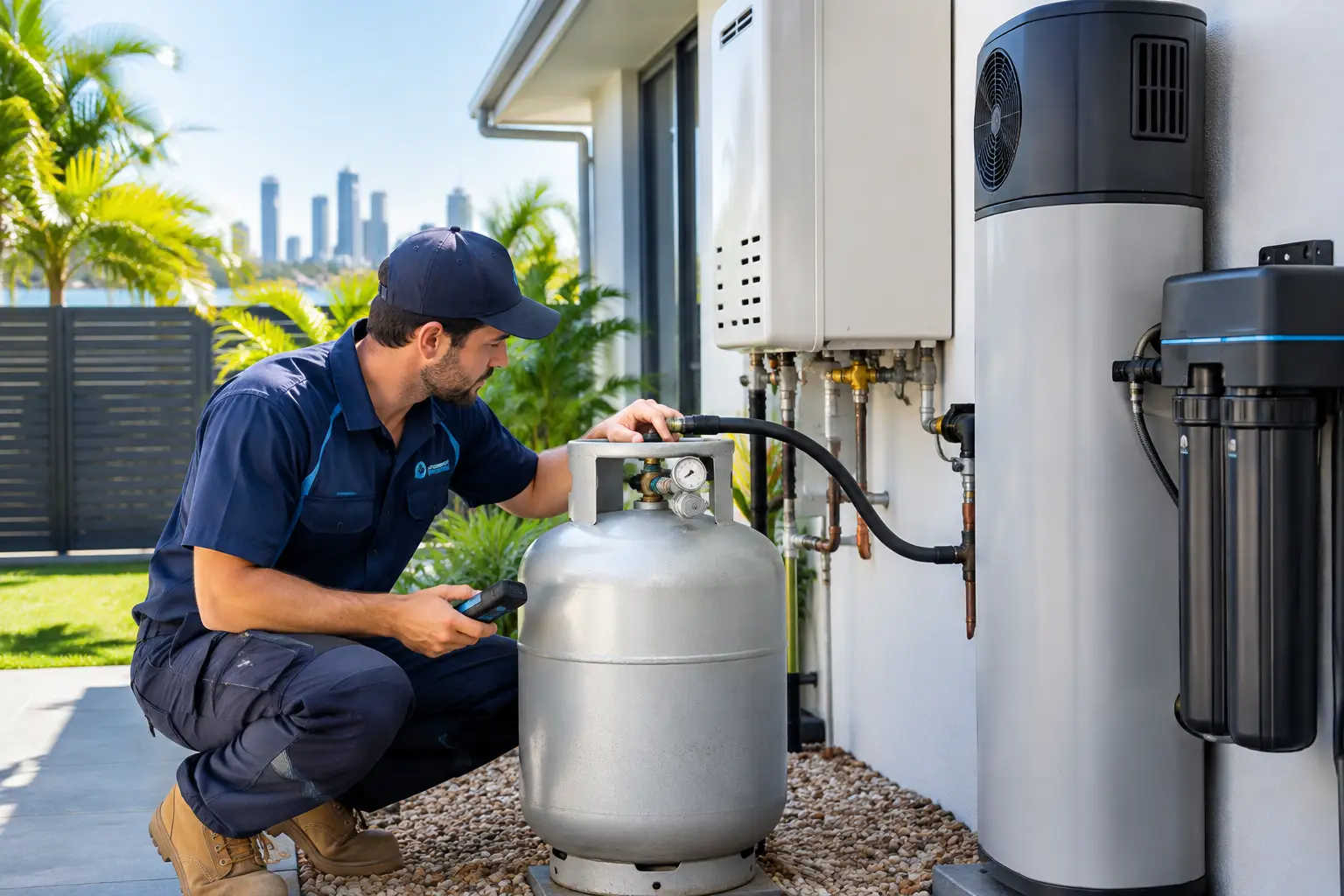
A cold shower halfway through getting ready, or a cooktop that will not light when dinner is already underway, usually comes down to one thing: the LPG bottle has quietly run out. Checking LPG bottle levels before that point is a simple household habit that can save a lot of inconvenience, especially when one bottle supplies your hot water, cooking or gas heating.
There is no single perfect method for every setup. The best option depends on whether you have a standard swap-style bottle, a larger cylinder, a clear view of its label and access to scales. What matters is using a safe check, allowing enough time to arrange delivery, and keeping a second bottle connected where your system allows it.
Why LPG bottles can be hard to judge
Unlike a clear water tank, an LPG bottle does not show its level from the outside. LPG is stored as liquid under pressure, with vapour sitting above it. As long as liquid gas remains, the pressure can appear much the same, so a pressure gauge does not reliably tell you how much gas is left.
Bottle use can also be surprisingly uneven. A household that only uses gas for cooking may get months from a bottle. One running continuous-flow hot water, a cooktop and a gas fire can use much more during a cool week or when visitors are staying. That is why estimating from the last delivery date alone can catch people out.
Safe ways of checking LPG bottle levels
Use the warm water test for a quick estimate
The warm water test is a practical way to find the approximate liquid level without moving the bottle. Carefully pour warm tap water down the side of the cylinder, then run your hand down the metal a minute later. The section containing liquid LPG will feel noticeably cooler than the empty section above it.
This happens because the liquid inside absorbs heat from the steel. The temperature change marks the general level of the gas. It is not an exact measurement, but it is useful when you need to know whether there is plenty left, roughly half a bottle, or very little.
Use warm water only, never boiling water. Keep your hands clear of valves and fittings, and do not do the test if you can smell gas or suspect damage to the bottle or hose.
Weigh the bottle for the most accurate result
Weighing is generally the clearest way of checking LPG bottle levels for portable cylinders. Every bottle is stamped with a tare weight, usually marked as TW. That is the weight of the empty cylinder without gas.
Place the bottle on suitable scales, then subtract the tare weight from the total. The result is the amount of gas remaining. For example, if a 9 kg bottle has a tare weight of 8 kg and weighs 12.5 kg in total, it has about 4.5 kg of gas left.
This method works well for bottles you can safely handle, but do not lift or disconnect a cylinder just to weigh it if it is heavy, awkwardly positioned or connected to your home supply. Larger household cylinders are best left in place. A rough check is better than risking an injury or interfering with a sound gas connection.
Read a gauge as a guide, not a promise
Some LPG systems have an in-line gauge or a bottle gauge. These can be handy for spotting a near-empty cylinder, particularly on a two-bottle setup. But treat the reading as an indication rather than an exact fuel gauge.
Temperature, how quickly appliances are running and the style of gauge can all affect what it shows. If a gauge says low, arrange gas soon. If it says half-full but your hot water is playing up, there may be another issue that needs a licensed gas fitter to inspect.
Keep an eye on appliance behaviour
Appliances sometimes give a warning before the bottle is completely empty. A gas cooktop may have smaller flames than usual, a heater may struggle to stay on, or hot water may stop during periods of high demand. These signs are not a substitute for a bottle check, but they are a prompt not to leave the order until tomorrow.
Low flow can also be caused by a regulator fault, a closed valve or an appliance issue. Avoid trying to diagnose gas equipment yourself. A qualified gas fitter can identify whether the problem is simply an empty bottle or something that needs repair.
What not to do when checking a gas bottle
Never use a flame, lighter or match to test for a gas level or leak. Do not shake, roll or tip the bottle to guess how much remains. These shortcuts are unreliable and can damage fittings or create a safety risk.
Avoid striking the cylinder or using a sharp object to scrape at frost. Frost can form when gas is being used quickly, but it does not provide a dependable measure of the amount remaining. It is also not a reason to heat the bottle with a heater, hot water system or any other heat source.
A bottle should always remain upright, in a well-ventilated outdoor location and away from ignition sources. If you smell gas, hear hissing, see a damaged valve or notice a badly corroded cylinder, keep clear of the area. If safe to do so, turn off the cylinder valve, avoid operating electrical switches or using flames nearby, and call for professional help. If there is an immediate threat to people or property, call 000.
When should you order a replacement?
For most households, the sensible time to order is when the active bottle is around one-quarter full, or sooner if a busy weekend, school holidays or guests are coming up. That buffer matters more when gas supports hot water, because nobody wants to discover an empty bottle at the end of the day.
If you have a two-bottle automatic changeover system, check which bottle is in service and which one is empty. The changeover indicator may show red when the active cylinder has run out. Turn the selector towards the full bottle if required, then arrange a refill or replacement for the empty one straight away. Waiting until the second bottle is low turns a convenient backup into another urgent job.
The right timing also depends on your usage. A couple using gas only for a cooktop can afford a larger buffer. A family relying on LPG for hot water, cooking and heating should check more often during winter. After two or three deliveries, you will have a clearer idea of your household pattern and can set a reminder before your usual run-out date.
Make running out of gas less likely
The easiest solution is not a more complicated test. It is a simple routine. Check both bottles once a month, and check again before long weekends or when the weather turns colder. If the warm water test shows a low level, do not wait for the bottle to empty completely.
A dual-bottle system is worth considering for homes that depend on LPG for hot water. One bottle supplies the home while the other is ready to take over, giving you time to organise delivery rather than rushing around after the gas has stopped. It does involve having space for a second cylinder and keeping both in good condition, but the convenience is significant.
For Gold Coast, Southern Brisbane and Tweed Heads households, No Hassle Homes can help keep the process straightforward with gas delivered by qualified gas fitters. If they spot an issue at the bottle, regulator or connection, they can address it on the spot where appropriate instead of leaving you with another trade to organise.
Checking your bottle takes only a few minutes. Do it while there is still gas left, and your next delivery becomes a planned household task rather than an after-hours scramble.