


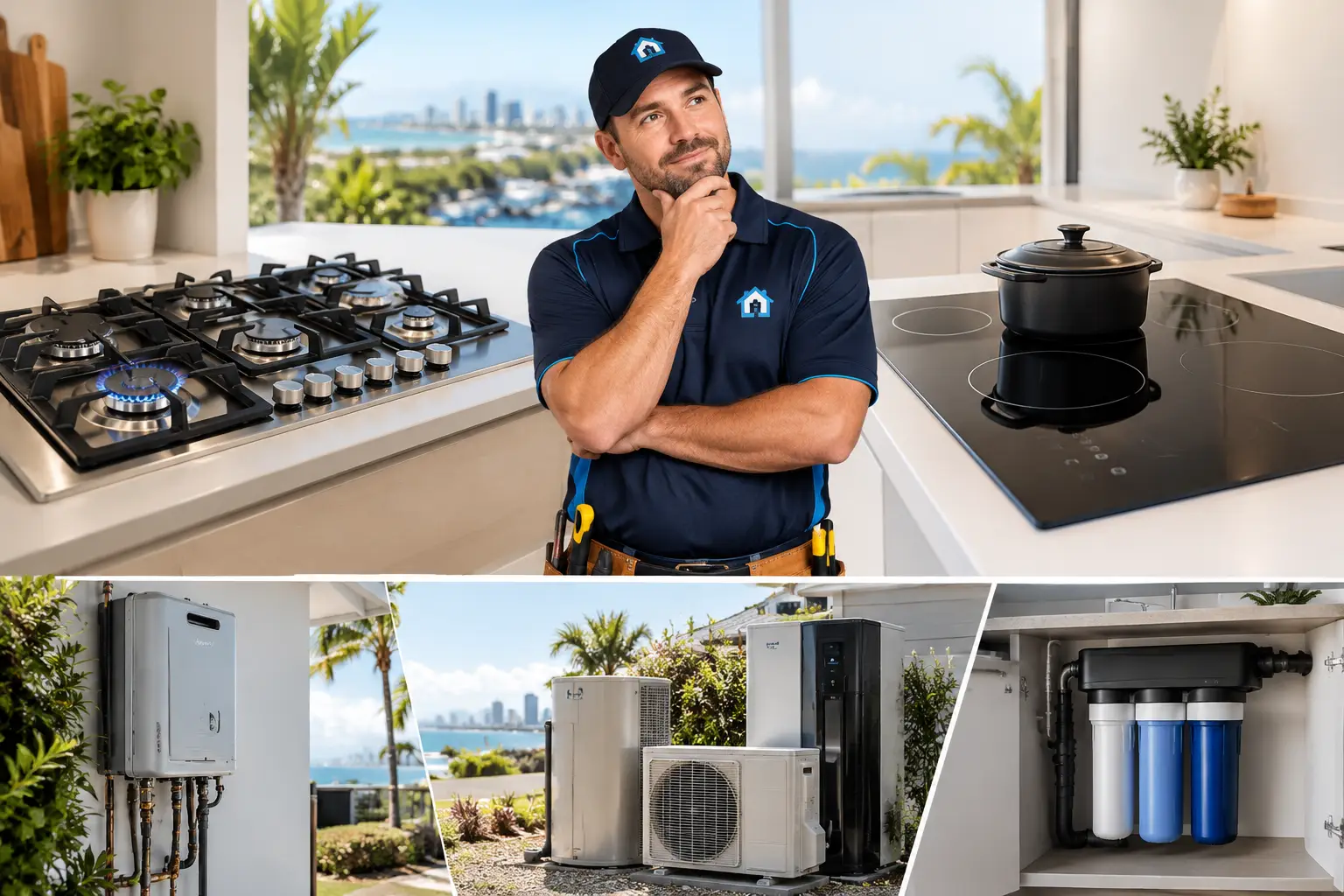
A cooktop decision usually gets urgent when the old one stops working, a kitchen renovation is already underway, or you are tired of cooking around a temperamental burner. In the gas versus induction debate, there is no single winner for every Gold Coast home. The right choice comes down to how you cook, what services your home already has, your budget, and what matters most on a busy weeknight.
Gas remains a practical, familiar choice for many households, particularly where LPG bottles already supply hot water, heating or cooking. Induction offers fast heating, an easy-clean surface and a cooler cooking area. Both can be excellent cooktops when they are properly selected and professionally installed.
Gas versus induction: the everyday difference
The biggest difference is how heat reaches the pan. A gas cooktop creates a visible flame beneath the cookware. You adjust the flame directly, which gives immediate visual feedback and works with almost any pot or pan that sits securely on the trivets.
An induction cooktop uses an electromagnetic field to heat compatible cookware itself. The glass surface gets warm from contact with the hot pan, but it does not generate heat in the same way as a traditional electric element. This makes induction very quick to respond and efficient at bringing water to the boil.
For many people, the choice is less about technical specifications and more about daily habits. Someone who enjoys wok cooking, charring capsicum over a flame or using a favourite collection of cookware may prefer gas. Someone who wants a tidy kitchen, quick boil times and less heat spilling into the room may lean towards induction.
Heat control and cooking feel
Gas is popular with confident home cooks because you can see the flame and make small adjustments as you go. It is particularly useful for cookware that benefits from direct flame contact, including a round-bottom wok used with the right wok burner and support. A gas cooktop also keeps working during a power outage if the model can be safely lit manually, although electronic ignition will not operate without power.
Induction is highly responsive too. It can change heat levels quickly and maintain a very low simmer with impressive consistency on a quality unit. It is excellent for boiling pasta, melting chocolate carefully and managing a busy dinner where several pans are on the go. The control is different from a flame, though, and some cooks simply prefer the familiar feel of gas.
Neither option automatically makes someone a better cook. Good cookware, sensible burner sizing and a cooktop layout that suits the meals you make matter just as much.
What will it cost to run?
Running costs depend on local energy prices, the efficiency of the appliance and how often you cook. Induction is generally more efficient because much of the energy goes directly into the pan rather than warming the air around it. That can make it a sensible option for households with solar power, especially when cooking during daylight hours.
Gas can still be a cost-effective choice, particularly when your home already uses LPG and the kitchen is set up for it. If you have gas bottles for hot water or a gas fire, adding or replacing a gas cooktop may be more straightforward than upgrading electrical infrastructure for induction.
The purchase price tells only part of the story. Before deciding, consider the full job: appliance cost, removal of the old cooktop, cabinetry cut-out requirements, gas connection or electrical work, ventilation, and any switchboard upgrades. A fixed quote from qualified installers makes it far easier to compare like for like.
Installation can change the equation
Replacing an existing gas cooktop with another gas model is often the simpler path where a compliant gas connection is already in place. It must still be installed and tested by a licensed gas fitter. Correct connections, gas pressure, burner operation and leak testing are not DIY jobs.
Moving from gas to induction can require a dedicated electrical circuit and, depending on the model and your existing electrical capacity, switchboard work. Older homes sometimes need upgrades before a high-powered induction cooktop can be installed safely. It is worth checking this early in a renovation, not after cabinetry and benchtops have been ordered.
Going the other way also needs planning. A new gas cooktop requires an appropriate gas supply, compliant installation and suitable clearances around the appliance. If you use LPG, bottle location, regulators and supply pipework all need to be assessed properly.
At No Hassle Homes, licensed gas fitters and electrical professionals can help homeowners understand the practical work involved before the installation date. That means fewer surprises when replacing a cooktop or planning a larger kitchen update.
Cookware, cleaning and kitchen comfort
Gas is the most flexible option for existing cookware. Stainless steel, cast iron, aluminium and copper pots can all be used, provided they are stable and suitable for the heat. Trivets and burner caps do need regular cleaning, especially after a spill-over, but the cooking surface is durable and familiar.
Induction requires cookware with a magnetic base. A simple magnet test is a useful starting point: if a magnet sticks firmly to the base of the pan, it will usually work. Many stainless-steel and cast-iron pans are compatible, while aluminium, glass and copper cookware may need an induction-ready base. Replacing a full set of pots can add meaningful cost, so check before committing.
Induction wins on day-to-day wipe-downs. Its flat glass surface has no burner caps or trivets to remove, and spills are less likely to bake onto the surface because the surrounding area stays comparatively cool. Use cookware with smooth, clean bases and follow the manufacturer’s care advice to reduce the chance of scratching the glass.
In a warm Queensland kitchen, induction can also make the space feel more comfortable because less heat escapes around the pan. Gas releases heat into the room, which is welcome for some cooking tasks but noticeable when the weather is already humid.
Safety and ventilation at home
Both cooktop types are safe when they are good-quality products, used correctly and installed by licensed professionals. The key is matching the appliance to the household and treating installation requirements seriously.
With gas, keep burners clean, use pots that fit the burner size, avoid leaving cooking unattended and make sure ventilation meets the appliance and building requirements. A flame should burn cleanly and evenly. If it looks unusual, the cooktop is difficult to ignite, or you smell gas, turn the appliance off if safe to do so, avoid electrical switches or naked flames, and contact a qualified gas professional straight away.
Induction removes the open flame, which appeals to families with young children and people who want fewer hot surfaces in the kitchen. However, the pan and surrounding glass can remain hot after use. It also needs compatible cookware and care around certain medical devices, so follow the appliance manufacturer’s guidance.
A rangehood or effective kitchen ventilation is worthwhile with either choice. It helps remove steam, heat, odours and cooking by-products, making the kitchen more pleasant to use.
Which cooktop is right for your household?
Choose gas if you value a visible flame, want broad cookware compatibility, regularly use a wok or flame-based cooking methods, or already have LPG at home. It is also a practical fit where electrical upgrades would make an induction installation more expensive than expected.
Choose induction if speed, easy cleaning, lower kitchen heat and a flat modern surface are high on your list. It can be particularly appealing for households with suitable electrical capacity, induction-ready pans and solar generation.
There is also room for preference. Some households genuinely enjoy cooking with gas and have no reason to change. Others try induction once and never want to scrub burner caps again. A cooktop is used often, so choose the one that will make ordinary dinners easier, not just the one that looks best in a showroom.
Before you buy, measure the existing cut-out, check the manufacturer’s clearance requirements, confirm your cookware and arrange a professional assessment of the available gas or electrical services. A little planning upfront helps ensure your new cooktop is safe, properly fitted and ready for the meals your household actually loves to cook.