


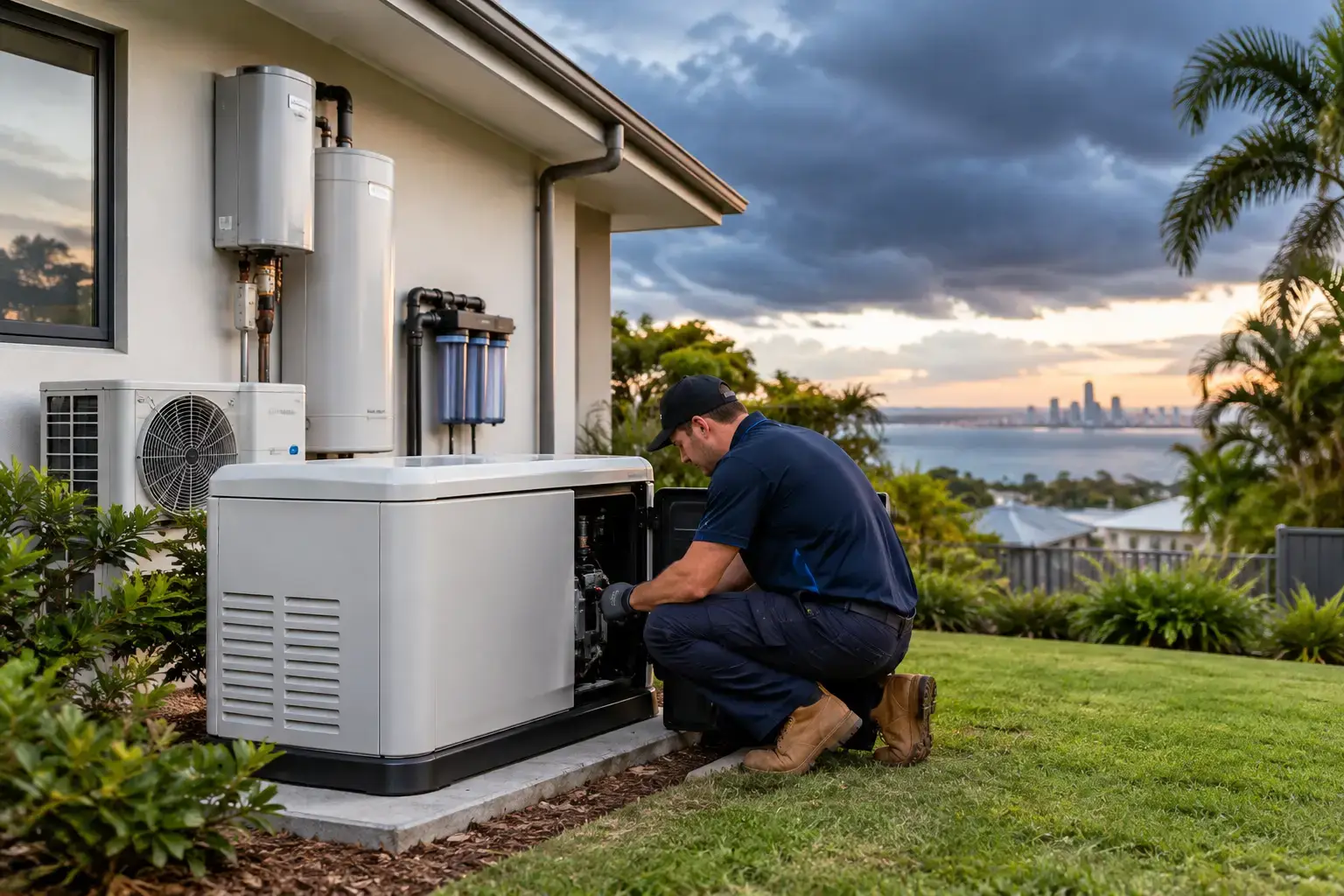
When a storm cuts the power, the problem is rarely just a dark house. Food starts warming in the fridge, internet drops out, electric gates may not work, and a long outage can make home life uncomfortable fast. A properly planned generator install for storm outages gives your household a safe, practical way to keep essential services running without scrambling for extension leads in the rain.
The right setup is not necessarily the biggest generator on the market. It is the one that suits your home, the appliances you genuinely need during an outage, and the way your family lives. Getting those details right before storm season makes all the difference.
Start with the essentials, not every appliance
A generator does not have to power your whole home to be worthwhile. For many households, the best value comes from backing up a carefully chosen group of essential circuits. That might include your fridge and freezer, a few lights, internet equipment, selected power points, a garage door, security system and a ceiling fan or air conditioner in one main room.
This approach keeps the generator size and installation cost sensible while still covering the things that matter most. It also avoids the common mistake of choosing a generator based on its headline output, then finding it struggles when several high-demand appliances start at once.
Electric ovens, large ducted air conditioning systems, pool pumps, electric hot water systems and some EV chargers can draw substantial power. They may be suitable for a larger whole-home backup system, but they are not always practical for an essential-circuits setup. A licensed installer can assess your switchboard, calculate expected loads and help you decide what should stay on during an outage.
Think about how outages affect your household
Every home has different priorities. A family with young children may place refrigeration, lighting and fans at the top of the list. Someone working from home may need reliable power for the modem, computer and mobile charging. For older residents, maintaining lighting, refrigeration and medical equipment may be the key concern.
Write down what you would miss first after four hours without power, then again after 24 hours. That gives you a more useful starting point than trying to run every appliance as normal.
Choose the right generator type
Homeowners generally choose between a portable generator connected through approved equipment and a permanently installed standby generator. Both can be useful, but they suit different needs.
A portable generator is usually the lower-cost option and can be stored when not in use. However, it still needs safe outdoor positioning, manual setup and a compliant connection point. You will need to start it, manage its fuel supply and decide which circuits to run while the outage is happening.
A standby generator is permanently located outside and connected to your home’s electrical system through a transfer switch. Depending on the system, it may start automatically when mains power fails and shut down once power returns. This option costs more upfront, but it is particularly helpful for households that want backup power without needing to be home, physically able to set up equipment or comfortable managing a portable unit during severe weather.
For homes using LPG, an LPG-fuelled generator can offer a tidy, long-term fuel option. It can be connected to an appropriately designed gas supply by a qualified gas fitter, subject to site requirements and appliance specifications. Gas storage and supply should be sized for expected generator use, rather than assuming existing household gas bottles will cover a lengthy outage as well as normal hot water and cooking needs.
Why a transfer switch is not optional
One of the most important parts of a generator install for storm outages is the transfer switch. This equipment safely separates your home from the electricity network before generator power is used.
Without it, electricity can feed back into external lines. That creates a serious danger for electrical workers repairing the network and can damage your generator or household wiring when grid power returns. Running a generator through an ordinary power point is unsafe and should never be attempted.
A licensed electrician can install either a manual transfer switch or an automatic transfer switch, depending on the generator and the level of convenience you want. They can also configure an essential-circuits board, which keeps the generator focused on selected parts of the home rather than attempting to carry everything.
It is a small detail on paper, but it is the difference between a safe backup system and a risky workaround.
Placement matters more than most people expect
Generators must operate outdoors, with clear airflow and enough separation from doors, windows, vents and other openings. Exhaust fumes contain carbon monoxide, an odourless gas that can be deadly in enclosed or poorly ventilated areas. A generator should never run in a garage, under a house, in a shed or near an open window, even if the weather is unpleasant.
Noise is another consideration. A generator that sits too close to bedrooms, neighbouring fences or outdoor living areas can be frustrating during an already stressful outage. Site selection should balance safety, noise, weather protection, access for servicing and local requirements.
Your installer will also consider the generator’s pad or base, drainage around the location, clearances, electrical cable routes and access to the switchboard. On the Gold Coast and nearby areas, storm exposure and heavy rain make sensible placement especially worthwhile. The goal is equipment that is protected from avoidable water exposure but still has the ventilation it needs.
Plan for fuel and runtime honestly
Generator runtime is often misunderstood. A unit may be capable of running for many hours, but its actual duration depends on its fuel storage and the electrical load being used. The more appliances you run, the faster fuel is consumed.
This is why an essentials-first approach works so well. Running refrigeration, lights, internet and a few power points uses far less energy than trying to operate multiple air conditioners, cooking appliances and a pool pump at the same time.
If you are considering LPG, ask how long the proposed gas supply is expected to support your selected generator load. Also consider whether that same supply serves your hot water, cooktop or gas fire. A good design accounts for the whole household, not just the generator in isolation.
Do not forget maintenance and testing
A generator is emergency equipment. Like a smoke alarm or backup battery, it needs attention before the emergency arrives. Portable units need regular checking, safe fuel management and test runs in accordance with the manufacturer’s guidance. Standby systems should be serviced on schedule and tested so you know the automatic start, transfer switch and selected circuits are working correctly.
Testing also helps you spot practical issues early. You may find that a particular appliance should be moved off the backup circuit, that family members do not know where the changeover equipment is, or that your internet equipment takes longer to restart than expected.
Keep the generator area clear, store operating instructions somewhere easy to find and make sure everyone in the household knows the basic safety rules. If the system uses LPG, include gas safety checks as part of your regular household maintenance.
Get the installation scope clear before booking
A clear quote should explain what is being supplied and what work is included. That means the generator model and capacity, switchboard work, transfer switch, essential circuits, cabling, mounting or base requirements, commissioning and any gas connection work where applicable.
It is also worth asking what happens if the existing switchboard needs upgrades or if site conditions reveal additional work. The cheapest quote can become expensive if key items are excluded or unclear. A fixed, upfront scope gives you a better basis for comparing options and avoids surprises on installation day.
No Hassle Homes can help homeowners organise generator supply and installation without juggling separate electrical and gas trades. The job should be assessed as one home system, with safety, fuel supply and your everyday priorities considered together.
A backup generator is not about making a storm outage feel normal. It is about keeping your home safe, connected and manageable until the power comes back. Plan it before the forecast turns ugly, and you will have one less thing to worry about when the lights go out.