


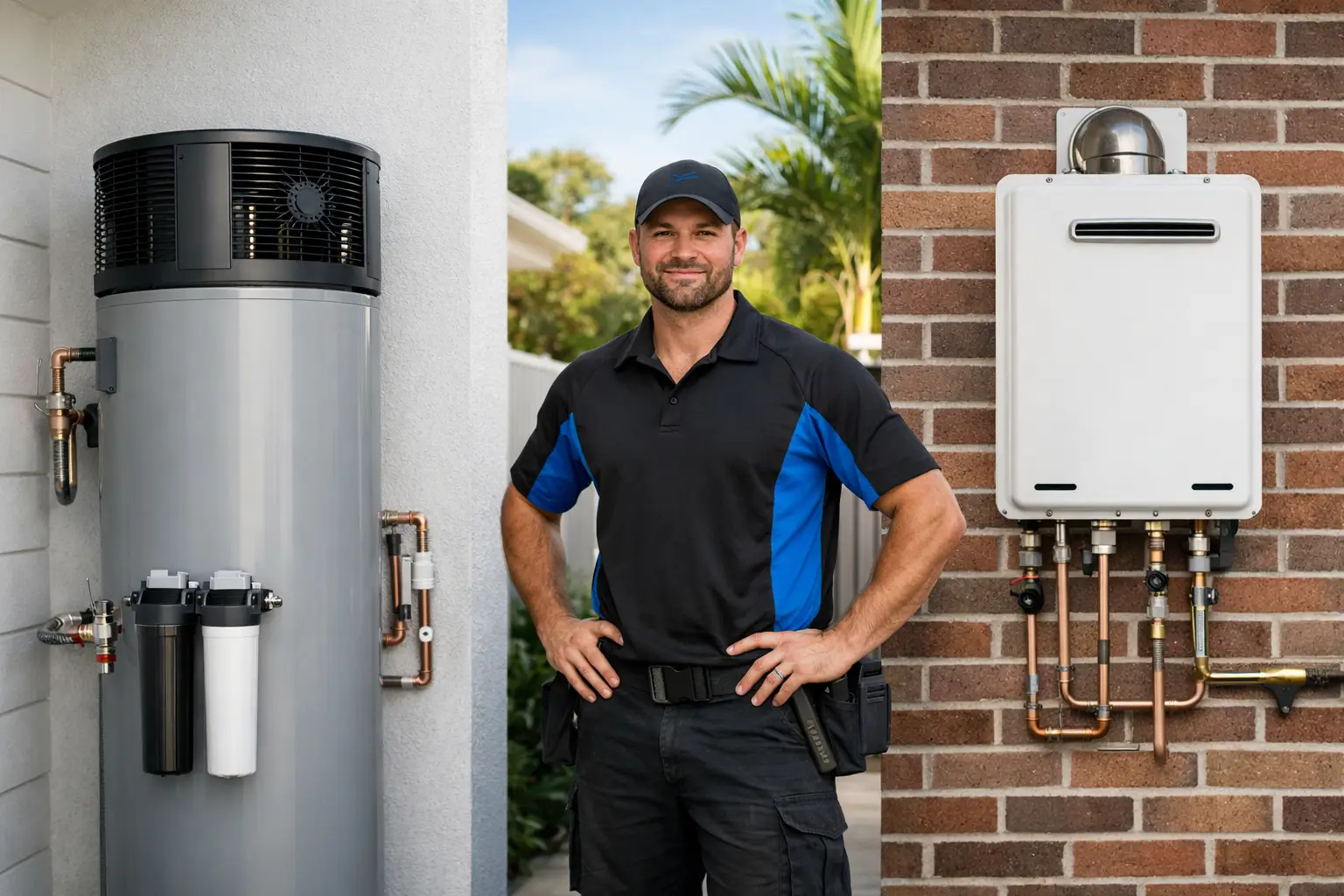
A cold shower at 6 am is not the time to discover your hot water system cannot keep up. When weighing up heat pump versus gas, the right choice comes down to more than the purchase price. Your household size, shower habits, available space, power supply and how quickly you need hot water all matter.
For many Gold Coast, Southern Brisbane and Tweed households, both options can be a sensible fit. Heat pumps can be very efficient in our generally mild climate. Gas hot water remains hard to beat for fast recovery, reliable high-demand performance and homes that already use LPG for cooking or heating.
Heat pump versus gas: the key difference
A heat pump water heater uses electricity to move heat from the surrounding air into the water tank. It does not create all the heat directly, which is why it can use less electricity than a conventional electric storage system. It needs a tank, an outdoor location with airflow and enough time to heat and store water ahead of use.
A gas hot water system heats water by burning gas. Instantaneous gas units heat water as it flows through the system, so there is no large tank of stored hot water to run out. Gas storage systems use a tank but generally recover faster than many electric options.
That difference changes the day-to-day experience. A heat pump is typically about planning around stored hot water. Gas, particularly continuous-flow gas, is about getting hot water when you turn on the tap.
Upfront cost and installation considerations
The unit price is only part of the job. A proper comparison includes removal of the old system, plumbing changes, electrical work, gas connections, drainage, safe clearances and any required upgrades.
Heat pumps often cost more to buy and install than a straightforward replacement gas unit. They need an appropriate outdoor site, a concrete base or stable mounting area, drainage for condensate and suitable electrical supply. Their fan and compressor also make some noise, so location matters – especially near bedrooms, neighbours or quiet outdoor entertaining areas.
Replacing an existing gas hot water system can be simpler where the gas line, water connections and flue arrangements are already suitable. However, older pipework, undersized gas lines or a move to a larger continuous-flow unit can add work. A licensed gas fitter should check the full setup before quoting, rather than guessing from a photo alone.
If you are building, renovating or replacing a failed unit urgently, ask for a fixed quote that clearly states what is included. The cheapest-looking system can become expensive when site work is left out of the original price.
Running costs: efficiency is not the whole story
Heat pumps are popular because they can be highly efficient. In warm, humid coastal conditions, they usually have good access to ambient heat, which can help keep electricity use lower. A household with solar panels may get even better value by scheduling the heat pump to run during daylight hours.
But savings depend on how the system is used. A heat pump has a tank of hot water to replenish. Large families who take long showers close together, regularly use multiple bathrooms, or run hot-water-heavy appliances may need a larger tank or careful system selection. In cooler weather, during extended wet periods or when demand is high, the unit may take longer to recover. Some models use an electric booster element when needed, which can increase electricity consumption.
Gas running costs depend on gas pricing, household usage and the type of system. Continuous-flow units only heat water when a tap is running, avoiding standby losses from a storage tank. For busy homes, that can be a practical advantage. If you already have LPG bottles for a cooktop or gas fire, keeping hot water on gas may also simplify the household setup.
There is no honest one-size-fits-all answer on bills. A smaller household with daytime solar and modest hot-water demand may find a heat pump very attractive. A larger household that wants back-to-back showers without managing usage may place more value on gas performance.
Hot water performance for real households
The best system is the one that matches what happens in your home, not an idealised usage chart.
A continuous-flow gas system provides hot water on demand, provided it is correctly sized and there is adequate gas supply. It is a strong option for families with teenagers, multiple bathrooms or frequent visitors. It can also free up outdoor space because there is no large storage tank.
Heat pumps work well for households that can store enough water before peak demand. A correctly sized model can comfortably serve a family, but sizing is critical. Buying too small to save upfront can lead to lukewarm water, booster use and frustration.
Water pressure and flow also deserve attention. A hot water upgrade will not always fix weak shower pressure caused by plumbing restrictions, pressure-limiting valves or the shower fixture itself. An experienced installer can identify whether the hot water system is the issue before you spend money on the wrong solution.
Reliability, maintenance and power outages
Both systems need professional installation and periodic attention. Gas systems should be installed and serviced by licensed gas fitters, with safe ventilation, compliant connections and correct pressure settings. For LPG homes, bottle supply and regulators should also be checked as part of the wider gas setup.
Heat pumps have more electrical and mechanical components than a basic gas storage system. The compressor, fan, controls and tank all need to be considered over the life of the unit. Keeping the outdoor area clear and allowing airflow helps the system work as intended.
Power outages are worth considering too. A heat pump needs electricity to operate. Many modern gas continuous-flow systems also need power for electronic ignition and controls, so they may not run during an outage either. If backup hot water is important, discuss your options when planning a generator or home backup-power system rather than assuming either system will operate automatically.
Space, noise and appearance
This is where practical site assessment makes a difference. Heat pumps are larger and need open air around them. They suit many side yards, laundry-adjacent outdoor areas and back-of-house locations, but not every tight townhouse or courtyard.
Gas instantaneous systems are compact, although they need compliant placement and clearances. Gas storage units take more room, but may still be the most straightforward replacement when an existing tank is already in place.
Do not choose a location based only on where the old unit sits. Consider access for future servicing, distance to bathrooms, pipe heat loss, noise, drainage and whether the position will interfere with gates, bins or outdoor living areas.
When a heat pump is likely to suit
A heat pump is often worth a close look if you have a suitable outdoor location, want to reduce grid electricity use, have solar or plan to add it, and can size the tank properly for your family. It can be a particularly good choice for households with predictable hot-water use and room to let the unit recover between peak periods.
It may be less appealing if space is tight, noise placement is difficult, the home has very high and unpredictable demand, or you need a rapid replacement with minimal site changes.
When gas is likely to suit
Gas is often the practical choice for larger or busier households, homes with existing LPG infrastructure, and anyone who values fast recovery and hot water on demand. It is also a sensible option where an old gas system has failed and you need a safe replacement without waiting through a major electrical or site upgrade.
The system still needs to be correctly sized. A unit that is too small can struggle when two showers and a kitchen tap are running at once. A qualified installer can assess bathrooms, likely simultaneous use, gas bottle capacity and pipe sizing before recommending a model.
Make the decision around your home, not a headline figure
Before choosing, write down how many people live in the home, when showers happen, whether you have solar, where a unit can go and whether you already rely on LPG for other appliances. Those details provide a far better answer than comparing two advertised prices.
A reliable hot water system should fit into your routine quietly, safely and without constant thought. Whether that points to a heat pump or gas, getting the sizing and installation right from the start is what keeps mornings running smoothly.