


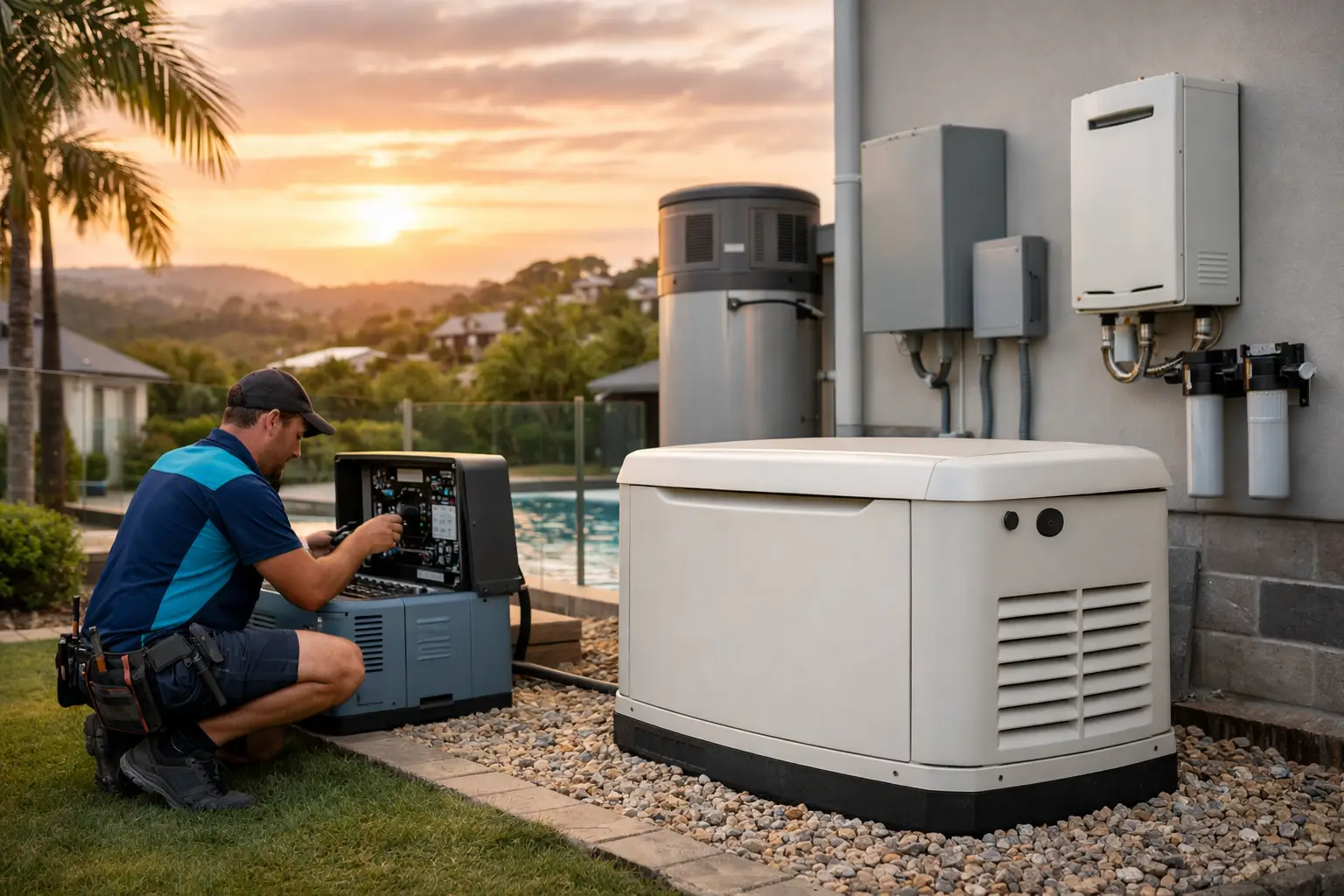
A blackout rarely arrives at a convenient time. It can stop the fridge, internet, lights, cooking and cooling just as a storm rolls through or the family is settling in for the evening. The right home generator supply gives your household a practical backup plan, but choosing one is about more than buying the biggest unit you can find.
A generator needs to suit the way your home actually operates. That means looking at the appliances you need to keep running, the fuel source, where the generator will sit and how it will connect safely to your switchboard. Get those details right from the start and backup power becomes simple, safe and useful when you need it most.
What home generator supply should include
Home generator supply should not mean a box dropped at the front door with a manual to decipher later. For most homes, it is a complete process: choosing an appropriately sized generator, confirming a safe location, arranging professional installation where required, connecting it correctly and showing you how to use it.
The best solution depends on whether you want power for a few essentials during occasional outages or automatic whole-home backup. A family that mainly wants to protect food, keep a few lights on and charge mobiles will need a very different setup from a household that relies on medical equipment, works from home or wants air conditioning available during a longer outage.
A clear, fixed quote matters here. It should explain what is included in the generator, any changeover equipment, electrical work, site preparation and commissioning. That removes the uncertainty that can come from trying to coordinate an electrician, gas fitter and equipment supplier separately.
Start with the appliances that matter most
It is tempting to add up every appliance in the house and aim to run them all. In practice, that can make the generator larger, noisier and more expensive than it needs to be. A better approach is to separate essential loads from nice-to-have loads.
For many Gold Coast and Northern NSW households, essential loads may include the fridge and freezer, a few lights, internet equipment, mobile charging, a television, selected power points and perhaps a pump. If someone works remotely, the home office may also be essential. If your property has electric gates, consider whether they need backup power or a manual release option.
High-demand appliances change the calculation quickly. Ducted air conditioning, electric ovens, hot water systems, pool pumps, clothes dryers and EV chargers can require significant capacity. You may still be able to power some of them, but it needs careful load planning. Often, a dedicated circuit arrangement lets the generator support the most useful parts of the home without trying to carry everything at once.
Running power is not the whole story
Motors and compressors can draw more power when they start than when they are running. Fridges, pumps and air conditioners are common examples. This starting load is one reason a generator that looks adequate on paper may struggle in real use.
A professional assessment considers both running watts and starting demand, along with the order in which appliances are likely to start. It also considers future needs. If you are planning an extension, adding a home office or changing from a gas cooktop to an electric appliance, mention it before the generator is selected.
Portable or standby generator: choose for the job
Portable generators are often a sensible option for shorter, occasional outages. They can be more affordable upfront and, when connected through the correct equipment, can keep selected circuits operating. They do require manual setup, fuel checks and safe placement each time they are used.
Standby generators are installed as a permanent backup system. Depending on the setup, they can start automatically when mains power fails and transfer the home to generator power. They are more convenient for frequent outages, people who may not be home when power drops, or households where continuity is especially important. The trade-off is a higher initial cost and more involved installation.
For either option, noise, weather protection and access for servicing are worth considering. A generator tucked into a difficult corner may be out of sight, but it can be awkward to inspect, operate or maintain. It also needs appropriate ventilation and clearance from doors, windows and vents.
Gas generator supply can reduce the refill rush
For homeowners with LPG already supporting cooking, hot water or heating, a gas generator may be worth discussing. A correctly designed LPG generator setup can provide a convenient on-site fuel source and avoids storing multiple containers specifically for emergency use.
It still needs planning. Fuel consumption varies with generator size and load, so the gas supply must be suitable for the expected running time. A generator running a few selected appliances for several hours has very different requirements from one supporting a larger home through an extended outage.
This is where using a provider with gas and home-service experience can make life easier. No Hassle Homes can help homeowners consider the generator alongside existing household gas systems, rather than treating backup power as a separate, complicated project.
Safe installation is not optional
A generator should never be connected directly to a household power point. This unsafe practice can send electricity back into the network, putting neighbours and electrical workers at risk, and can damage appliances when normal power returns.
A licensed electrician should install the correct changeover switch or transfer equipment so the generator and mains supply cannot feed the home at the same time. The installation should identify which circuits are backed up, provide clear operating instructions and be tested before you rely on it during an outage.
Portable generators must always operate outdoors in a well-ventilated location. Never run one in a garage, shed, enclosed patio or near open windows and doors. Exhaust gases are dangerous, and moving the generator under cover during heavy rain without considering ventilation can create a serious hazard.
If the setup uses LPG, a qualified gas fitter should assess the gas connection, regulator requirements, pipework and clearances. This is not a job for makeshift hoses or temporary fittings. Proper installation protects your household, your equipment and your insurance position.
Think about outages before the storm season
The easiest time to organise backup power is before the weather forecast looks worrying. During a widespread outage, equipment availability and installation schedules can tighten quickly. Planning early gives you time to compare the right options rather than making a rushed choice.
It also gives you time to prepare the rest of your outage plan. Keep torches charged, know how to manually operate gates if needed, save important contacts on your mobile and make sure everyone in the household knows which appliances should stay off while generator power is running. A simple note near the switchboard can prevent confusion.
If you have solar, do not assume it will power the home during a blackout. Most standard solar systems shut down when the grid goes off for safety reasons. Some battery and hybrid inverter systems can provide backup, but the generator connection needs to be designed to work with the existing system. Raise this during the initial assessment so the equipment is compatible.
Keep your generator ready, not just installed
A generator is most reliable when it is tested before an emergency. Run it according to the manufacturer’s guidance, check the battery on a standby model and inspect leads, connections and the area around the unit. Keep leaves, stored items and garden growth clear of ventilation points.
Maintenance intervals vary by model and operating hours. Oil, filters, spark components and battery condition all affect whether the generator starts when you need it. Record servicing dates and do not ignore a unit that becomes hard to start, runs roughly or shows warning lights.
For a gas-powered system, arrange periodic checks of the gas components as part of normal home maintenance. A small issue found early is far less disruptive than discovering it during a blackout.
Make backup power fit your home
The right generator is not necessarily the largest one. It is the one that covers the essential parts of your household, fits your property safely and is installed by qualified professionals who can explain exactly how it works. Whether you are protecting a fridge and internet connection or planning automatic backup for a larger home, a properly planned system takes much of the stress out of the next outage.
A quick conversation about how your household uses power can turn home generator supply from a confusing purchase into a dependable part of your home.