


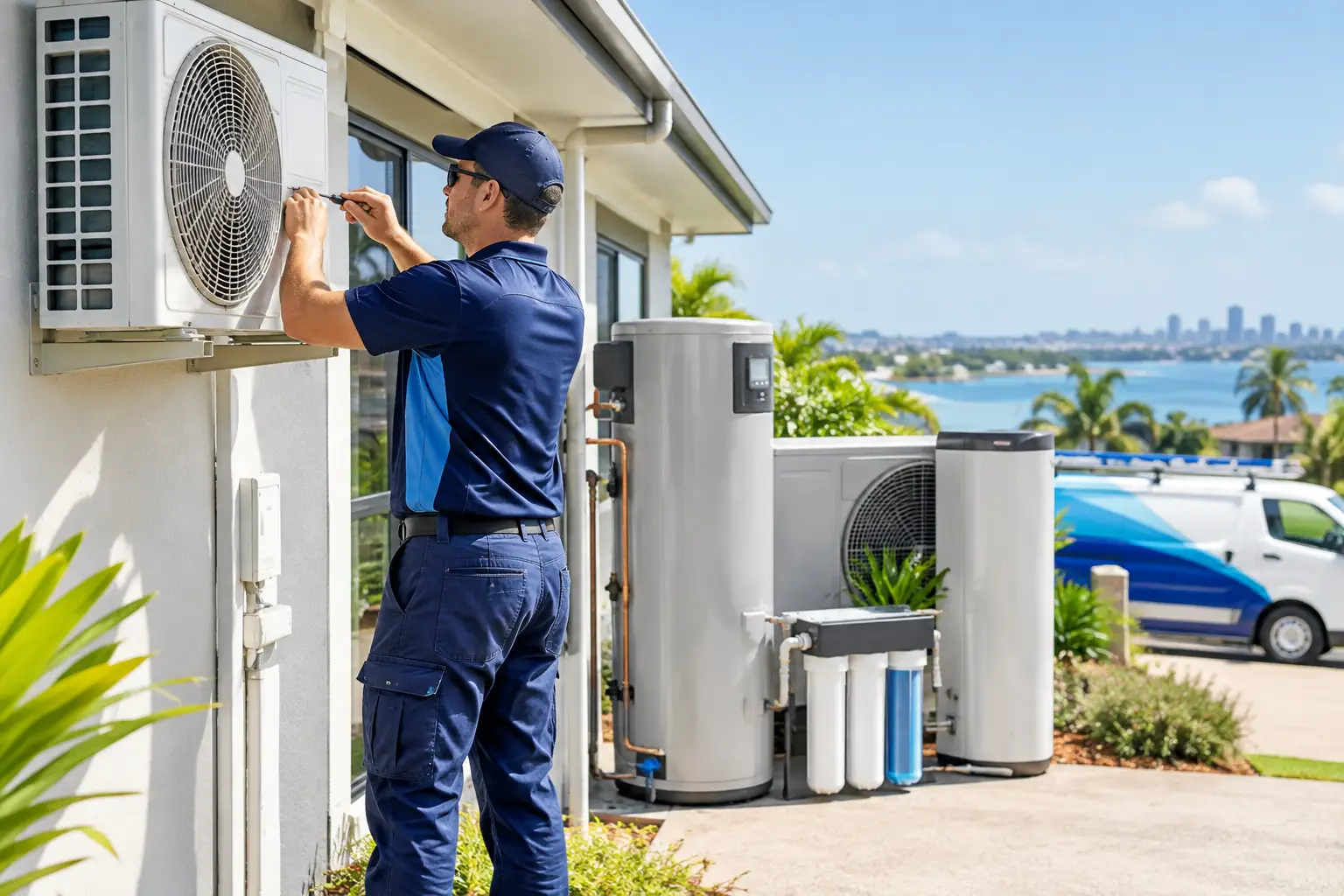
A new air conditioner is usually fitted in a day, not a week of tradies coming and going. If you are asking, “how long does aircon installation take?”, the short answer for a standard split-system unit is around four to eight hours. The exact timing depends on your home, the system you choose and whether the installer can access everything easily.
For Gold Coast homes, air conditioning is less of a luxury than a practical way to stay comfortable through humid summer days and warm nights. Knowing what is involved before installation day makes the process far less stressful – and helps avoid surprises with timing or cost.
How long does aircon installation take for most homes?
A straightforward wall-mounted split-system installation generally takes half a day to a full day. This includes mounting the indoor unit, placing the outdoor condenser, running the pipework and electrical connections, fitting the drainage line, testing the system and showing you how to use it.
If you are replacing an existing split system in the same location, the job can sometimes be quicker. Much of the pathway for the pipework, cabling and drainage may already be in place, although the installer still needs to check that it meets the requirements of the new unit. Reusing unsuitable pipework simply to save time is not a good outcome.
A multi-head system, where several indoor units connect to one outdoor unit, usually needs a full day and may run into a second day. Ducted air conditioning is a larger project. Depending on the size of the home, roof access, duct layout and electrical work required, allow one to three days.
The system type matters, but access and preparation often make the biggest difference.
What can make an installation take longer?
Every home is laid out differently. An experienced installer will assess the site before confirming the best location for each component, rather than rushing into the nearest available wall.
The job may take longer if the outdoor unit needs to be installed on brackets, on a balcony, high on an external wall or a long distance from the indoor unit. Longer pipe and cable runs require more time and materials. Tight side access, steep blocks and difficult roof space access can also slow things down safely.
Electrical capacity is another key factor. Air conditioners need a compliant electrical connection and, in many cases, a dedicated circuit. If your switchboard has no room, needs an upgrade or is located a long way from the unit, extra electrical work may be needed before the aircon can be commissioned.
Older homes can present a few unknowns too. Concealed wiring, brittle wall finishes, asbestos-containing materials and drainage challenges need to be handled properly, not worked around in a hurry. Bad weather can also delay exterior work where it affects safety.
These issues do not mean the installation will be difficult. They simply mean a fixed quote should be based on a proper assessment, so you know what is included before work starts.
A realistic timeline by aircon type
For a single split system in a readily accessible bedroom, living room or office, plan for four to eight hours. A larger, higher-capacity split system may sit toward the longer end of that range, particularly where the outdoor unit is not directly behind the indoor unit.
Two separate split systems installed on the same visit will often take a full working day. There can be efficiencies when the team is already on site, but each unit still needs correct mounting, drainage, electrical work, pressure testing and commissioning.
Multi-head air conditioning is commonly a one- to two-day job. It has fewer outdoor units but more indoor connections, more pipework and more planning around the route through the home.
Ducted systems take the longest because installers need to position the indoor fan coil, run insulated ducting through the roof space, fit ceiling outlets, install a controller and connect the outdoor unit. A single-storey home with good roof access may be completed in a day. Larger homes, two-storey properties and more complex zoning systems can take two or three days.
What happens on installation day?
A professional installation follows a clear sequence. First, the installer confirms the agreed locations and checks access. The indoor unit is mounted securely, while the outdoor unit is set on a stable base or approved brackets with enough clearance for airflow and future servicing.
Next comes the connection work. Refrigerant pipework, condensate drainage and electrical cabling are run between the indoor and outdoor units. The drainage line needs the right fall so condensation leaves the system instead of dripping into a wall, ceiling or walkway.
The installer then pressure-tests and evacuates the pipework before releasing refrigerant and starting the system. This is not a shortcut stage. Proper testing helps protect efficiency, performance and the life of the unit.
Finally, the system is checked in both cooling and heating modes where applicable. You should be shown the remote or controller, filters, basic operating settings and any maintenance steps recommended for your model. The site should be left tidy, with packaging and installation waste removed as agreed.
How to help the job run on time
You do not need to do the technical work, but a little preparation can save time on the day. Make sure the installer can access the switchboard, indoor wall and proposed outdoor-unit area. Move furniture, pot plants, outdoor toys and stored items away from those spaces where practical.
If the unit is going into a bedroom or living area, protect or relocate valuable items beneath the work area. Let the installer know about known issues such as previous leaks, solar equipment, recent renovations, a difficult gate or pets that need to stay secure.
It also helps to be available at the start and finish of the appointment. At the start, you can confirm positioning. At the end, you can ask practical questions about running costs, filter cleaning and the best temperature settings for comfort without overworking the system.
Why a quick installation should still be done carefully
Fast service is valuable, especially when the weather is already heating up. But speed should come from good scheduling, clear quoting, qualified installers and having the right materials ready – not from skipping checks.
Poor placement can make an air conditioner noisier, less efficient or harder to maintain. Incorrect drainage can cause water damage. Electrical work that is not completed correctly is a safety risk. A neat, properly commissioned installation may take a few extra hours compared with a rushed job, but it gives you a system that is safer and more likely to perform as it should.
This is also why the cheapest quote is not always the best value. Compare what is included: the unit capacity, pipe run allowance, electrical work, wall brackets or slab, removal of an old unit, testing and any warranty support. A clear fixed quote makes it easier to compare like for like.
When should you book aircon installation?
The best time to install air conditioning is before you urgently need it. Booking in spring or early autumn can give you more flexibility around appointment times, while avoiding the peak summer rush. That said, a reliable local provider should still make the process straightforward when your old unit fails or you need cooling quickly.
If you are renovating, arrange the aircon plan early. Coordinating it before walls are closed or painting is finished can reduce visible pipework and avoid redoing completed work. For a replacement system, do not wait until it has stopped altogether if it is becoming noisy, leaking or struggling to cool a room. An early assessment gives you time to choose the right option rather than making a rushed decision on a hot day.
No Hassle Homes helps homeowners organise air conditioning installation with clear communication, licensed work and practical scheduling. The aim is simple: make sure you know what is happening, how long it should take and what you are paying for before the work begins.
A well-planned aircon installation should feel refreshingly ordinary: the team arrives prepared, completes the job safely, cleans up and leaves you with a home that is ready for the next heatwave.