


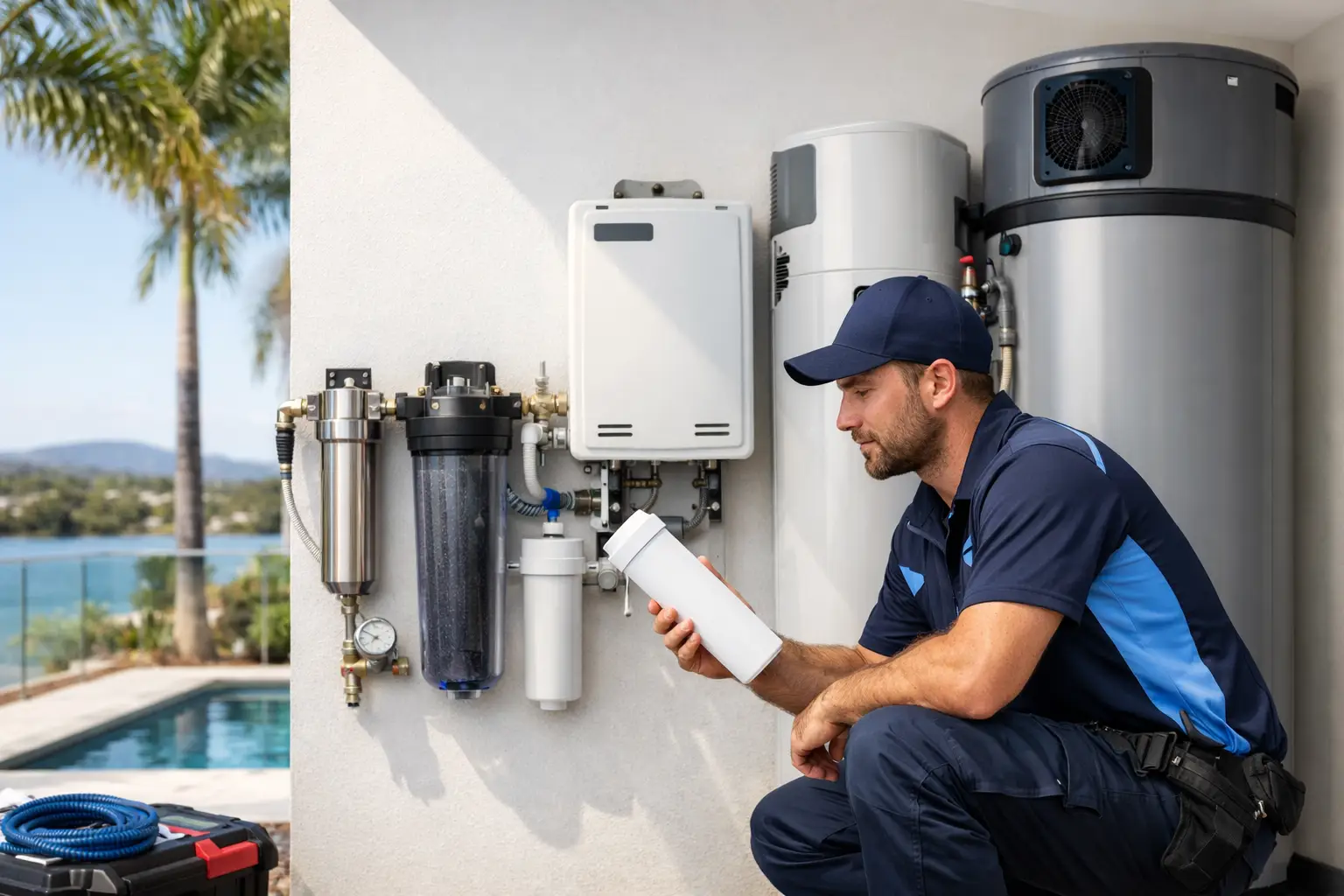
That chlorine taste in your kitchen tap, the white marks on your shower screen, the kettle that keeps scaling up – these are usually the moments homeowners start asking how to choose water filtration without wasting money on the wrong system. The tricky part is that water filtration is not one-size-fits-all. What works well for one home can be unnecessary, undersized or simply inconvenient in another.
The best choice starts with the problem you are actually trying to fix. Some households want better-tasting drinking water. Others want to reduce sediment, protect appliances, or deal with hard water symptoms that show up in taps, hot water systems and glassware. If you skip that first step, it is easy to overbuy or end up with a system that does not solve the issue you notice every day.
How to choose water filtration for your home
A good way to think about filtration is by working backwards from your daily use. Ask yourself where the water quality matters most. If your concern is mainly what you drink, an under-sink drinking water filter may be enough. If you are seeing staining, build-up or wanting broader protection for plumbing fixtures and appliances, a whole-house system may make more sense.
This matters because the price gap between systems can be significant, and so can the installation requirements. A compact drinking water setup is usually simpler and cheaper than filtering every tap in the house. On the other hand, if you install a small point-of-use system when the real issue is affecting showers, laundry and hot water equipment, you have only fixed part of the problem.
Start with your water source and symptoms
Town water and tank water can raise different concerns. Mains water is treated, so people often focus on taste, odour and chlorine. Tank water users may be more concerned about sediment, organic matter and general water quality consistency, especially after weather events.
Then look at the symptoms in your own home. Bad taste and smell often point people towards carbon filtration. Visible sediment may call for a sediment filter. Scale build-up may suggest hardness issues, which filtration alone does not always solve. That is an important distinction because some homeowners buy a filter expecting it to fix hard water, when what they may actually need is a different treatment approach.
Know what filtration can and cannot do
Filtration is a broad term, and systems vary a lot. A basic sediment filter catches particles like dirt and rust. Carbon filters are commonly used to improve taste and reduce chlorine and odours. More advanced systems can target a wider range of contaminants, but they also come with higher upfront costs, more maintenance and sometimes slower flow rates.
That trade-off matters in busy households. A highly specialised system may sound impressive, but if it slows water pressure too much or needs constant cartridge changes, it can become more hassle than help. The right system is not the one with the longest feature list. It is the one that matches your water, your household size and the level of maintenance you are willing to keep up with.
Choosing between under-sink and whole-house filtration
For many homes, this is the main decision. Under-sink systems are designed to treat water at a single point, usually the kitchen sink. They are a practical choice when your main goal is cleaner drinking and cooking water. They cost less than whole-house systems, take up less room and are often enough for households that are otherwise happy with their water.
Whole-house filtration treats water as it enters the property. That means filtered water goes to bathrooms, laundry, kitchen taps and in some cases outdoor use depending on the setup. This option is more appealing when the issue is not limited to drinking water – for example, if you want to reduce sediment through the home, improve water quality for showering, or help protect appliances and plumbing components.
The downside is cost and complexity. Whole-house systems need proper sizing, suitable installation space and a clear plan for servicing. If the property has high water demand and the system is not sized correctly, pressure and flow can suffer. That is why professional advice matters, particularly for larger homes or households with multiple bathrooms in regular use.
Capacity matters more than most people realise
A filter system that is too small for the household will not perform well for long. It may clog faster, reduce pressure or need more frequent replacement than expected. When working out size, think about how many people live in the home, how many bathrooms are used at the same time, and whether you want filtered water only at one outlet or across the whole property.
This is where buying purely on price can backfire. A cheap system may look good initially, but if it needs frequent cartridge changes or struggles under normal household demand, the running costs and frustration add up quickly. A slightly better-suited system often works out cheaper over time.
Do not ignore maintenance
Every filtration system needs maintenance. Cartridges need replacing, housings may need cleaning, and the system needs checking to make sure it is still doing what it should. If a filter is neglected, performance drops and in some cases it can become a hygiene issue rather than a solution.
Before choosing a system, ask how often it needs servicing, what replacement parts cost and whether access is easy. A system hidden in an awkward cupboard or installed where it is hard to isolate water can turn a simple service job into an annoying one. Homeowners who want a set-and-forget option should be realistic here. There is no truly maintenance-free filter.
How to compare water filtration systems without getting lost in specs
A lot of product information is written to sound more technical than it needs to be. For most homeowners, the better comparison points are simpler. Look at what problem the system is designed to solve, the expected flow rate, cartridge lifespan, servicing needs, installation requirements and total cost over time.
It also helps to ask whether the system fits how you actually live. A family home with morning showers, school lunches, washing loads and a busy kitchen has different demands from a small unit occupied by one or two people. The best setup is practical, not just impressive on paper.
If you are weighing up a DIY purchase against professional supply and installation, think beyond the box price. Correct placement, pressure considerations, shut-off access and future servicing all affect how well the system works once installed. A poor installation can create leaks, pressure issues or make maintenance far more difficult than it needs to be.
When professional advice is worth it
If you are only replacing a simple cartridge in an existing system, the decision may be straightforward. If you are choosing a new setup for the whole home, dealing with water pressure concerns, or trying to solve several symptoms at once, professional guidance can save you from an expensive wrong turn.
A licensed installer can help identify whether you need filtration, conditioning, or a combination of both. They can also assess where the system should go, what size is suitable, and how to keep access easy for future servicing. For homeowners juggling work, family and everything else, that kind of clarity is often worth more than spending hours comparing products online.
In areas across the Gold Coast, Southern Brisbane and Tweed Heads, water conditions and household setups can vary enough that local experience helps. What suits a newer home with good pressure and limited space may not suit an older property with different plumbing constraints.
A sensible budget is one that covers the full job
When budgeting, include the system itself, installation, replacement cartridges and ongoing servicing. Cheap filters can look attractive until you realise the consumables are frequent or pricey. More expensive systems are not automatically better either. Sometimes you are paying for treatment capability you simply do not need.
A sensible budget is one that fits the problem and the property. If your only concern is drinking water taste, there is no need to pay for a whole-house setup. If sediment is affecting fixtures and appliances throughout the home, going too small may just delay a proper fix.
The good news is that choosing well does not have to be complicated. Start with the water issue you notice, be honest about your maintenance habits, and match the system to the size and use of the home. If you want the process to be straightforward, a service-focused local team like No Hassle Homes can help you sort out what makes sense without overcomplicating it. The right filtration setup should make daily life easier, not give you one more household job to think about.