


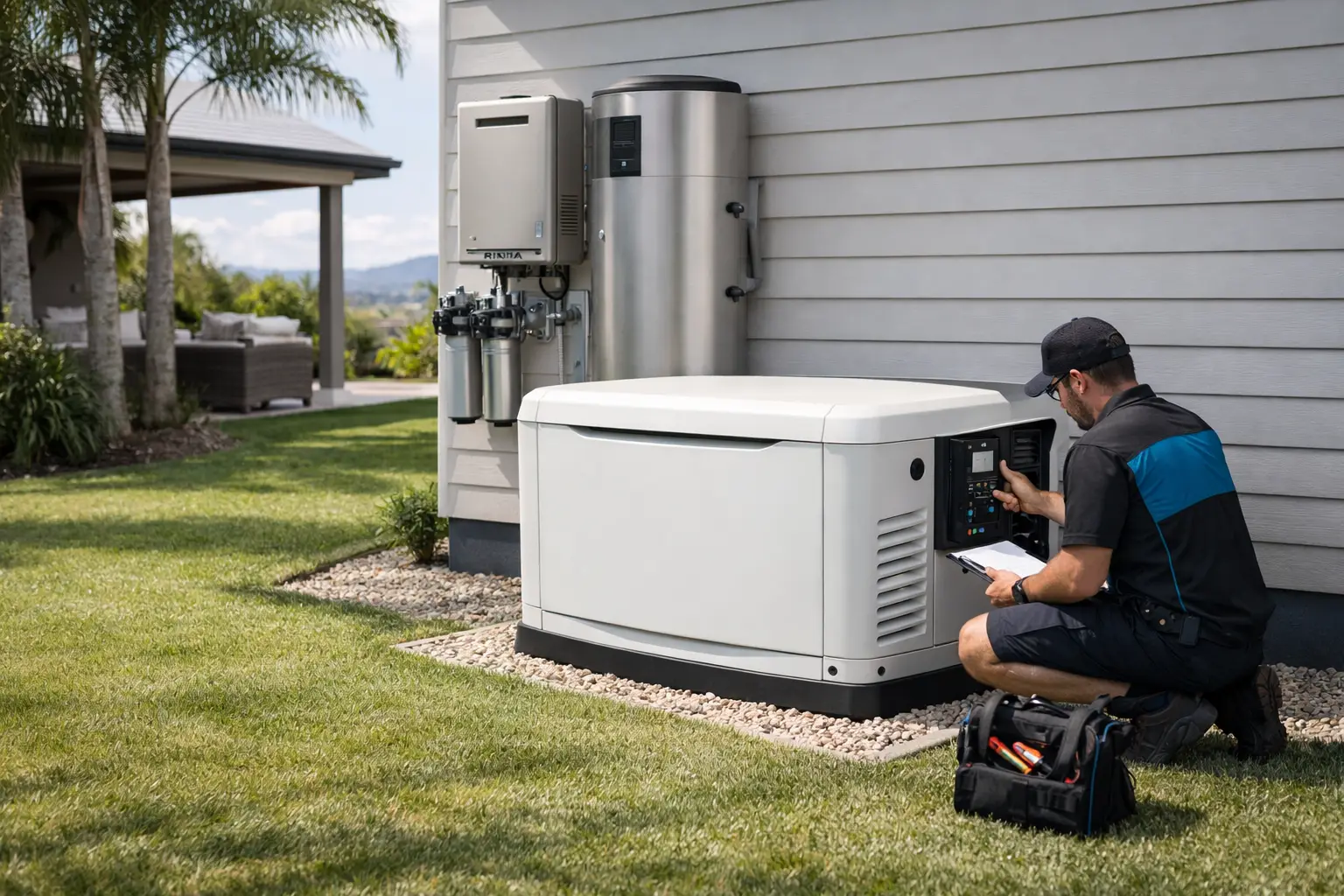
A blackout is rarely convenient. It can mean a dark kitchen just as dinner is getting started, a warm home when the air conditioning stops, or a worryingly quiet fridge full of food. When you choose a whole home generator, the goal is not simply to buy the biggest unit available. It is to set your home up with backup power that starts when you need it, safely supports the circuits that matter, and suits the way your household actually lives.
For homeowners across the Gold Coast and nearby areas, a standby generator can be a practical safeguard against storm outages and unexpected supply interruptions. The right choice comes down to four connected decisions: what you need to run, how much power it requires, where the generator will sit, and how it will be supplied and installed.
How to choose a whole home generator without overspending
The phrase “whole home” can be misleading. Some households want every circuit operating as normal during an outage. Others mainly want essential systems covered: refrigeration, lighting, internet, selected power points, a water pump, security, and perhaps air conditioning in key rooms. Both are sensible approaches. The better option depends on your budget, the size of your home and what would cause the biggest disruption if the power went out.
Start by thinking through a normal evening at home during an outage. Which appliances must stay on? For a family, that may include the fridge, freezer, lights, cooking appliances, Wi-Fi, televisions and bedroom air conditioning. For a property with pumps, gates or a home office, those systems may move higher up the list. Retirees may place greater value on cooling, medical equipment or keeping communications available.
This exercise is more useful than guessing from the size of your house. A large home with efficient appliances may have lower backup needs than a smaller home with several air conditioners, a pool pump and high-demand electric cooking.
Essential circuits or full-home coverage?
An essential-circuits setup directs generator power to selected circuits through a dedicated switchboard arrangement. It can be a cost-effective choice if you are comfortable managing a few non-essential appliances during an outage. You still keep the systems that protect food, comfort and communication without paying to power every load at once.
Full-home coverage is designed to carry the home more comprehensively. It suits households that do not want to decide what stays on when the grid fails, or homes where several systems need to operate together. The trade-off is a larger generator, more gas capacity and a higher installed cost.
There is also a middle ground. A properly designed system can prioritise major loads, so the generator does not try to start every heavy appliance at the same time. That may allow you to run more of the home without sizing the unit for every possible appliance operating at its maximum demand simultaneously.
Get the generator size right
Generator capacity is usually measured in kilowatts (kW). Sizing is not just about adding up the wattage printed on every appliance in the house. Motors and compressors can draw considerably more power when they start than when they are running. Air conditioners, pumps, fridges and some workshop equipment are common examples.
A licensed electrician should assess both your running load and start-up demand. They will also consider whether appliances are single-phase or three-phase, the capacity of your existing switchboard and how your circuits are arranged. This is where an on-site assessment is worth far more than an online calculator.
Undersizing creates frustration. The generator may overload, trip protection or struggle when a large appliance starts. Oversizing is not automatically better either. You may pay more upfront, use more gas than necessary and end up with a system that is larger than your real requirements.
Be clear with your installer about future plans as well. If you expect to add another air conditioner, a pool heater, an EV charger or a granny flat, mention it before the generator is selected. Designing with sensible allowance can save a costly upgrade later.
Consider gas supply, location and noise
For many homes, an LPG gas standby generator is a dependable option. It can run from an appropriately designed gas supply rather than relying on you to refill a small portable unit during a storm. This gives the system a major advantage: when there is an outage, the generator can start automatically and continue operating while its gas supply is available.
The available gas storage and expected runtime need to be planned together. A generator that supports essential circuits for a short outage has different supply needs to one intended to carry a full household through extended disruptions. Your usage will vary with the electrical load, so an experienced gas professional can help work out a practical arrangement that also accounts for other gas appliances in the home, such as hot water, cooktops or gas fires.
Location matters just as much. The generator needs a stable base, clear airflow and safe separation from doors, windows, vents and boundaries. It must also be accessible for servicing. It is tempting to tuck it into a tight corner to keep it out of sight, but restricted ventilation and poor access can create safety and maintenance problems.
Noise is another real consideration, particularly in closely settled streets. Generator enclosures reduce sound, but they do not make a running generator silent. A good site assessment considers your bedroom windows, neighbouring homes and where the sound will travel, not only the shortest path to the switchboard.
Automatic transfer makes the difference
A whole home generator should be paired with an automatic transfer switch or equivalent approved changeover equipment. This is what detects a loss of mains power, starts the generator and transfers the selected circuits to backup power. When grid supply returns and stabilises, it transfers the home back safely.
This automatic operation is one of the key differences between a permanently installed standby generator and a portable generator. You do not need to be at home, awake or willing to go outside in rough weather to set it up. It is particularly valuable if the home is vacant during the day, if someone relies on powered equipment, or if you simply want less stress when a storm rolls through.
The changeover equipment also protects utility workers and your electrical system by preventing generator power from feeding back into the grid. Never attempt to connect a generator to household wiring with improvised leads or a do-it-yourself arrangement. Backup power must be designed and installed by licensed professionals.
Look beyond the purchase price
The cheapest generator quote is not always the lowest-cost decision. Compare what is actually included: the generator itself, base preparation, electrical works, switchboard changes, automatic transfer equipment, gas pipework, gas storage considerations, approvals where required, commissioning and testing.
Ask how the installer will confirm the final capacity, which circuits are covered, and what happens if the existing switchboard needs upgrades. A clear fixed quote should spell out the scope rather than leaving major site work as a surprise later.
Maintenance also deserves attention before you buy. Like any engine-driven equipment, a standby generator needs periodic servicing, test runs and checks of its battery, fluids, controls and gas connections. Automatic weekly exercise cycles are useful, but they do not replace professional maintenance. Choose a unit and service provider you can confidently keep maintained for years, not just one that looks good on installation day.
Choose an installer who can manage the whole job
A home generator sits across electrical and gas work, so coordination is vital. You need licensed trades who understand the equipment, the home’s electrical demand, gas supply requirements and local installation rules. One organised point of contact helps avoid the usual back-and-forth between separate suppliers and trades.
Before booking, ask whether the site will be inspected, how the generator will be tested under load, what handover information you will receive, and who to call if you have a question after installation. A good installer will explain the system in plain language, including what it will and will not run during an outage.
No Hassle Homes can help local homeowners plan a gas generator installation with the right electrical and gas expertise involved from the start. The best time to arrange an assessment is before the next major storm puts backup power at the top of everyone’s list.