


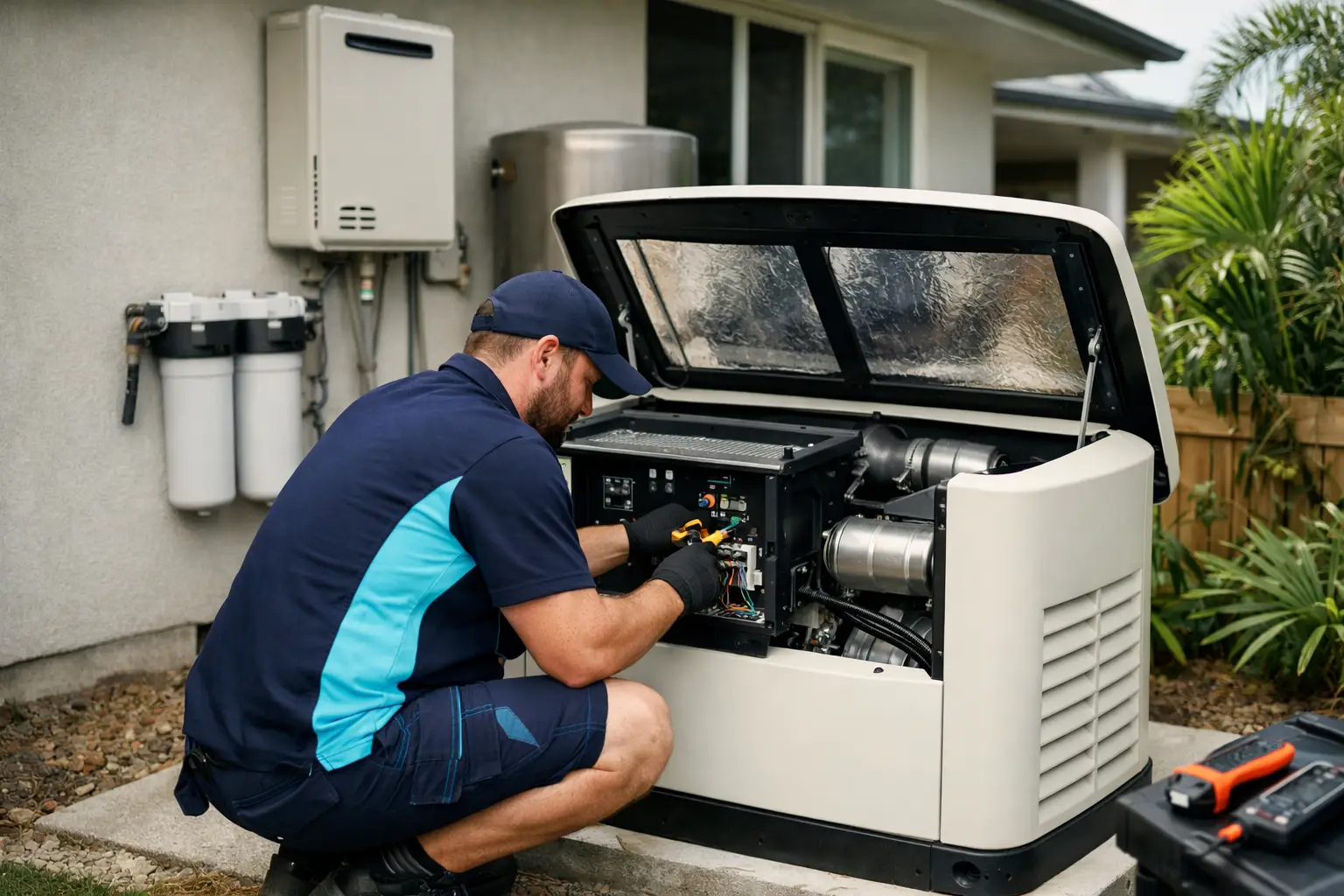
When the power goes out, a generator can keep the essentials running: lights, refrigeration, internet, selected power points and, depending on the setup, critical appliances. If you are searching for “how to install home generator” backup power, the key point is this: choosing the right unit is only half the job. Safe placement, correct electrical changeover equipment and licensed installation are what make it reliable when you need it.
A home generator installation is not a weekend DIY project. Connecting a generator to your switchboard or hardwiring it to a gas supply involves electrical and, in some cases, gas work that must be carried out by appropriately licensed trades. Done properly, it gives your household confidence during storms, network outages and unexpected interruptions. Done poorly, it can damage appliances, create a fire risk or put people working on the electricity network at serious risk.
Start by deciding what needs backup power
Before selecting a generator, work out what you actually want it to run. Most households do not need to power every appliance at once. Focusing on essential circuits usually keeps the system more affordable, easier to manage and less demanding on the generator.
For many Gold Coast and Northern NSW homes, essentials may include the fridge and freezer, a few lights, internet equipment, mobile charging, selected kitchen power points, a water pump, medical equipment or a garage door. You may also want to allow for air conditioning, but it can significantly increase the generator size required. Electric hot water systems, ovens and large ducted air conditioning systems can also draw substantial power, particularly when they start up.
An installer will assess the running load and the starting load of the appliances you want covered. Motors in pumps, fridges and air conditioners can need a larger burst of power at start-up than they use while running. This is why simply adding up appliance labels is not always enough.
Portable or standby generator?
A portable generator is a lower-cost option for occasional outages. It can run selected appliances through approved generator outlets and extension leads, but it must always operate outdoors in a well-ventilated location. It is not designed to be run in a garage, under a house, near doors or windows, or in any enclosed space.
A standby generator is permanently installed outside and connected through a dedicated changeover system. It can be set up to start automatically when mains power fails, depending on the equipment selected. This option costs more upfront, but it is far more convenient for families, frequent travellers, people relying on medical equipment and homeowners who do not want to be outside setting up equipment during heavy rain.
Fuel choice also matters. Some permanently installed generators can run on LPG gas, while others use natural gas where available. A gas-connected generator needs the correct supply capacity and certified gas fitting work. Your installer can confirm whether your existing gas setup can support the generator as well as hot water, cooking or other gas appliances.
How to install a home generator safely
The installation begins with a site inspection and a clear plan, not with connecting cables. A licensed electrician should inspect your switchboard, identify the circuits that will receive backup power and check the home’s earthing and electrical protection arrangements. If the generator will use LPG gas or natural gas, a licensed gas fitter should also assess the supply, pipe sizing and appliance requirements.
The usual process looks like this:
- Confirm the backup circuits and generator size. Your installer helps you prioritise what stays on during an outage and matches the generator output to those needs.
- Choose a compliant outdoor location. The generator needs a stable base, safe clearances, weather protection suited to the unit and access for servicing. It must be positioned away from openings, vents and areas where exhaust could enter the home.
- Check approvals and site requirements. Depending on the property, installation may involve council requirements, body corporate approval, noise considerations, boundary clearances or electricity distributor rules.
- Install the changeover equipment. This is the device that safely separates your home from the electricity network during an outage. It may be a manual changeover switch or an automatic transfer switch.
- Complete licensed electrical and gas work. The electrician connects the generator, switchboard and protected circuits. Where applicable, the gas fitter completes the gas connection, tests it and provides the required certification.
- Test the system under load. A proper handover includes simulating an outage, confirming the generator starts or transfers correctly, and showing you how to operate the system safely.
The changeover switch is particularly important. It prevents electricity from your generator feeding back into the street network. Backfeeding can injure line workers, damage the generator and create serious electrical hazards. Never attempt to power your house by plugging a generator into a standard wall outlet. It is unsafe and not an acceptable substitute for a correctly installed changeover system.
Choose the right location before installation day
Generator placement affects safety, noise, servicing and long-term reliability. The unit needs a level, durable foundation and enough surrounding space for cooling airflow and maintenance access. Manufacturer instructions and local requirements determine the required clearances, so avoid assuming a spot beside the garage or under an awning will be suitable.
Think about your neighbours as well. Generators make noise, even enclosed standby models. A location that is practical for cables and gas pipes may not be ideal if it sits close to a bedroom window or a neighbour’s fence. An experienced installer can help balance access, compliance, noise and appearance before work begins.
For portable units, the same safety principles apply every time you use them. Keep the generator outside, dry, well away from doors and windows, and protected from rain in a way that does not restrict ventilation. Carbon monoxide from engine exhaust is colourless and dangerous, so indoor or semi-enclosed operation is never worth the risk.
Allow for switchboard upgrades and fuel supply
Older homes sometimes need switchboard work before a generator can be connected safely. Your electrician may recommend additional circuit protection, a new enclosure, clearer circuit labelling or an upgrade to accommodate the transfer equipment. This can add to the initial quote, but it is better to identify it early than discover it when installation is underway.
For an LPG gas generator, supply capacity is just as important as the generator itself. The system must have sufficient gas flow for the generator’s demand while still supporting appliances such as your cooktop, gas hot water system or gas fire. The size and number of gas bottles, regulator capacity and pipework all need to be considered together.
This is where using one local team for gas and home services can remove a lot of running around. No Hassle Homes can coordinate the practical side of a generator project, from assessing the gas supply to arranging licensed installation, so you are not left trying to manage separate trades and unclear responsibilities.
Understand what your generator will not do
Backup power is about priorities. Unless you install a large whole-home system, you will need to make sensible choices during an outage. Running every high-draw appliance at the same time can overload the generator, trigger protection systems or reduce performance.
Ask your installer to label the backed-up circuits clearly and explain what can run together. For example, you may be able to use the fridge, lights and internet without concern, but need to avoid operating an electric oven while an air conditioner and pool pump are running. A simple operating plan means less guesswork when the power is off.
Automatic systems also need occasional attention. They are convenient, but they are not fit-and-forget equipment. Battery condition, oil levels, filters, error codes and gas supply should all be checked as part of scheduled servicing.
Test and maintain it before storm season
The worst time to find a generator fault is midway through an outage. Run and test your system at the interval recommended by the manufacturer, and arrange professional servicing according to its operating hours and age. Automatic standby generators often perform a scheduled self-test, but they still need a proper inspection from time to time.
Keep the area around the unit clear of leaves, stored items and garden growth. Check that ventilation openings remain unobstructed and that the gas bottle area, if applicable, is accessible and tidy. If your generator has a manual changeover switch, make sure every adult in the household knows the basic process and where to find the instructions.
A properly planned generator gives you more than a few lights during a blackout. It gives your household a safer, calmer way to get through it. Arrange the right assessment first, use licensed electrical and gas professionals, and you will have backup power that is ready when the weather is not.