


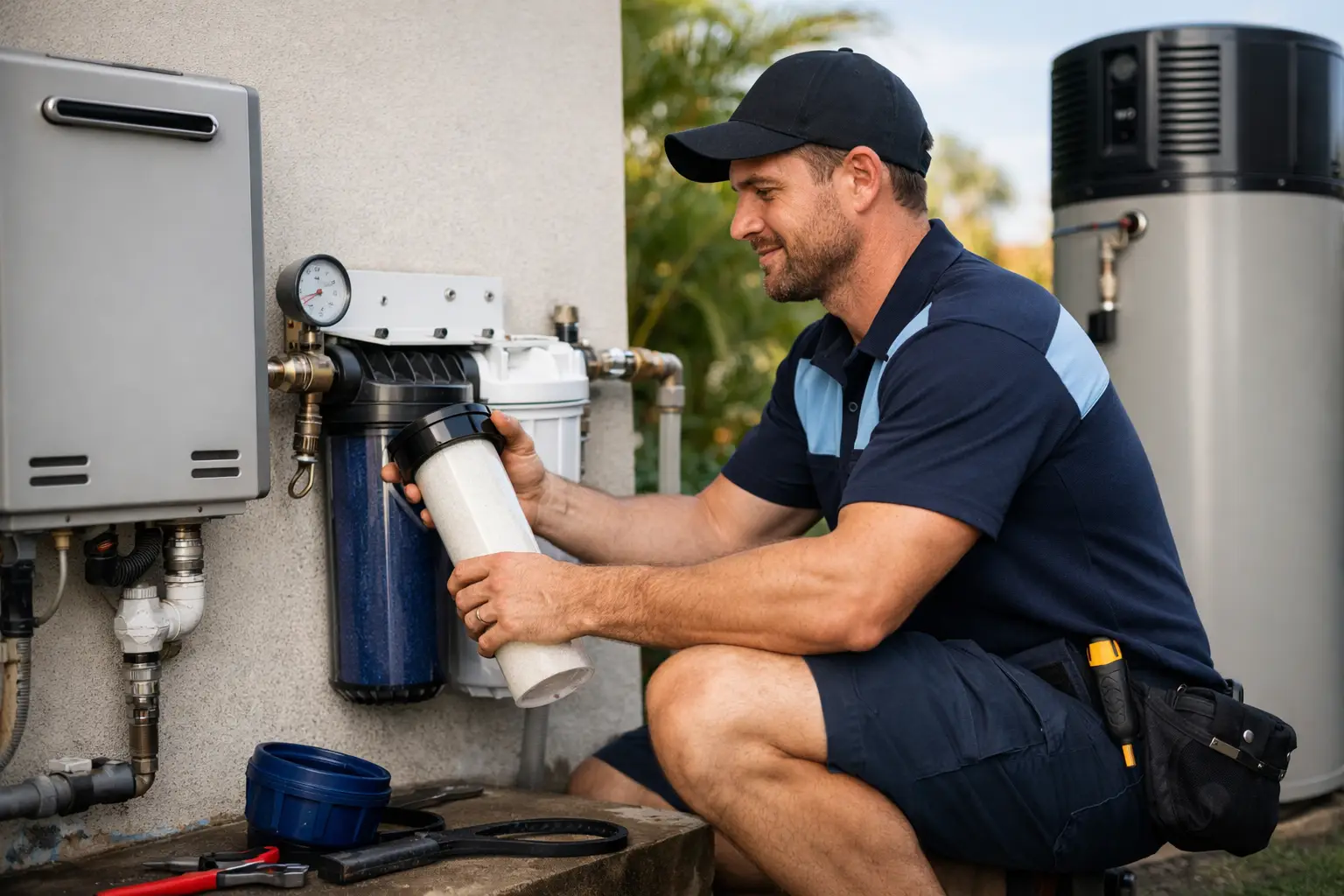
A water filter can keep working long after it has stopped doing its best job. The water may still look clear, but an overdue cartridge can affect taste, flow and the filter’s ability to reduce the contaminants it was designed to handle. Knowing how to maintain home water filter systems helps you protect your household’s water quality and avoid a surprise leak under the sink.
The good news is that most filter maintenance is straightforward. It comes down to using the right replacement cartridge, changing it on time, keeping the housing clean and acting early if something does not look right.
Start by knowing which filter you have
Maintenance depends on the system installed in your home. A benchtop jug filter, an under-sink unit and a whole-home water filter all need attention, but the timing and process are different.
Under-sink systems are common for filtered drinking water at a separate tap. They usually use a cartridge that needs replacing every six to 12 months, depending on the model, household water use and local water conditions. A whole-home system filters water as it enters the property, so it may have a sediment pre-filter as well as a carbon cartridge. These systems protect more outlets, but they also need regular checks because a blocked filter can reduce water pressure across the house.
Reverse osmosis and ultraviolet systems have extra components. Reverse osmosis units may have multiple filters and a membrane with its own replacement interval. UV systems need a working lamp and clean protective sleeve to treat water effectively. Keep the manufacturer’s instructions and take a photo of the cartridge label before buying replacements. Similar-looking cartridges are not always interchangeable.
How to maintain a home water filter on schedule
Do not wait until the water tastes odd or the flow slows down. By that stage, the cartridge may have been overdue for some time. Set a calendar reminder on your mobile for the recommended change date and write the date on the new cartridge or filter housing when it is fitted.
A practical schedule for many homes is to inspect the system every three months and replace cartridges according to the manufacturer’s maximum interval. If your household uses a lot of filtered water, has several people at home during the day, or receives water with noticeable sediment, you may need to change filters sooner.
During a quick inspection, look for moisture around the filter housing, fittings and tubing. Check that the tap runs freely and that the water flow has not dropped noticeably. For clear filter housings, look for discolouration or a build-up of sediment. Brown, orange or grey material can indicate that the sediment stage is doing its job, but it also tells you the cartridge may be nearing the end of its useful life.
There are a few warning signs worth taking seriously:
- Water pressure at the filtered tap becomes weak or inconsistent.
- Water develops an unusual taste, smell or cloudiness.
- The filter housing, connections or cupboard floor are damp.
- Your filter change reminder has passed, even if the water seems fine.
A slow flow can sometimes be caused by a partially closed isolation valve or a blocked aerator at the tap, rather than the filter itself. Still, it is best to check the system before assuming it is a minor issue.
Replacing a cartridge safely
Cartridge changes are often suitable for homeowners when the filter was designed for simple servicing and the isolation valve is easy to access. Read the system manual first, as the order of steps and flushing requirement can vary.
Start by turning off the water supply to the filter. Open the filtered tap to release pressure, then place a towel or shallow tub below the housing. Even after the water is isolated, some water will remain inside the canister. Use the supplied filter wrench if needed, and avoid forcing the housing with pliers or other tools that can crack it.
Remove the old cartridge and inspect the O-ring – the rubber seal that sits in the housing groove. Wipe the groove clean and make sure the O-ring is not twisted, flattened or damaged. If the manufacturer recommends food-grade silicone lubricant, use only a small amount. Do not use general-purpose oils or lubricants.
Fit the correct new cartridge, reassemble the housing hand-tight, then turn the water back on slowly. Check carefully for drips before putting anything back in the cupboard. Run the filtered tap for the period specified by the manufacturer. Carbon filters commonly need flushing to clear harmless carbon fines, which can otherwise make the first few glasses of water look grey or cloudy.
If you cannot isolate the water cleanly, the housing will not loosen, or there is a leak once the system is back on, stop there. A licensed plumber can service the unit without risking water damage to your cabinetry or flooring.
Keep the housing and tap clean
Replacing the cartridge is not the only part of filter care. Each time you open a serviceable filter housing, clean the inside according to the manufacturer’s directions. Usually, this means washing it with warm water and a mild detergent, then rinsing thoroughly. Some systems allow sanitising with a specifically recommended solution. Do not improvise with harsh chemicals, as residue can affect your drinking water or damage seals.
Wipe the filtered-water tap regularly, especially around the spout and handle. The outside of the tap is exposed to hands, food preparation and kitchen splashes. A clean cloth and mild cleaner are generally enough. Avoid abrasive pads that can scratch the finish.
For systems stored under the sink, keep household chemicals away from filter tubing and fittings. Make sure nothing is pressing against the lines when you close the cupboard door. A small leak can be hard to spot in a crowded cupboard, so leave the system visible where possible.
Watch for changes after heavy rain or plumbing work
Water conditions can change after heavy rain, nearby water-main work or a plumbing interruption. If you notice increased sediment or a bigger drop in pressure after one of these events, inspect your filter sooner than planned. A sediment cartridge can load up quickly when there is more material in the supply.
If plumbing work has been completed in your home, run the filtered tap as instructed before using the water for drinking. This helps clear any air or loosened particles from the line. If the system has been disconnected, moved or altered, check that the filter is reinstalled in the correct flow direction. Most housings have an arrow showing the intended direction of water flow.
When professional water filter servicing makes sense
Some jobs are better left to a professional, particularly for whole-home filters, reverse osmosis systems, UV units and any filter connected to concealed plumbing. These systems can involve pressure-limiting valves, drainage connections, electrical components or multiple stages that need to be fitted in the right order.
Arrange professional help if you see persistent leaks, cracked housings, damaged threads, discoloured tubing, repeated pressure problems or water that remains unpleasant after a correct cartridge change. You should also get advice if you are unsure which cartridge your system requires. Installing the wrong filter can restrict flow or fail to provide the treatment your household expects.
For homeowners on the Gold Coast and nearby areas, No Hassle Homes can help with water filtration installation and maintenance alongside other essential household services. A qualified technician can check the system, replace suitable components and make sure connections are secure, without turning a routine service job into a weekend headache.
A simple maintenance habit that pays off
Keep a small note in your mobile with the filter model, cartridge code, installation date and next change date. It takes less than a minute to update and saves guesswork when it is time to order a replacement.
Clean, good-tasting water should be the easy part of running a home. A regular check, the right cartridge and prompt attention to leaks will keep your filter doing the job you installed it for.