


A scorching Gold Coast afternoon can make an air conditioning decision feel urgent. But choosing between split versus ducted air conditioning is about more than getting cool quickly. The right setup needs to suit your home’s layout, the rooms you actually use, your budget and how long you plan to stay.
A split system is often the straightforward answer for one or two key rooms. Ducted air conditioning offers whole-home comfort and a cleaner look, but usually involves a larger installation. Here is how to weigh up both options without the technical run-around.
Split versus ducted air conditioning: the main difference
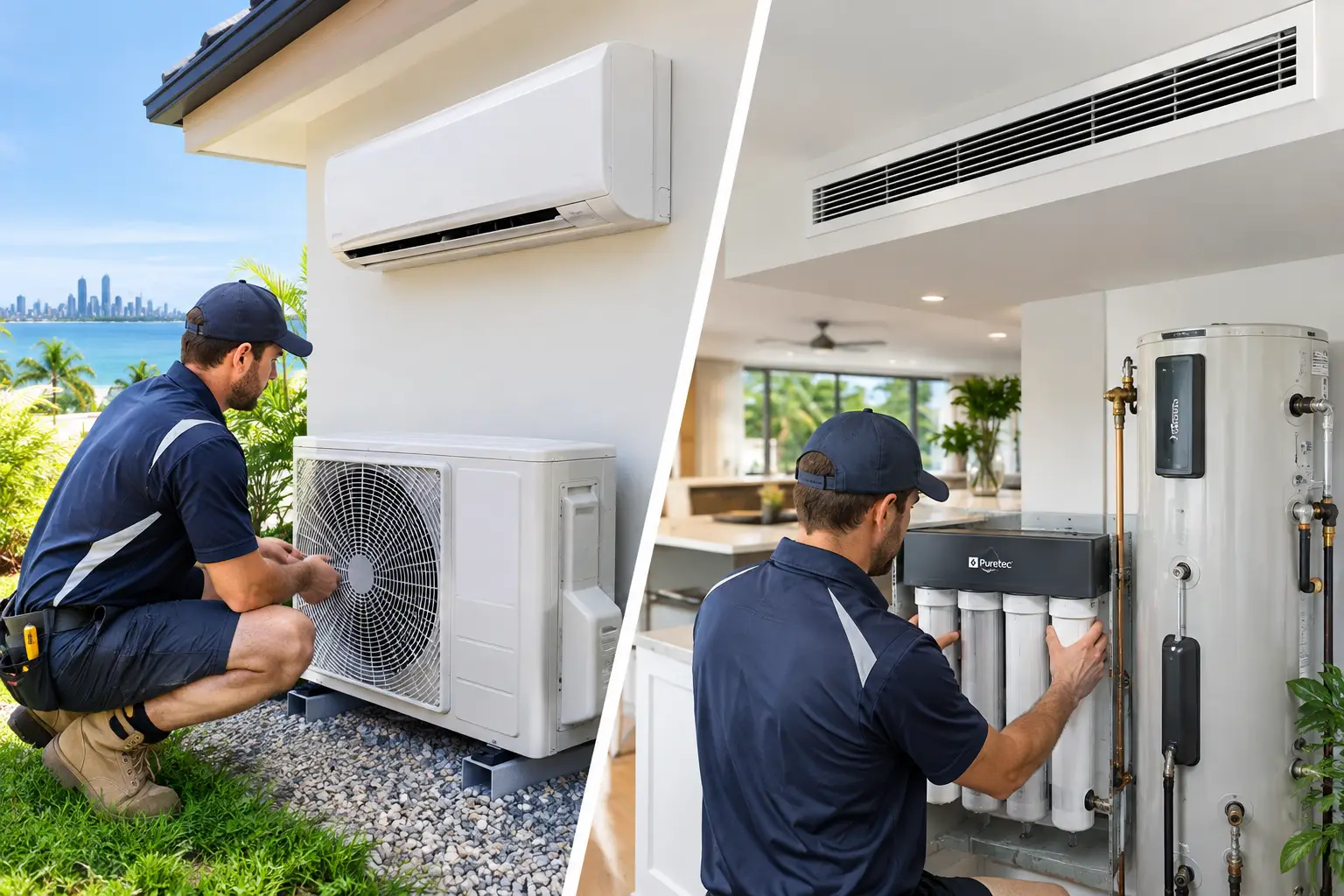
A split system air conditioner has two main parts: an indoor wall-mounted unit and an outdoor condenser. One indoor unit generally cools or heats one room or open area. You can install separate split systems in several rooms, but each is its own unit.
Ducted air conditioning uses one central system connected to a network of concealed ducts. Air is delivered through ceiling or floor vents to multiple rooms, controlled from a central wall controller or, in many modern systems, an app.
Put simply, split systems target selected spaces, while ducted systems are designed to condition much or all of the house. Neither is automatically better. The best choice depends on how your household lives in the home.
When a split system makes sense
Split systems are popular for good reason. They are typically quicker and less disruptive to install, particularly in established homes where adding ductwork would mean opening ceilings or wall cavities. If your lounge room is where everyone gathers after work, a correctly sized split can make that space comfortable without paying to cool empty bedrooms.
They are also a practical option for apartments, smaller homes, granny flats, home offices and individual bedrooms. If you are replacing an ageing wall unit, installation may be especially simple if the existing location and electrical supply are suitable.
The upfront cost is usually lower than ducted air conditioning because there is less equipment and labour involved. A split can also be economical to run when you only need one room conditioned at a time.
There are trade-offs. Indoor units remain visible on the wall, and a single unit may struggle to push comfortable air around corners, down hallways or into closed rooms. Installing several separate units can solve that problem, but it may eventually narrow the price gap between a multi-room split setup and a ducted system. It also means multiple outdoor units or a more complex multi-split arrangement.
When ducted air conditioning is worth it
Ducted air conditioning is often the better fit for larger family homes, new builds and major renovations. It provides a consistent level of comfort across living areas and bedrooms without wall-mounted heads in every room. Only the discreet vents and return-air grille are visible.
For homes in the Gold Coast and surrounding areas, that whole-home coverage can be valuable during long humid spells, particularly in houses with upstairs bedrooms, west-facing rooms or open-plan living spaces. You can cool the rooms people are using and avoid the familiar argument over who gets the fan or the coolest bedroom.
Zoning is one of ducted air conditioning’s biggest advantages. Zones allow you to switch off sections of the home that are not needed, such as guest bedrooms during the week or the living area overnight. This gives you more control, though it does not make a large system cheap to run by default. The system still needs to be correctly designed, sized and commissioned.
Ducted systems cost more upfront because the work involves the indoor unit, outdoor unit, ducts, vents, zoning controls and access through the roof space. Homes with limited ceiling clearance, difficult roof access or unusual layouts can add to the installation complexity. In a two-storey home, planning the position of ducts and returns is particularly important.
Upfront cost versus running cost
It is tempting to compare systems on purchase price alone. That can lead to a system that looks affordable on day one but does not properly cover the rooms you need. A quote should consider the home, not just the size of the air conditioner.
A split system is generally the more affordable starting point. Ducted air conditioning is a bigger investment, especially where new ductwork and electrical work are required. However, if you need to condition five or six rooms and would otherwise install multiple splits, ducted may offer better value over the life of the home.
Running costs depend on more than the system type. Capacity, efficiency rating, thermostat settings, insulation, window coverings, ceiling height, solar exposure and the number of people at home all make a difference. A unit that is too small may run constantly without keeping up. One that is too large may cycle inefficiently and can leave the air feeling clammy.
The most useful question is not, “Which one is cheapest?” It is, “What will give us reliable comfort in the rooms we use, without paying to condition spaces we do not?”
Comfort, appearance and noise
Split systems provide fast, direct cooling where the indoor head is installed. They work very well in open-plan living rooms, but airflow can be uneven in a long or divided layout. Placement matters. A unit facing a hallway or blocked by bulky furniture will not perform as well as one installed with a clear path across the main area.
Ducted systems spread conditioned air more evenly through the house. They are a strong option for homeowners who prefer a tidy interior and do not want equipment mounted high on bedroom or living room walls. Good design also places return-air grilles and vents where they can circulate air effectively rather than creating hot and cold spots.
Both options have outdoor components that create some noise. With split systems, the indoor fan is in the room, although quality modern units are generally quiet on lower settings. With ducted systems, the central fan is usually located in the roof space, so room noise can be lower. Outdoor unit placement still matters for your own outdoor areas and neighbouring properties.
Installation details that should not be overlooked
Air conditioning installation is not just a matter of mounting equipment and switching it on. Correct sizing, secure mounting, condensate drainage, electrical protection, airflow and refrigerant work all affect safety, performance and system life.
Before accepting a quote, make sure the installer has assessed the areas you want to heat and cool, not simply asked for the number of bedrooms. They should discuss where the outdoor unit will sit, whether drainage is practical, how electrical supply will be managed and what access is needed on installation day.
For ducted systems, ask about the number of zones, where vents and return-air grilles will be located, and whether your roof space provides enough access. For splits, ask whether the proposed indoor-unit location will comfortably serve the room and whether the outdoor unit will be accessible for future servicing.
A fixed quote is helpful because it makes the scope clear before work begins. If extra work could be required due to hidden wiring, difficult access or building conditions, that should be explained upfront rather than becoming a surprise later.
Maintenance is part of the decision
Every air conditioning system needs routine care. Dirty filters restrict airflow, reduce efficiency and can affect indoor air quality. Split-system filters are usually easy for homeowners to remove and clean as directed by the manufacturer. Ducted systems also have filters, commonly behind the return-air grille, but their location varies by design.
Professional servicing helps identify issues such as blocked drains, worn electrical components, damaged insulation, duct leaks or reduced performance before a hot week exposes the problem. Ducted systems have more concealed components, so maintaining clear access to the unit and roof space is worthwhile.
If your system starts dripping, smelling unusual, making new noises or failing to cool properly, do not simply keep turning it down. Prompt assessment can prevent a minor fault becoming a larger repair.
A simple way to decide
Choose a split system if you mainly need comfort in one or two rooms, want a lower initial outlay, or have an existing home where major ceiling work is not appealing. It is a sensible, effective solution when the unit is sized and positioned properly.
Consider ducted air conditioning if you want whole-home comfort, a less visible finish, zoning across several rooms, or you are building or renovating. It costs more to install, but it can suit the way a larger household uses the home every day.
For either option, get advice based on your actual layout and priorities rather than choosing by square metres alone. A properly planned system should make home life easier on the hottest days, not give you another household job to manage.