


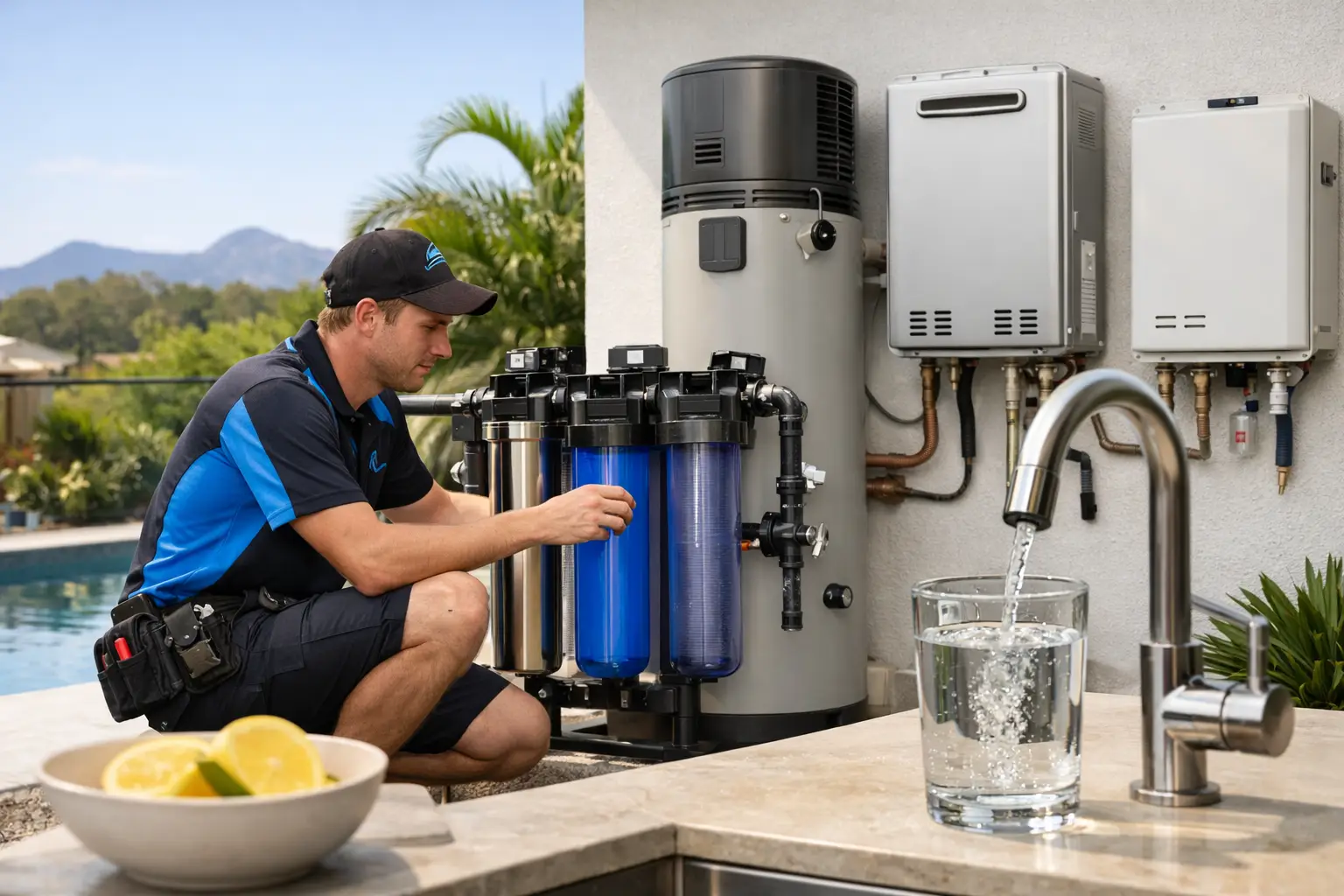
A glass of water can look perfectly clear and still leave a chlorine smell in the shower, scale around taps, or a taste nobody enjoys. This whole home filtration guide is for homeowners who want to improve the water coming into the house, without guessing which system will actually suit their plumbing, household size and local water supply.
A whole-home system treats water at the point where it enters your property. That means the kitchen tap, showers, laundry, toilets and outdoor taps can all receive filtered water, depending on how the system is configured. It is a different job to a small filter fitted under the kitchen sink, and choosing the right setup starts with being clear about the problem you are trying to solve.
What a whole-home water filter can do
Most town water is treated to meet safety standards before it reaches your home. That does not mean every household likes its taste, smell or effect on fixtures. Chlorine is commonly used for disinfection, for example, and some people notice it most in hot showers or when filling a bath.
A properly selected whole-home filtration system can reduce sediment, chlorine, unpleasant odours and certain other contaminants. It may also protect appliances and plumbing fixtures from dirt and particles entering the line. The exact result depends on the filter media, the water quality at your address and whether the system has been installed and sized correctly.
What it cannot do is solve every water issue with one cartridge. Hardness, iron, bacteria, chemical residues and sediment all need different treatment methods. A filter that is excellent for chlorine taste may not be the right answer for mineral scale. That is why a quick conversation about your water source and symptoms is worth having before you buy.
Whole home filtration guide: start with your water source
The first question is simple: are you on town water, tank water, bore water or a mix of sources? The answer changes the type of filtration you need.
Town water households often choose a sediment pre-filter and carbon filtration. The sediment stage catches grit, rust and fine particles before they reach the main filter. Carbon media is commonly used to reduce chlorine taste and odour. For many Gold Coast homes, this is the practical starting point when the goal is better-feeling shower water and more pleasant drinking water throughout the house.
Tank water needs a different level of care. Leaves, dust, bird droppings and material from the roof can enter the system, even with good gutter protection. Sediment filtration is important, but filtration alone may not be enough where microbiological safety is a concern. A UV disinfection unit may be recommended, particularly where tank water is used for drinking and cooking. UV systems need clear water to work effectively, so the sediment stages ahead of them matter.
Bore water and water with known staining, metallic taste or heavy scale should be tested before a system is chosen. These issues can point to iron, manganese, hardness or other conditions that require purpose-built treatment. Buying a standard carbon filter first can create an expensive disappointment.
Notice what is happening around the home
Your everyday clues are useful. White, chalky buildup on shower screens and kettle elements often suggests hard water. Orange or brown staining can indicate iron or sediment. A swimming-pool-like smell may be chlorine. Grit in tap aerators points to particles in the supply or ageing pipework.
These clues are not a laboratory diagnosis, but they help narrow the conversation. If the concern is health-related, persistent, or connected to a private water source, arrange water testing rather than relying on appearance alone.
Choose the treatment stages that match the problem
Whole-home systems are normally built around one or more stages. The right combination matters more than choosing the biggest unit on the shelf.
Sediment filtration is the workhorse for particles. It is often measured in microns, with a lower micron rating catching finer material. Very fine filtration can improve clarity, but it can also reduce flow faster when the water carries a lot of sediment. That trade-off matters in a busy family home where several showers, the washing machine and dishwasher may run close together.
Carbon filtration is a popular choice for treated mains water because it targets chlorine taste and odour. Carbon comes in different forms, including cartridge-based and larger media tanks. Larger tanks generally offer a longer service interval and better flow capacity, but they need more space and cost more upfront.
Water softening is designed to address hardness minerals that cause scale. It can help protect hot water systems, taps and appliances, especially in hard-water areas. Softening is not automatically necessary for every home and it has ongoing salt requirements, so it should be recommended based on water conditions rather than added as a default.
UV treatment uses ultraviolet light to deactivate microorganisms. It is commonly considered for rainwater and other private supplies. The lamp needs scheduled replacement and the sleeve must be kept clean. It also relies on a steady power supply, so it is only one part of a sensible water treatment plan.
Some homes add a dedicated drinking-water filter at the kitchen sink even after installing whole-home filtration. This can make sense if you want a higher level of treatment for the water you drink, while keeping a practical whole-house setup for showers, laundry and appliances.
Size the system for your household, not just the cupboard
A common mistake is choosing a system based on price or the physical size of the filter housing. Flow rate is just as important. If the system is too small, pressure can drop when more than one tap or shower is running. Nobody wants a weaker shower because the dishwasher has started its cycle.
A suitable design takes account of how many bathrooms you have, the number of people in the home, peak water use and the incoming water pressure. Larger homes may need higher-flow housings, bigger media tanks or parallel filtration to avoid a bottleneck.
Installation location also needs planning. The filter is usually fitted close to the water meter or point of entry, where it can serve the house before water branches off to different rooms. There needs to be room for servicing, protection from weather where required, and safe access to isolation valves. A system should not be tucked into a spot where no one can change a cartridge without dismantling half the garden bed.
If you have a hot water system, check whether the filtration is intended to protect that system too. Sediment can be tough on valves and appliances. However, the filter should be selected and installed so it does not unnecessarily restrict the water supply to your hot water unit.
Ask about ongoing maintenance before installation
No filter is maintenance-free. Clear expectations are part of a hassle-free system.
Cartridge filters generally need replacement on a schedule based on water use and water quality. A household with sediment-heavy water may need changes more often than a home on clean town water. Media tanks can last longer between services, but the media will eventually need replacement. UV lamps are usually changed annually, even if the light still appears to be operating.
Keep a simple note of installation and service dates. If you notice reduced pressure, a return of chlorine smell, discoloured water, or an unusual taste, arrange an inspection rather than waiting for the next planned service. Prompt maintenance protects both water quality and your plumbing.
It is also worth asking what replacement parts cost and whether they are readily available. An inexpensive system is not a bargain if its cartridges are difficult to source or costly to replace. Fixed, clear pricing and a service plan you understand are more valuable than a vague promise that it will last for years.
Why professional installation is worth it
A whole-home filter becomes part of your plumbing system. It needs the right fittings, isolation valves, pressure considerations and secure placement. Poor installation can lead to leaks, pressure problems or a filter that is difficult to service.
A licensed installer can assess the entry point, confirm the best treatment approach and fit the system cleanly. For homeowners who would rather deal with one local team for water filtration, hot water, gas appliances and other essential home services, No Hassle Homes can make the process simpler from quote through to installation.
Before booking, ask what is included: the filtration unit, installation, valves, any water testing, commissioning and future servicing. A written fixed quote gives you a clear picture of the cost before work begins.
Clearer, better-tasting water should feel like an improvement to daily life, not another complicated household project. Start with the water you have, choose treatment for the issue you can identify, and make sure the system is sized to keep up when your home is at its busiest.