


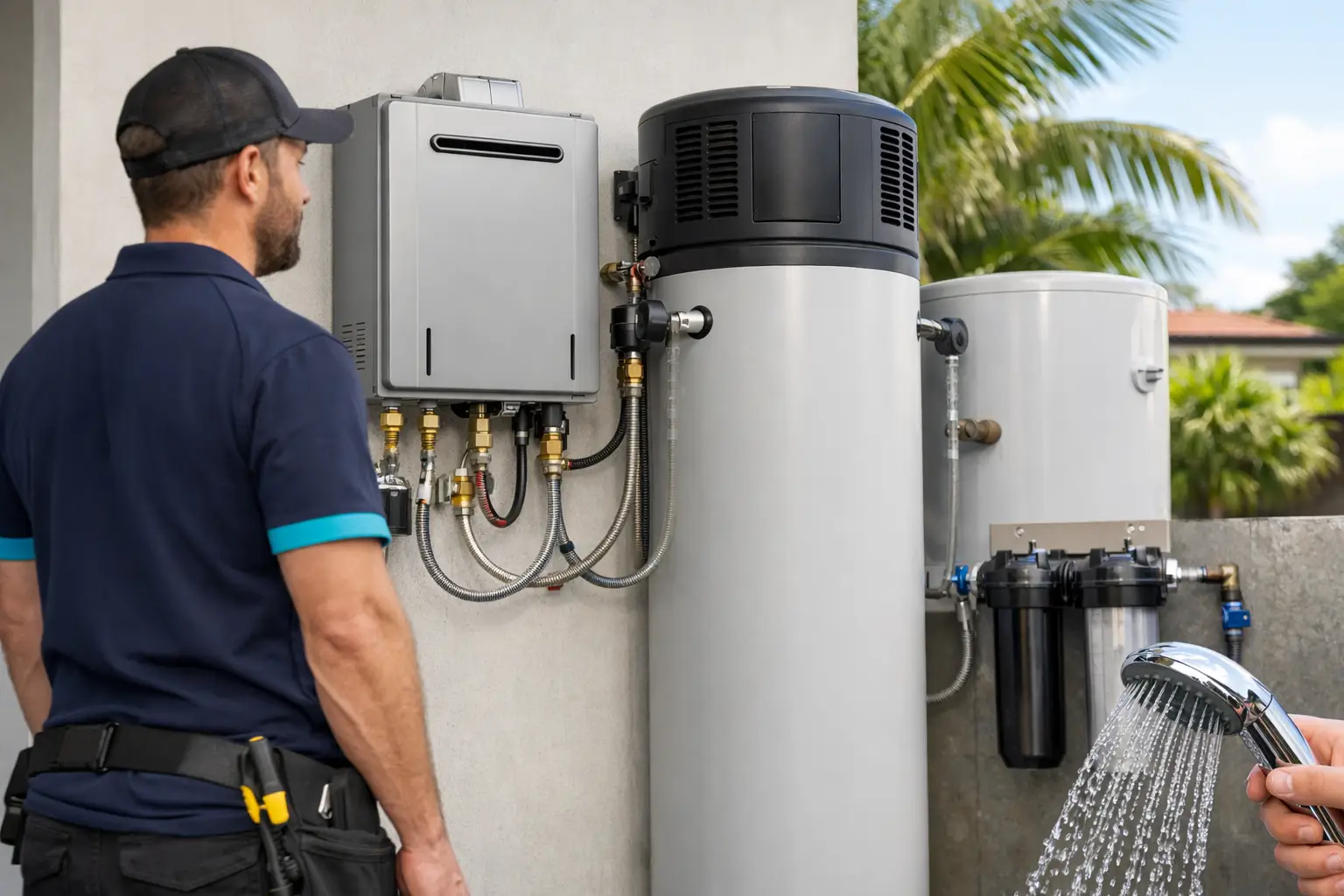
One minute the shower is spot on, the next it turns lukewarm or suddenly too hot. If you’re asking why is my hot water fluctuating, you’re not alone – and it usually means something in the system isn’t working as it should.
The good news is that fluctuating hot water often points to a handful of common issues. Some are simple, like high demand across the house or a partially empty gas bottle. Others need a licensed technician, especially if the problem involves your hot water unit, tempering valve, water pressure, or gas supply. The trick is knowing the difference so you can act quickly and avoid bigger problems.
Why is my hot water fluctuating in the first place?
Hot water should be reasonably steady. If the temperature keeps changing, it usually means the system is struggling to maintain either heat, water flow, or both. That can happen in gas storage systems, continuous flow units, electric storage tanks, and heat pump systems, but the exact cause depends on the setup in your home.
In many cases, the issue comes down to inconsistent water flow, a faulty valve, sediment build-up, a failing thermostat, or a supply problem. Homes with gas hot water can also see temperature swings when gas pressure drops, the burner isn’t operating properly, or the bottle is running low. If you have a larger household, simple timing can play a part too – two showers, a washing machine and the kitchen tap all running at once can stretch a system beyond what it was sized for.
The most common causes of fluctuating hot water
Someone else is using water elsewhere
This is one of the most common reasons, especially in busy family homes. If another tap, shower, dishwasher or washing machine kicks in while you’re using hot water, the pressure balance can change. That can cause a sudden burst of hotter or colder water at the outlet you’re using.
This is more noticeable in older homes or homes without pressure-balancing tapware. It doesn’t always mean the hot water system itself is faulty. Sometimes the issue is how water is being distributed through the house.
Your hot water system is undersized
If the unit can’t keep up with demand, temperature fluctuations can become a daily problem. Storage systems run out of hot water when the tank is depleted. Continuous flow systems don’t store water, but they still have output limits. If too many fixtures are drawing hot water at the same time, the unit may struggle to keep the temperature stable.
This often shows up in households that have grown over time. A system that worked well for two people may not cope nearly as well with four or five.
Low gas supply or a gas delivery issue
For homes with gas hot water, low or inconsistent gas supply is a major suspect. If the gas bottle is nearly empty, if a regulator is failing, or if there’s an issue affecting gas flow to the appliance, your system may not heat water consistently.
Sometimes the signs are subtle at first. The shower might start hot but go cool after a minute. Or the temperature may bounce around rather than fail completely. If your hot water, cooktop or gas fire all seem a bit off at the same time, it’s worth considering a gas supply issue rather than assuming the water unit is the only problem.
A tempering valve is failing
A tempering valve mixes hot and cold water to deliver safe water temperatures to taps and showers. When it starts to wear out or gets blocked, you can end up with unstable temperatures, especially in the bathroom.
This is a common problem in older systems. The valve may stick, overcorrect, or stop blending properly. Because tempering valves are safety devices, this isn’t something to ignore or try to dismantle yourself.
Sediment build-up inside the system
If you have a storage hot water unit, sediment can build up in the tank over time. Mineral deposits can affect heating performance, reduce efficiency, and create uneven water temperatures. In some cases, the system still heats water, but not as consistently as it should.
Sediment issues tend to creep up slowly. You may notice the hot water doesn’t last as long, takes longer to recover, or starts fluctuating more than it used to.
A thermostat or heating component is on the way out
Both gas and electric systems rely on components that regulate temperature. If the thermostat is faulty, the burner is misfiring, or the heating element is failing, water temperature can become unpredictable.
This is where guesswork usually stops being helpful. Once internal components start failing, the system needs proper testing. Continuing to use it without inspection can lead to higher running costs, poor performance, or a complete breakdown.
What you can safely check before booking a technician
There are a few simple things worth checking before you call for help. Start by noticing when the fluctuation happens. Is it only during showers? Only at one tap? Only when more than one appliance is running? That pattern can tell you a lot.
If you have bottled gas, check whether the bottle may be running low. Also think about whether other gas appliances are performing differently. If the issue is across the whole house, the hot water service may not be the only thing involved.
Look at whether the problem affects every outlet or just one. If it’s isolated to a single shower, the tapware or mixer may be the issue. If the whole house is affected, it’s more likely to be the system, a valve, or supply related.
You can also check the age of the unit. If your hot water system is getting on in years and the temperature has become unreliable, wear and tear is a realistic possibility. Older systems don’t just fail all at once – they often give plenty of warning first.
When fluctuating hot water means you should stop and book help
If your water is suddenly scalding, if the unit is making unusual noises, if you can smell gas, or if the temperature swings are getting worse, it’s time to stop troubleshooting and get a licensed professional involved.
The same goes if the system keeps cutting out, the pilot won’t stay on, or you suspect a tempering valve problem. These aren’t jobs for DIY fixes. Hot water systems involve plumbing, gas and sometimes electrical components, and the safe option is to have the fault properly diagnosed.
For homeowners, the real cost isn’t just discomfort. Fluctuating hot water can signal a system that’s becoming inefficient, unsafe, or close to failure. Booking help early often means a simpler repair and less disruption.
Why is my hot water fluctuating only in the shower?
If the basin tap seems fine but the shower is inconsistent, the issue may be closer to the shower itself. Worn mixer cartridges, pressure fluctuations, blocked shower heads, or faulty balancing mechanisms can all affect shower temperature more than other outlets.
That said, showers are also where hot water problems are most noticeable. A kitchen tap running slightly cooler might not bother you. A shower changing temperature every 20 seconds definitely will. That’s why it’s worth having the whole setup checked rather than replacing random parts and hoping for the best.
Repair or replace?
It depends on the age of the unit, the type of fault, and how often you’ve been dealing with problems. A newer system with a faulty valve or thermostat may be well worth repairing. An older unit with repeated temperature issues, poor recovery and rising running costs may be better replaced.
This is where straightforward advice matters. A good technician should tell you whether the fault is minor, whether the system is still safe, and whether spending money on repairs makes sense. If a replacement is the better option, it should be because it solves the problem properly, not because it’s the easiest sale.
For households across the Gold Coast, Southern Brisbane and Tweed Heads, fast help matters even more when hot water is unreliable. You don’t want to chase a plumber, gas fitter and electrician separately if the problem could involve more than one trade.
The best next step
If your hot water keeps changing temperature, don’t wait for it to turn into a full cold shower or a complete system failure. A quick assessment can usually pinpoint whether the issue is demand, gas supply, a valve, tapware, or the hot water unit itself.
That means less guesswork, a safer outcome, and a faster fix. And if the system is beyond repair, you’ll know exactly where you stand and what it’ll cost before anything goes ahead.
Steady hot water is one of those things you shouldn’t have to think about – and when it starts playing up, getting it sorted early is the easiest way to keep your home running without the hassle.