


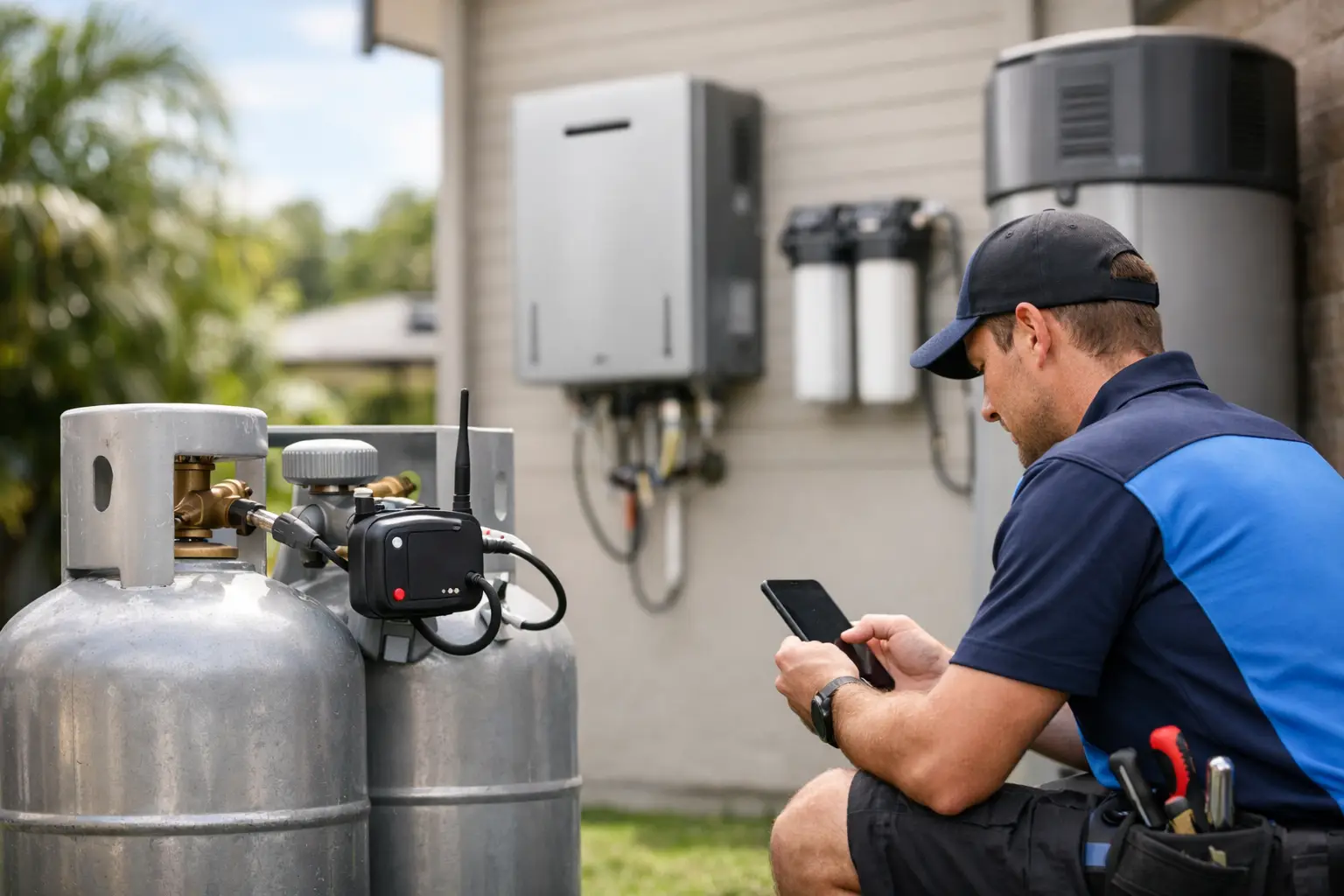
Running out of gas usually happens at the worst possible time – halfway through dinner, during a hot shower, or just as visitors arrive for the weekend. An LPG bottle monitoring system is designed to take the guesswork out of household gas supply by showing how much gas is left and, in some cases, alerting you before the bottle runs empty.
For many homes, that extra visibility is useful. But it is not the right answer for every household. The best choice depends on how your home uses gas, whether you have one bottle or an automatic changeover setup, and how easily you can arrange a refill or delivery when you need one.
What is an LPG bottle monitoring system?
An LPG bottle monitoring system is a device that estimates the amount of gas remaining in your bottle. Most home systems sit beneath the bottle and measure its changing weight. Because an LPG bottle gets lighter as gas is used, the monitor can calculate an approximate gas level and send that information to an app, display or connected home device.
Other products use ultrasonic sensors fitted to the outside of the bottle. These look for the liquid gas level inside the cylinder. Some are simple visual indicators, while others connect to a mobile app and can send notifications when the gas drops below a selected level.
The key word is estimate. LPG levels can change with outdoor temperature, appliance use and the monitor’s position. A good system gives a helpful indication of usage and remaining supply, rather than a promise that gas will last until a particular hour or day.
Why gas levels are hard to judge
Unlike a car, an LPG bottle does not have a built-in fuel gauge. The outside of the cylinder may feel colder around the liquid level when gas is being used, but that is not a reliable way to plan a refill. Shaking or lifting the bottle can offer a rough clue, although it is inconvenient and not particularly accurate.
This becomes more difficult when your bottle supplies several appliances. A gas cooktop may use relatively little over a week, while instantaneous hot water, a gas fire or outdoor heating can draw much more gas in a short period. A family with regular hot showers can use their reserve far faster than expected, especially during cooler weather.
A monitoring system replaces those rough checks with a clearer view of your normal pattern. After a few bottle cycles, you may start to see how much gas your household uses each week and when it makes sense to order your next bottle.
When an LPG bottle monitoring system makes sense
A monitor is most valuable when running out of gas would create a real inconvenience. Homes using LPG for hot water are an obvious example. If the bottle empties overnight, nobody wants to find out when they turn on the shower before work or school.
It can also suit households where the gas bottles are hard to access. If they are positioned down the side of the home, behind a gate or in a place that is easy to forget, an app notification can be far more useful than a reminder stuck on the fridge.
Monitoring may be a smart option if you have:
- LPG hot water alongside cooking or heating appliances
- high or unpredictable gas usage
- a holiday home, rental property or granny flat to keep an eye on
- older family members who would rather avoid checking bottles manually
- a single-bottle installation with no reserve bottle available
For a busy household, the main benefit is not the technology itself. It is the chance to order gas before it becomes urgent.
It is especially useful for single-bottle homes
With one LPG bottle, there is no backup supply when it runs out. Monitoring can provide enough warning to organise a delivery at a time that suits you, rather than needing to change plans because the hot water has stopped.
That said, an alert only helps if you act on it. If notifications are turned off, the app is not checked or the household waits until the last few per cent, the monitor cannot prevent a run-out on its own.
Two bottles and automatic changeover: often the simpler answer
For many homes, a two-bottle setup with an automatic changeover valve is the most practical way to avoid disruption. When the service bottle empties, the system switches to the second bottle. That leaves you with gas while you arrange a replacement.
This approach is simple and reliable, but it still relies on someone noticing that the first bottle is empty. The changeover indicator should be checked regularly. If both bottles are empty, hot water, cooking and heating can all stop at once.
A monitoring system can work well with a two-bottle setup, particularly for larger households or homes with several gas appliances. It can make it easier to know when the active bottle is getting low, rather than waiting for the changeover to occur.
There is a trade-off, though. A monitor adds an upfront cost, requires batteries or charging depending on the model, and may need app setup and occasional troubleshooting. If your household has two bottles, checks the changeover indicator and orders promptly, you may find a monitor is not necessary.
Choosing the right system for your bottle setup
Before buying a monitor, check that it suits your cylinder size and the way your bottles are installed. Weight-based systems need a stable, level surface and enough room under the bottle. They may be less suitable where the cylinder sits on an uneven base or in a tight cabinet.
App-connected products are convenient, but they depend on Bluetooth range, Wi-Fi or a gateway device. If the bottles are a long way from the house, behind masonry or near a metal enclosure, the connection may be inconsistent. A basic local display can sometimes be the better option.
Look for a system that clearly states it is suitable for LPG bottles used in Australia. It should be installed without interfering with the cylinder valve, regulator, pigtails or changeover valve. A monitor should never involve altering gas fittings yourself.
If you are unsure whether a device will work with your current gas installation, ask a licensed gas fitter. They can check bottle location, clearances, regulators and the overall condition of the setup while helping you decide whether monitoring will genuinely solve a problem.
A monitor does not replace safe gas bottle care
Knowing the gas level is handy, but safe installation and maintenance matter far more. LPG bottles should stay upright in a well-ventilated outdoor location, away from ignition sources and clear of drains, openings and areas where gas could collect.
Keep the bottle area accessible for delivery and avoid storing household items around the cylinders. If you smell gas, hear hissing near a fitting, see damaged hoses or notice appliances behaving unusually, turn off the gas supply if it is safe to do so and contact a licensed gas fitter. Do not try to repair a regulator, hose or valve yourself.
A professional delivery team that includes qualified gas fitters can be particularly helpful when a bottle change reveals an issue. Rather than being left without gas while you search for another trade, the problem can often be assessed on the spot.
How to use monitoring without overthinking it
The easiest approach is to set a practical alert level instead of waiting for the bottle to reach empty. For a household relying on LPG hot water, an alert around 25 to 30 per cent gives a sensible buffer. The right level may be higher if deliveries are less frequent in your area, you are heading away, or your home uses gas heavily.
Use the first one or two bottle cycles to learn your household’s pattern. Note whether usage rises during winter, when guests stay, or when a gas fire is used more often. That information is more useful than watching the app every day.
For homeowners across the Gold Coast, Southern Brisbane and Tweed Heads, a reliable delivery option can be just as valuable as the monitor itself. No Hassle Homes offers online gas ordering with delivery days you can choose, weekend delivery options and no rental fees – you pay for the gas you receive.
The practical choice is the one that prevents a run-out
An LPG bottle monitoring system can bring real peace of mind, especially for single-bottle homes, busy families and properties where gas use is hard to predict. It will not make the bottle last longer, and it cannot replace safe fittings, regular checks or a dependable delivery plan.
If a monitor helps you order before the hot water goes cold, it has done its job. If a second bottle and a quick check of the changeover indicator suit your household better, that is a sensible solution too. The aim is simple: keep the gas supply sorted, safely and without the last-minute hassle.