


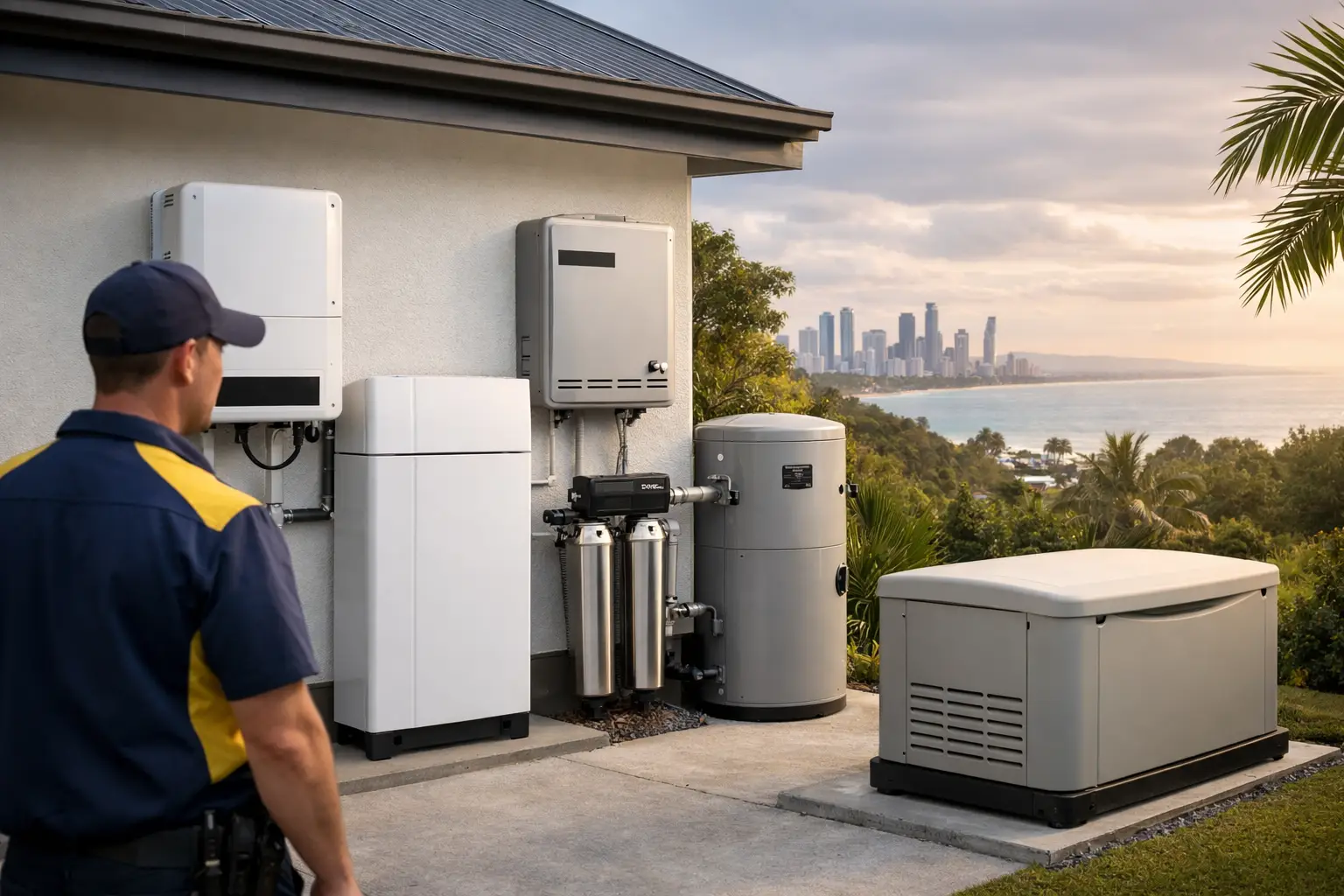
A blackout is more than a dark lounge room. It can mean warm food in the fridge, no internet for work, an unusable electric garage door, no air conditioning and, for some homes, no water pump. A practical guide to home backup power starts by deciding what your household genuinely needs to keep running when the grid is down – not by simply buying the biggest generator available.
For homes across the Gold Coast and surrounding areas, the right system depends on your property, the appliances you rely on and how long you want to remain comfortable during an outage. A professionally planned generator system can keep the essentials operating safely without the stress of extension leads, guesswork or an overloaded unit.
Start with the essentials you want to power
Backup power works best when it is designed around priority circuits. Most households do not need to run every appliance at once during an outage. Heating elements, large ducted air conditioning systems, pool equipment and electric ovens can demand a lot of power. Including everything can significantly increase the size and cost of the generator required.
Instead, think through a typical evening without mains power. You may want lighting in key rooms, the fridge and freezer, Wi-Fi, mobile charging, selected power points, a television, a security system and a garage door. If your home uses a pump for water supply, that may be a non-negotiable inclusion. Homes with medical equipment should discuss those requirements early in the planning process.
A useful first step is to separate appliances into three groups: essential, helpful and optional. Essential loads keep the household safe and functional. Helpful loads make an outage more manageable. Optional loads can wait until normal supply returns. This approach keeps the system sensible and helps avoid paying for capacity you are unlikely to use.
Do not rely on appliance labels alone
Appliance labels provide a starting point, but calculating generator capacity is not always straightforward. Fridges, pumps, air conditioners and some motors can draw more power when starting than when running. This is known as starting load or surge demand.
A licensed electrician can assess the circuits in your switchboard, identify likely peak loads and recommend a generator size with appropriate headroom. Allowing for that extra capacity helps prevent nuisance shutdowns and protects the equipment you are relying on during an outage.
Choose between portable and standby backup power
There is no single best generator for every property. The right option comes down to how often outages occur, how much convenience you want and the loads you need to support.
A portable generator is often the lower-cost entry point. It can be useful for occasional outages and can power selected appliances through properly installed generator connections. However, it needs to be positioned outdoors before use, started manually and safely managed each time. It also needs secure, dry storage and regular testing.
A standby generator is a fixed unit installed outside the home and connected to nominated circuits through an approved changeover arrangement. Depending on the setup, it can start automatically when power fails and switch your chosen circuits back to generator supply. When mains power returns, it can transfer back again. This option costs more upfront, but it is particularly useful for families, retirees, people who work from home and properties where a water pump or security system needs reliable support.
For many local households, an LPG gas standby generator is worth considering. LPG gas can be stored on site, which avoids the need to top up a small portable tank during a widespread outage. The required bottle size and gas supply arrangement depend on the generator, expected running time and whether the supply also serves other appliances. A proper site assessment makes sure the arrangement is safe and suited to your home.
Why the switchboard setup matters
A generator should never be plugged into a standard wall outlet to feed power back through the house. This unsafe practice can energise wiring beyond your property and put electrical workers, neighbours and your own household at serious risk. It can also damage appliances when power returns.
Safe home backup power requires a licensed electrical installation that isolates generator supply from the grid. This usually involves a manual or automatic changeover switch, along with a clearly defined essential-circuits board or carefully managed circuit selection.
The best setup depends on your switchboard, the age of the property and the generator type. Some homes need switchboard upgrades before a backup system can be installed neatly and compliantly. That is not a reason to put the project off. It is simply part of getting the job done properly, rather than creating a temporary solution that causes more trouble later.
Consider location, noise and weather exposure
Generators need fresh air, safe clearances and a suitable outdoor location. They should not run in a garage, enclosed patio, shed or near open windows and doors. Exhaust gases are dangerous, and ventilation is not something to compromise on.
Placement also affects noise, access for servicing, proximity to gas bottles and the cable run back to the switchboard. A unit tucked away at the far end of the block may be less noticeable, but longer cable runs can add to installation costs. A location close to bedrooms, neighbouring fences or outdoor entertaining areas may create noise concerns.
On the Gold Coast, weather exposure matters too. Your installer should consider drainage, flooding risk, corrosion, ventilation and protection from wind-driven rain. The goal is a system that is accessible when you need it, not one that becomes difficult to operate or maintain after a storm.
Plan for the outage you are most likely to have
Some households only want enough backup to get through a few hours. Others want to operate for a full day or longer, particularly where storms, fallen trees or local network repairs can interrupt supply. Your desired run time affects generator sizing, gas storage and the number of circuits you can reasonably support.
Ask yourself practical questions. Will you need to keep working from home? Is there a baby, elderly family member or person using essential equipment in the house? Does your home rely on electric refrigeration for medication or food storage? Do you need a pump running for water, wastewater or drainage?
It also helps to set expectations around air conditioning. A smaller backup system may support a bedroom split system or selected fans, but not an entire large ducted system alongside every household appliance. A bigger system can do more, but comes with higher installation, running and fuel-storage costs. Good advice is about finding the right balance, not selling more capacity than you need.
Maintenance is part of reliable backup power
A generator that sits unused for years is not a dependable emergency plan. Like any important household system, it needs periodic attention. Regular servicing checks the engine, battery, fluid levels, controls, electrical connections and automatic transfer equipment. It also gives you confidence that the unit will start when the lights go out.
Homeowners should also run through their own outage plan. Know which circuits are backed up, where the generator is located and how the changeover works if it is manual. Keep the area around the unit clear, and make sure adults in the home understand the basic operating instructions.
If your generator runs on LPG gas, include the gas supply in that check. Confirm bottles are accessible for delivery, valves and connections are in good condition, and you have enough gas available for the planned run time. A gas fitter can help identify issues on the spot, which is especially valuable when the generator supply is connected to other household gas appliances.
Get a clear quote before you commit
Two generator quotes can look similar while covering very different work. Before booking, make sure you understand the generator capacity, included circuits, changeover equipment, site preparation, gas connection work, switchboard upgrades, commissioning and ongoing servicing requirements.
It is also worth asking whether the quoted system is designed for manual use or automatic operation during an outage. The difference has a major impact on convenience. A fixed quote with clear inclusions gives you a far better basis for comparison than a low headline price followed by unexpected extras.
No Hassle Homes can assess your home’s gas and electrical requirements in one coordinated process, helping remove the usual back-and-forth between separate trades. For homeowners, that means fewer moving parts and a clearer path from initial assessment to safe installation.
A well-designed backup system is there for the moments you hope are brief: a stormy night, a network fault or an unexpected local outage. Choose the essentials, install it properly and keep it maintained, and your home can stay safe, comfortable and functional when power is hardest to come by.