


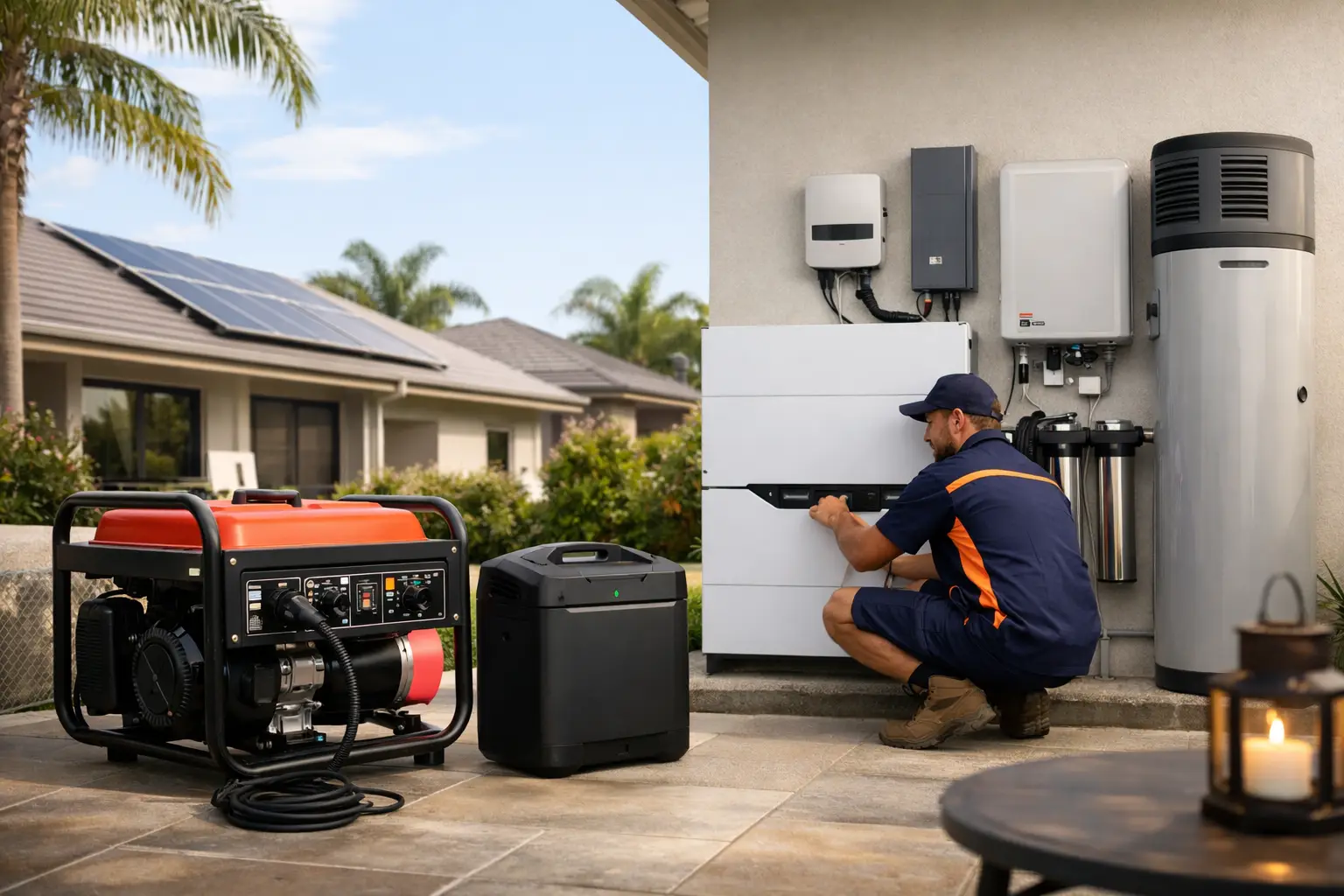
When the power goes out, the problem is rarely just the lights. Fridges start warming up, internet drops out, garage doors may not open, and essential medical or work equipment can be left without power. The best backup power solutions are the ones that match what your household genuinely needs during an outage – without creating safety risks, noise headaches, or a system that is costly to maintain.
For homes across the Gold Coast and surrounding areas, the right choice often comes down to outage frequency, the appliances you need to keep running, and whether you want a simple short-term option or automatic whole-home protection.
What do you need backup power for?
Before comparing equipment, make a short list of what must stay on when the grid is down. For many households, that means the fridge and freezer, a few lights, mobile chargers, Wi-Fi, a television and perhaps a fan. Others may need power for a home office, a water pump, security system, medical equipment or an electric gate.
This distinction matters because not every backup system is designed to power an entire house. A smaller portable generator can be a practical answer for a few priority appliances. A permanently installed standby generator is better suited to households that want power to come back automatically, including when they are away from home.
Also consider how long outages usually last in your area. A battery may comfortably cover a short interruption, while a generator is generally more practical for extended outages if you have an available fuel supply. There is no one-size-fits-all answer – the best system is the one sized around your real priorities.
Best backup power solutions compared
Portable generators
A portable generator is usually the most accessible backup option. It can supply power through standard outlets for selected appliances, making it useful for keeping food cold, charging devices and running basic household essentials during a short outage.
Portable generators suit homeowners who want backup power without installing a permanent system. They are also handy when power is needed in different locations around the property. However, they require manual setup, safe storage and refuelling. They are not something to run indoors, in a garage or near open windows, doors or vents.
If you choose a portable generator, use outdoor-rated leads and keep the unit in a dry, well-ventilated outdoor position. Never connect a portable generator directly to a household power point. This can backfeed electricity into the network and creates a serious risk for your home, neighbours and electrical workers.
Inverter generators
Inverter generators are a more refined version of a portable generator. They generally produce cleaner, more stable electricity, which is a better fit for sensitive electronics such as laptops, phones, modern televisions and gaming consoles. Many are quieter and more fuel-efficient at lighter loads as well.
The trade-off is capacity and price. Smaller inverter generators may not run large air conditioners, electric hot water systems or multiple high-demand appliances at once. They are ideal when you want quiet, reliable power for essential circuits rather than trying to run everything as normal.
LPG generators
An LPG generator can be a smart option for households that already use gas at home. LPG stores well, is readily available through suitable cylinders, and can support longer run times when there is a properly planned fuel supply.
For a fixed backup setup, an LPG generator avoids the need to keep several fuel containers stored around the home. It can be connected to an appropriately sized gas supply by a licensed gas fitter, with the generator installation and electrical changeover work completed by qualified professionals.
Generator sizing, cylinder capacity and usage patterns all need to be assessed together. A generator that is too small may struggle with starting loads, while an oversized unit can cost more than necessary. A professional site assessment helps ensure the system is safe, practical and ready when you need it.
Standby home generators
A standby generator is permanently installed and connected to your home through an automatic transfer switch. When the grid fails, the switch isolates your house from the network and starts the generator. Depending on the system design, it can power selected essential circuits or a much larger portion of the home.
This is one of the best backup power solutions for families who want minimal interruption. It is particularly useful where refrigeration, communications, pumps, security equipment or medical devices cannot be left without power. It also offers peace of mind for homeowners who travel regularly or do not want to manage a portable unit in bad weather.
The higher upfront cost reflects the installation work involved. Your electrician needs to assess the switchboard, electrical load, generator location, ventilation, noise, cable runs and transfer equipment. If the unit is gas-powered, the gas supply and connection also need professional planning. The result is a safer, more dependable setup than trying to improvise during an outage.
Solar batteries
A solar battery stores excess energy generated by your solar panels for use later. During a blackout, some battery systems can supply nominated backup circuits, such as lights, refrigeration, internet and selected power points. This can be quiet, automatic and extremely convenient for shorter outages.
The key question is whether the battery has blackout backup capability. Not all solar systems keep supplying power when the grid goes down. Safety settings typically shut standard solar inverters down during an outage unless the system has the right backup equipment installed.
Battery capacity is another consideration. Running a fridge, lights and Wi-Fi uses far less energy than running ducted air conditioning, an electric oven or a large hot water system. A battery can be an excellent everyday energy solution, but it may not replace a generator for long outages or high-demand households.
Generator and battery combinations
For some homes, the strongest arrangement is a battery for everyday use and a generator for extended outages. The battery handles short interruptions quietly and instantly, while the generator provides extra charging or longer-term support when poor weather or grid issues continue.
This approach costs more and needs careful design, but it can be worthwhile for homes with essential power needs. It is also useful where comfort matters during prolonged outages and relying on one energy source alone does not provide enough confidence.
How to choose the right generator size
Generator size is measured in watts or kilowatts. The right capacity depends on both running power and starting power. Appliances with motors – including fridges, pumps, air conditioners and some power tools – can draw a higher surge of electricity when starting.
Start by adding the running wattage of the appliances you want to use at the same time. Then allow for starting loads and a sensible buffer. You do not need to size a generator around every appliance in the house if your goal is simply to keep essentials running.
For example, a fridge, freezer, lighting, Wi-Fi, television and device charging may need far less capacity than a system designed to include air conditioning, cooking appliances and hot water. Your electrician can help identify priority circuits and prevent overloading the system during an outage.
Safety and installation are not optional
Backup power is electrical work, and shortcuts can be dangerous. A properly installed changeover switch prevents electricity from feeding back into the grid. It also makes the process of switching between mains and generator power clear and controlled.
Generator placement matters just as much. Exhaust gases must be directed safely away from living areas, doors, windows and air intakes. The unit needs weather protection without restricting ventilation, and it should be positioned with noise and access for servicing in mind.
If you are planning an LPG generator, use a licensed gas fitter for the gas connection and a licensed electrician for the electrical installation. No Hassle Homes can help homeowners organise these connected parts of the job without sending them off to chase separate trades.
Think beyond the next blackout
A backup system should be easy to use when conditions are stressful. That means knowing where it is, how it starts, which circuits it powers and what maintenance it needs. Test portable units periodically, keep batteries charged, and arrange servicing for standby generators in line with the manufacturer’s requirements.
The most useful backup power is not necessarily the biggest or most expensive system. It is the one that keeps your household safe, connected and comfortable for the time you are likely to be without mains power – and is installed properly before you need it.