


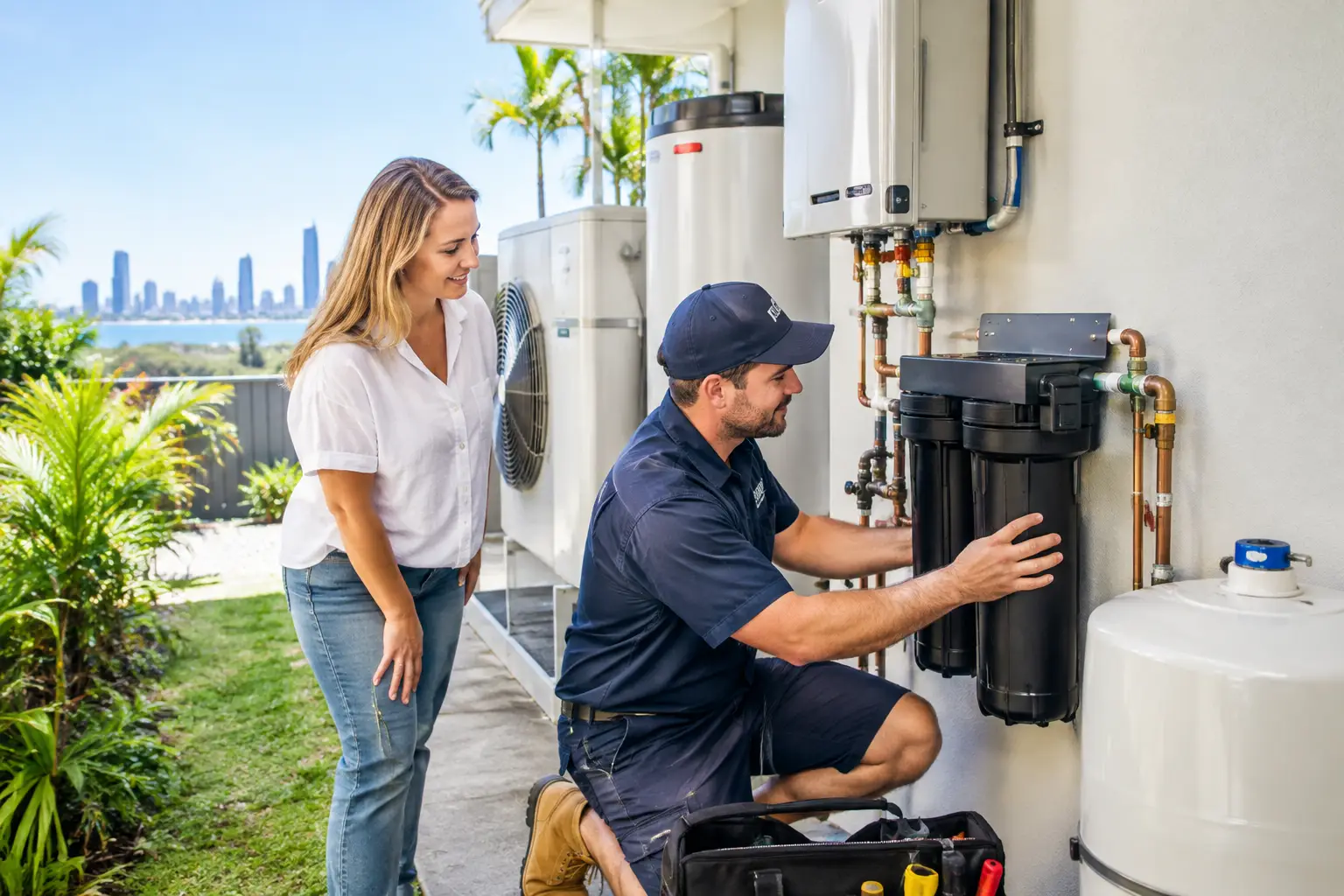
A new water filter can look straightforward in the box, but fitting one properly often means working on your home’s drinking-water plumbing. So, can plumbers install water filters? Yes – and for most under-sink, whole-house and plumbed-in fridge filter systems, a licensed plumber is the right person for the job.
The benefit is not simply getting filtered water faster. A professional installation helps protect your cupboards, benchtops and water supply from leaks, poor connections and makeshift fittings that can cause trouble later. For Gold Coast, Southern Brisbane and Tweed Heads homeowners, it is one less job to coordinate and one more essential home system handled properly.
Can plumbers install water filters safely?
Licensed plumbers regularly work with water pipes, isolation valves, taps, pressure regulation and drainage. Those are the exact systems involved in many water-filter installations. They can assess the available space, identify the pipe material, fit the required connections and check the unit is operating as it should.
A plumber is particularly useful when the filter needs a dedicated filtered-water tap, a new connection point under the sink, or a filter installed on the main water line. These jobs are more involved than attaching a countertop jug or screwing a filter directly onto an existing tap.
The exact licensing requirements can differ between states and by the scope of the work. As a practical rule, if a job involves altering fixed plumbing, cutting into a water pipe or installing a new tap, book a qualified plumber rather than treating it as a weekend DIY project.
Which water filters need a plumber?
Not every filtration product needs professional fitting. A countertop filter, filter jug or tap-mounted attachment is usually designed for household installation and does not alter permanent plumbing. The trade-off is that these options can have lower flow, less capacity and fewer placement choices.
For the systems below, a plumber is usually the sensible choice:
- Under-sink filters that connect to your cold-water line and feed a separate drinking-water tap
- Three-way mixer taps that supply hot, cold and filtered water through one fixture
- Whole-house filters fitted near the water meter or where water enters the home
- Fridge water and ice-maker lines that need a permanent connection
- Reverse osmosis systems with several filter stages and, in some cases, a drain connection
Whole-house filtration deserves extra care. It affects water delivered to every tap, shower, toilet, appliance and outdoor outlet after the installation point. The filter needs to be correctly sized for your household demand and installed where it can be accessed for future cartridge changes. A system that is too small or poorly located can reduce pressure just when several taps are running.
What a professional water-filter installation involves
The work starts with choosing the right location. Under-sink systems need enough cupboard space for the housing, cartridges and tubing, plus room to replace filters without pulling apart half the cabinet. A plumber will also check whether the existing shut-off valve works and whether the water pressure suits the selected system.
For a dedicated drinking-water tap, the installer may use an existing hole in the sink or benchtop, or discuss a suitable new location. This needs careful planning, especially with stone benchtops, where drilling should never be an afterthought. The goal is a tap that is easy to use without crowding the main mixer or damaging the surface.
Once the connections are made, the system should be flushed according to the manufacturer’s instructions. This removes any loose carbon fines or manufacturing residue before you start drinking the water. The installer should then check every fitting for leaks, confirm the flow is acceptable and explain how and when to replace the cartridges.
With reverse osmosis equipment, there may be an additional wastewater line and storage tank to position. These systems can deliver a high level of filtration, but they take up more space and need more ongoing attention than a simple carbon filter. The best option depends on what you want to reduce from your water, your available space and how much maintenance you are comfortable handling.
Why DIY plumbing can become an expensive leak
Many filter kits are marketed as easy to fit, and some are. But a small leak under the kitchen sink can go unnoticed for days, damaging cabinetry, swelling flooring or creating mould conditions. A fitting that feels secure at first can also fail after water pressure changes or repeated movement inside the cupboard.
There is also the question of compatibility. Australian homes may have different pipe materials, connection sizes and older fittings that do not suit the parts supplied in a filter kit. Forcing a connection or relying on excessive thread tape is not a reliable fix.
DIY may be reasonable for a non-permanent, manufacturer-designed attachment where no plumbing is changed. Once the job involves a water line, valve, dedicated tap or whole-home system, professional installation offers better peace of mind. It also means you have someone to call if the set-up needs adjustment after the job.
Choosing the right filter before booking
Start with the reason you want filtered water. If you mainly dislike chlorine taste or odour, a quality carbon filter may be enough. If you are concerned about specific contaminants, check what the system has been tested and certified to reduce. Avoid buying based only on broad claims such as “pure” or “healthy” water.
Think about where you want filtration. An under-sink system focuses on drinking and cooking water, typically at a lower upfront cost. A whole-house system filters water throughout the property, which can be useful if you want filtered water for showers and appliances as well, but it requires a larger initial investment and more considered installation.
Maintenance matters just as much as the first fitting. Filter cartridges have a replacement schedule based on time, litres used or both. Leaving an old cartridge in service too long can affect taste, flow and filtration performance. Choose a unit with readily available replacement cartridges, clear servicing instructions and a housing you can access easily.
If your home uses rainwater, bore water or has an unusual water-quality concern, a general-purpose filter may not be the right answer. Water testing and product advice tailored to the result can prevent you from paying for a system that does not address the issue you actually have.
Questions to ask your plumber
Before installation, have the filter’s make and model ready, along with photos of the area where you want it fitted. This helps the plumber identify likely space, access or connection issues before arriving.
Ask whether the quoted work includes all required valves, fittings and a pressure-limiting component if one is needed. Confirm where the unit will sit, how cartridge changes will work, and whether any benchtop or sink drilling is required. If you are comparing quotes, make sure each one covers the same scope rather than simply comparing the lowest number.
It is also worth asking what happens if an existing valve, pipe or cabinet condition creates extra work. Clear, fixed-quote booking where practical gives you a better idea of the cost before the job begins and avoids unpleasant surprises.
A simpler way to get it sorted
Water filtration is one of those home upgrades that should make life easier, not create another list of calls, quotes and waiting around. A qualified installer can help you decide whether your chosen system suits the space, fit it safely and leave you knowing how to look after it.
No Hassle Homes provides water-filtration installation alongside other essential home services, so homeowners can deal with one dependable local team rather than chasing separate trades. Whether you are fitting an under-sink drinking-water filter or planning a whole-house system, the right installation gives you confidence every time you turn on the tap.
Good water should be easy to enjoy. Choose a filter that suits your household, have the plumbing done properly, and keep its maintenance on schedule.