


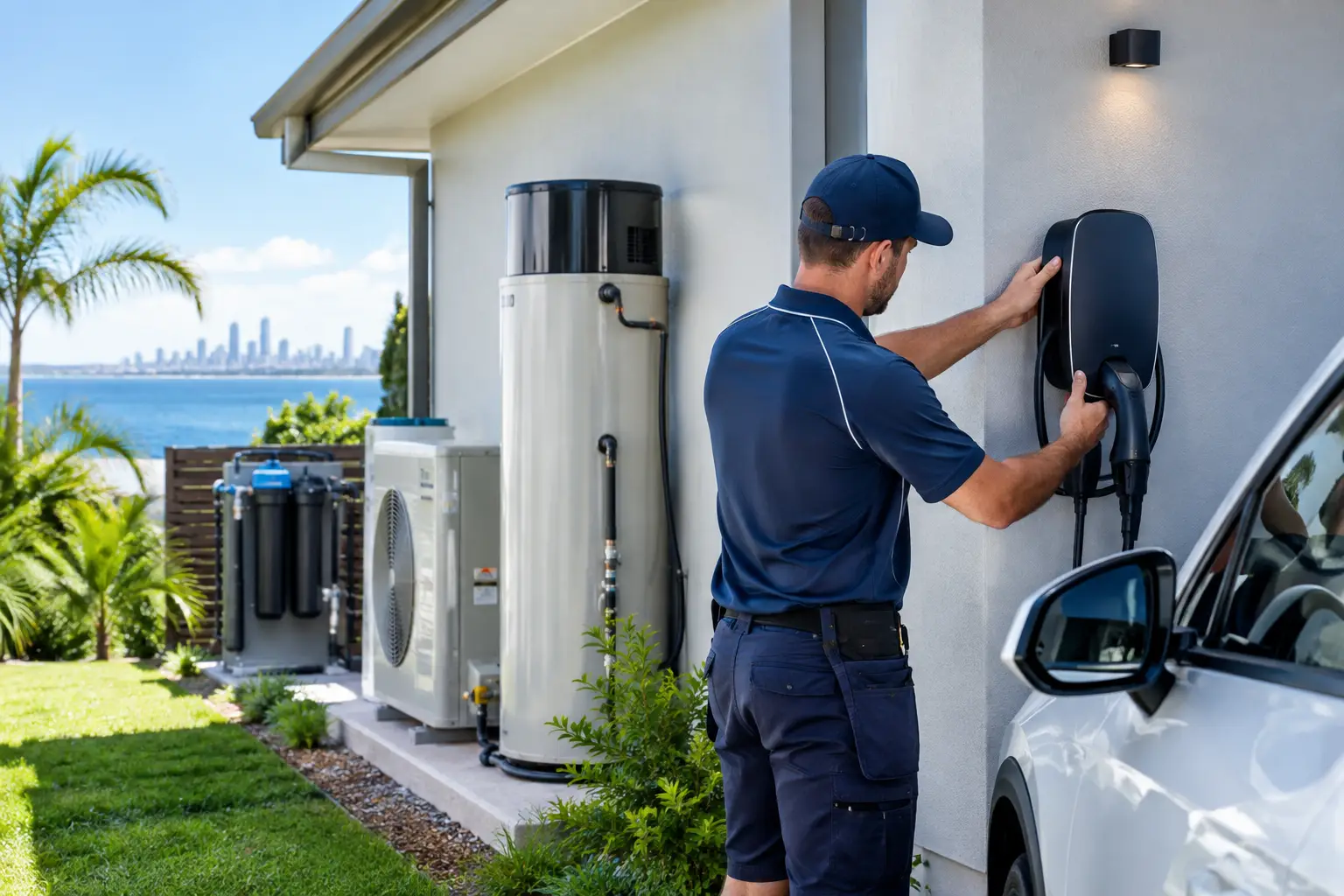
A wall charger installed beside the driveway has to cope with more than a quick shower. On the Gold Coast and across Tweed Heads, it may face heavy rain, humid afternoons, summer heat, wind-blown sand and salty coastal air. So, are EV chargers weatherproof? Most quality home chargers are designed for outdoor use, but weatherproof does not mean every charger can go anywhere without planning.
The charger, its mounting position, cable route and electrical installation all need to suit the conditions at your home. Getting those details right protects your charging equipment, your vehicle and your household electrical system.
Are EV Chargers Weatherproof Enough for Outside?
Many hard-wired EV chargers sold for Australian homes are made for outdoor installation. Their enclosure is sealed to a stated level, with durable materials intended to handle sun, rain and everyday temperature changes. However, the right question is not simply whether a charger is weatherproof. It is whether that particular charger is rated and installed for the exact spot you have in mind.
A charger under a carport has a far easier job than one mounted on an exposed front wall. A unit near the beach may need greater protection from salt-laden air than one in a sheltered inland garage. Likewise, a charger placed where a hose, sprinkler or runoff regularly hits it needs more consideration than one installed high and dry under eaves.
Weatherproof products are generally built to resist water and dust getting into the electrical components. They are not automatically waterproof in every situation. Submerging a charger, directing a pressure washer at it or allowing water to pool around its cable and connections can still create a problem, even with a well-rated unit.
What an IP Rating Tells You
The easiest way to compare outdoor suitability is to look at the charger’s IP rating. IP means Ingress Protection. The first number relates to protection from solid objects and dust, while the second relates to water.
For example, a charger with an IP54 rating has useful protection against dust and splashing water. An IP55 rating adds protection against water jets from different directions. Higher water-resistance ratings may suit more exposed locations, but an IP number is not the whole story. The manufacturer’s installation instructions still set the rules for where and how the charger can be fitted.
It is worth checking the rating of the charger itself, rather than assuming an outdoor-looking case is enough. Also check the rating of any socket, plug, isolator, cable gland and enclosure used as part of the installation. One weak point can undermine an otherwise well-protected setup.
Water resistance is not the same as pressure washing
Rain normally falls, splashes and blows sideways in a storm. A pressure washer drives water into gaps with far more force. Avoid spraying an EV charger, its plug, cable ends or surrounding electrical equipment directly. If the area needs cleaning, follow the charger manufacturer’s advice and use a gentle method.
The same goes for flooded areas. If water has reached the charger, electrical connections or charging lead, do not use the system until a licensed electrician has checked it. A quick inspection can prevent a much larger repair later.
Placement Matters as Much as the Charger
A good installer starts by looking at where you park, how you use the cable and what the weather does around your property. The aim is practical charging without creating an exposed, awkward or unsafe setup.
Where possible, an EV charger is best placed under a carport, in a garage or beneath a substantial eave. Shelter reduces long-term exposure to UV, driving rain and salt air. It also makes charging more comfortable when the weather turns.
That said, an outdoor wall can work well when the equipment is suitably rated. The charger should be mounted securely on a solid surface, away from areas where water collects. It should not sit directly below a leaking gutter, next to a downpipe outlet or in the path of regular sprinkler spray.
Think about cable management too. The charging lead should reach the vehicle without being stretched across a walkway, crushed by a car tyre or left lying in standing water. A proper cable holster or tidy mounting arrangement keeps the connector off the ground and reduces wear.
For homes close to the coast, cleaning salt residue from the outside of the unit with a manufacturer-approved method can help preserve its finish. Regular visual checks for corrosion, cracked seals or loose fittings are sensible, particularly after severe weather.
Heat, Sun and Storms Need Consideration
Rain gets most of the attention, but heat can be just as relevant in a Queensland summer. EV chargers are designed to manage normal operating temperatures, and many can reduce charging output if they get too hot. That protection is useful, but constant direct sun can still affect long-term performance and make the unit unpleasant to handle.
A shaded position is often the smarter choice. It can help the charger run in a more stable temperature range and protects plastics, labels and cable insulation from prolonged UV exposure. If shade is not available, choose a charger specifically rated for outdoor heat and have the installer assess the location.
Storm preparation also comes back to sound installation. Secure mounting, correct cabling, suitable weatherproof fittings and properly protected electrical circuits all matter. If your home is in an area prone to lightning or power fluctuations, ask your electrician whether surge protection is appropriate for your switchboard and charging equipment.
Safe Installation Is Not a DIY Job
An EV charger draws a significant electrical load for extended periods. It needs a dedicated circuit designed for the charger, the home’s existing electrical capacity and the way you intend to charge. This is work for a licensed electrician, not a DIY project and not a job for an ordinary outdoor power point.
A professional installation should consider the switchboard, cable sizing, circuit protection, earthing, isolation requirements and compliance with current Australian electrical rules. The electrician should also check whether the household supply can support the charger alongside air conditioning, hot water, cooking appliances and other major loads.
Load management may be a useful option in some homes. It can allow the charger to adjust its output when other high-demand appliances are running, helping avoid unnecessary supply upgrades or tripped circuits. It is one of those details that is easy to miss when comparing charger prices, yet can make a real difference to how well the system works day to day.
What to Ask Before Booking an EV Charger Installation
Before choosing a charger or installation location, have a clear conversation about your home and routine. Tell the installer whether the vehicle is usually parked inside, under cover or fully exposed. Mention if you live near the coast, have a shared driveway, regularly wash cars in that area or experience water runoff during heavy rain.
It also helps to discuss how far you drive, when you expect to charge and whether another EV may be added later. A faster charger is not always the best answer. Your vehicle’s charging capability, available electrical supply, overnight parking time and future plans should guide the recommendation.
Ask which charger rating suits the proposed location, how the cable will be protected, whether the switchboard needs work and what warranty applies to both the equipment and installation. A fixed quote that clearly explains the scope gives you a far better basis for comparing options than a headline charger price alone.
Simple Care for an Outdoor Charger
Once installed, an outdoor EV charger needs very little day-to-day attention. Keep the cable tidy, return the connector to its holder after use and avoid slamming it against the wall or driveway. Check occasionally that the enclosure is intact and that no insects, dirt or garden growth are interfering with the unit.
If you notice a damaged cable, cracked case, water inside the enclosure, repeated charging faults or a circuit breaker that trips, stop using the charger and arrange an inspection. Do not tape over damage or try to open the unit yourself.
For homeowners who want one local team to manage the supply and installation, No Hassle Homes can help make the process straightforward. The best outdoor charger is not simply the one with the highest rating on the box – it is the one that suits your home, is installed properly and stays easy to use in every season.