


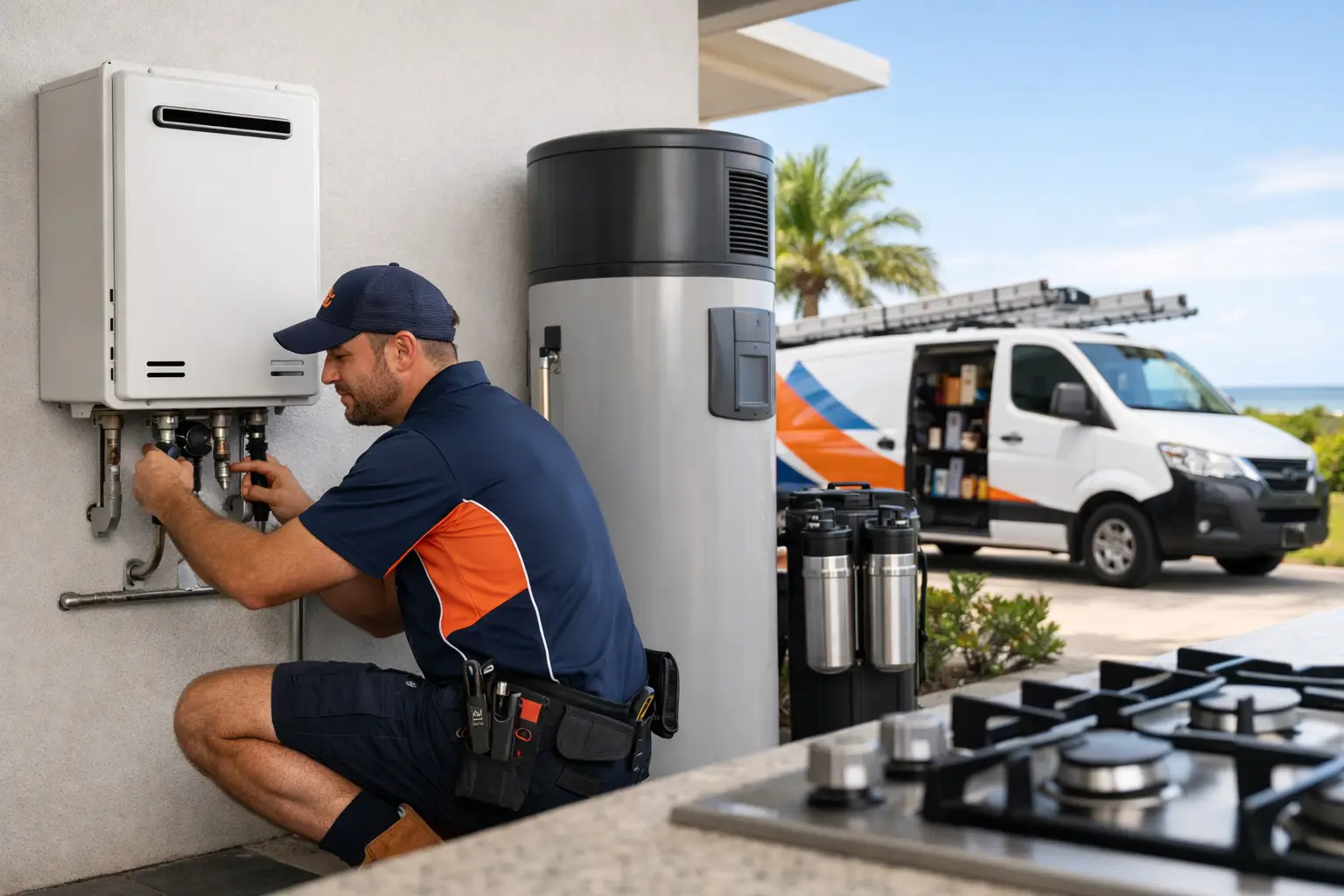
A new cooktop, gas fire or hot water system should make life easier from day one. Proper gas appliance installation is what makes that possible – with the right gas connection, safe clearances, reliable operation and no guessing about whether the job has been done properly.
For homeowners, the frustrating part is often not choosing the appliance. It is coordinating delivery, a gas fitter, possibly a plumber or electrician, and finding a time that does not mean taking another day off work. A well-planned installation removes that runaround and gives you confidence when you turn the appliance on.
What a safe gas appliance installation involves
Installing a gas appliance is more than connecting a hose and checking that it lights. A licensed gas fitter needs to assess the appliance, the available gas supply, the location and the existing installation before any work begins. This matters whether you are replacing an old LPG cooktop, fitting a new gas fire or upgrading a hot water system.
The first check is compatibility. Appliances are made for a particular gas type, usually LPG or natural gas, and the correct pressure and components must be used. An appliance set up for one gas type cannot simply be connected to another. In some cases, a manufacturer-approved conversion may be possible, but it must be completed and tested correctly.
The fitter will also check the condition and capacity of the gas line, the regulator and bottle connections where LPG is used. Older pipework, undersized lines or worn fittings can affect performance. A cooktop that struggles to maintain a flame or a hot water system that cuts in and out may be showing a supply issue, not necessarily an appliance fault.
Location is equally important. Gas appliances need suitable clearances from surrounding surfaces, access for future servicing and appropriate ventilation. The exact requirements vary by appliance and manufacturer instructions. A gas fire, for example, has different placement and flue requirements from an outdoor barbecue point or a kitchen cooktop.
Once connected, the installation must be tested for leaks and commissioned. That means confirming the appliance lights, burns correctly, operates through its settings and shuts down as intended. It is the final stage that turns an installation into a working, safe household system.
When replacement is better than repair
Not every issue means you need a new appliance. A faulty igniter, worn hose, regulator problem or blocked burner can often be repaired. If the appliance has been dependable and parts are readily available, repair can be the sensible option.
Replacement starts to make more sense when repairs are becoming regular, hot water is unreliable, the appliance is no longer efficient, or parts are difficult to source. It can also be the better call when you are renovating and the existing appliance no longer suits the layout or the way your household uses the space.
For LPG households, it is worth looking at the whole setup rather than the appliance alone. A larger family may need more hot water capacity, while frequent cooking or a gas fire can change how quickly bottles are used. The right appliance size and a dependable gas delivery arrangement help avoid the inconvenience of running out at the worst time.
How to prepare before the gas fitter arrives
A little preparation helps the job move quickly and avoids surprises on the day. Make sure there is clear access to the appliance location, the gas bottles or meter, and any relevant switchboard or water connections. Move items from under the kitchen bench if a cooktop is being installed, and keep pets safely away from the work area.
Have the appliance make, model and any paperwork available if you have already purchased it. This allows the fitter to confirm installation requirements before work starts. If you are replacing an existing unit, mention any past problems such as weak flames, a smell of gas, inconsistent hot water or a circuit that trips.
It also helps to be clear about what is included in the quote. A fixed quote should explain whether it covers removal of the old appliance, new pipework, electrical work, valves, flue components, alterations to cabinetry or benchtops, and testing. Straight answers upfront are far better than unexpected extras after the work has begun.
Why licensed installation is not a DIY job
Gas work is regulated for good reason. Incorrect connections, poor ventilation and untested leaks can create serious safety risks. Even a small leak should never be ignored, and a flame that is yellow, smoky or unstable needs professional attention.
A licensed gas fitter has the training and equipment to carry out the work, pressure-test the installation and make sure it complies with applicable requirements. Depending on the job and location, you may also receive the relevant compliance documentation. Keep this with your home records, especially if you plan to sell, rent out or insure the property.
Avoid trying to move, reconnect or modify a gas appliance yourself to save time. The same applies to changing regulators, extending gas lines or adapting fittings that do not match. What looks like a quick fix can create a much larger problem and may affect warranty or insurance cover.
If you smell gas, turn off the appliance if it is safe to do so, avoid flames and electrical switches, ventilate the area where possible, and call for professional help. For an immediate emergency, contact emergency services. Do not use the appliance again until it has been checked.
Gas appliance installation that fits your home
The best installation is not always the cheapest appliance connected in the fastest possible way. It is the setup that suits your household, works reliably and can be serviced without difficulty later. A compact unit may be ideal for a smaller home, while a busy family may benefit from more capacity or a system designed for higher demand.
Kitchen projects often need a broader view. A new gas cooktop may require changes to cabinetry, benchtop cut-outs, electrical ignition connections and the gas line. Hot water upgrades can involve plumbing changes, safe discharge arrangements and decisions about where the unit will sit. One qualified team that can coordinate gas, plumbing and electrical-related work can save a lot of phone calls.
For homeowners across the Gold Coast and nearby areas, No Hassle Homes provides licensed help with LPG gas, hot water systems, cooktops and gas fires, backed by practical scheduling and clear pricing. Where an issue is found during a gas delivery, having gas fitters on the road can also mean repairs are handled on the spot rather than leaving you without gas.
Questions worth asking before you book
Before confirming an installation, ask whether the appliance is suitable for your available gas type, what work is included, how long the job is likely to take and whether there may be any site-specific additions. Ask who will test and commission the appliance, and what paperwork you will receive when the work is complete.
If you are choosing an appliance as well as arranging installation, discuss your household’s actual needs. How many people use hot water? Do you cook every day? Is the appliance indoors or outdoors? Do you want to keep the same position, or is this part of a renovation? A good recommendation should reflect those answers, not just what happens to be available.
A properly installed gas appliance should fade into the background of daily life. Your hot water arrives when you need it, dinner gets cooked without fuss, and your gas fire works when the temperature drops. That quiet reliability is worth choosing a licensed installer for.