


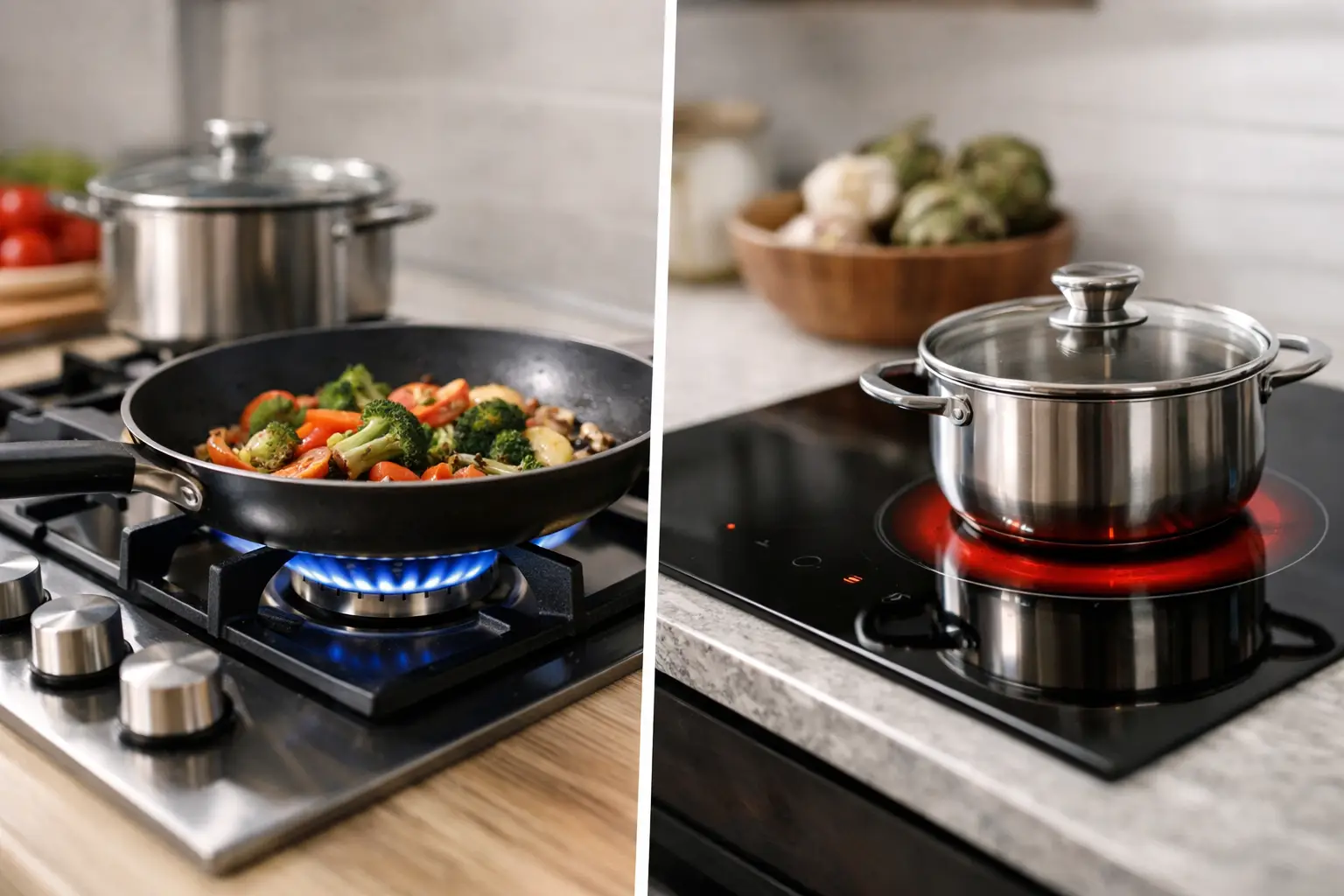
Choosing a new cooktop usually gets real the moment dinner is half prepped and your old one stops behaving. That is when the gas cooktop vs induction cooktop question stops being theoretical and starts affecting how you cook every day, how much bench space you clean, and what it takes to install the right system safely.
For most households, there is no single winner. The better option depends on how you cook, what services are already in the home, and whether you want fast changeover or a bigger kitchen upgrade. If you are replacing an existing unit, those practical details matter just as much as the appliance itself.
Gas cooktop vs induction cooktop: the real difference
The biggest difference is how heat is created. A gas cooktop uses an open flame, giving you visible heat and instant control with a turn of the knob. Induction uses electricity and a magnetic field to heat the cookware itself, not the glass surface.
That difference changes the cooking experience straight away. Gas feels familiar to many home cooks because you can see the flame, adjust it instantly, and use a wide range of pots and pans. Induction feels modern and precise, with fast heat-up times and a flatter, easier-to-clean surface.
Neither is automatically better in every kitchen. Gas tends to suit households that already have a gas connection or LPG bottle setup and want a straightforward replacement. Induction often suits renovators or homeowners already planning electrical upgrades and looking for a cleaner-looking finish.
Cooking performance in everyday use
If cooking control is your top priority, both options can perform well, but in different ways.
Gas gives immediate visual feedback. Turn the flame up, the heat increases. Turn it down, it softens straight away. That makes gas popular for stir-frying, charring, simmering sauces and cooking with larger or heavier cookware. It is also forgiving if your pots and pans are not perfectly flat.
Induction is known for speed and precision. Water boils quickly, temperature changes are responsive, and lower heat settings can be very consistent. For busy households, that can make weeknight cooking faster and more predictable.
There is a trade-off, though. Induction only works with compatible cookware, so some households need to replace pots and pans. Gas does not have that issue. If you already own quality cookware that is not induction-ready, that extra cost can shift the decision.
What running costs look like
Running costs depend on your home setup, energy usage and local tariffs, so there is no one-size-fits-all answer.
A gas cooktop can be cost-effective for homes already set up for natural gas or LPG, especially if gas is also used for hot water or heating. If your household already relies on gas, adding or replacing a gas cooktop may be the simpler and more economical move overall.
Induction cooktops run on electricity, and they are generally efficient because the energy goes directly into heating the cookware. But efficiency does not always mean the lowest bill. Your actual running cost depends on electricity rates and how often you cook.
Installation costs can matter more than running costs in the short term. Swapping an old gas cooktop for a new gas model is often simpler than changing from gas to induction, especially if electrical work is needed. Moving to induction may require a dedicated electrical circuit or switchboard upgrades, and that can add to the project cost quickly.
Safety matters more than brochure features
Both cooktop types can be safe when correctly installed and used properly. The key is understanding how the risks differ.
Gas cooktops involve a live flame, so ventilation, correct installation and appliance condition are important. A licensed gas fitter should always handle installation, disconnection and any gas line work. That is not just a box-ticking exercise. It protects your home and makes sure the cooktop performs as it should.
Induction removes the open flame, which many families see as a major plus. The surface around the cooking zone stays cooler than a standard electric cooktop, although it can still become hot from the pan. Many induction units also include child locks, auto shut-off and pan detection.
If you have young kids, older family members, or simply want fewer moving parts in the kitchen, induction may feel more reassuring. If you are comfortable with gas and have a professionally maintained setup, gas remains a reliable option.
Cleaning and day-to-day maintenance
This is where induction often wins people over.
A flat induction surface is quick to wipe down, and because the glass around the pot does not get as hot as a traditional electric cooktop, spills are less likely to bake on hard. For busy families, that can save time every single day.
Gas cooktops take more effort. Trivets, burner caps and the surface around the burners all need regular cleaning, and grease can build up in places that are awkward to reach. It is manageable, but it is not as simple as wiping a flat glass panel.
On the other hand, gas cooktops are generally less fussy about scratches from cookware movement, and many people prefer their durable, workhorse feel. If your kitchen gets heavy use, that practical side still counts.
Installation is often the deciding factor
A lot of homeowners start by comparing cooking features, then make the final decision based on installation.
If your home already has a gas cooktop, replacing it with another gas unit can often be the smoother path. The gas supply is already there, and the job may involve fewer changes overall, provided everything is compliant and in good condition.
If you are switching from gas to induction, the electrical side becomes important. Some homes are ready for it. Others need extra work before the new cooktop can be installed safely. That might include circuit upgrades or switchboard changes, which can affect timing and budget.
There is also the reverse scenario. If you want to move from electric to gas, you will need access to a suitable gas supply and licensed gas installation. For some homes, especially those already using LPG for other appliances, that can still be a very practical option.
This is why a proper site check matters. The best appliance on paper is not always the best fit for the home you have now.
Which cooktop suits your household?
When homeowners weigh up gas cooktop vs induction cooktop, their lifestyle usually points to the answer.
Gas often suits people who cook frequently, like visible flame control, already have a gas setup, or want a more direct replacement without turning the project into a full electrical upgrade. It is also a strong option for households that value flexibility with cookware and want a proven, familiar cooking style.
Induction often suits homeowners who want a sleek look, easier cleaning, fast heat-up times and strong safety features. It can be especially appealing in renovated kitchens where electrical work is already part of the plan.
There is also a middle ground. Some people prefer gas for serious cooking but would choose induction in a smaller household where convenience and cleaning matter more than flame cooking. Others love the idea of induction until they price the electrical changes and realise a quality gas replacement makes better sense right now.
The best choice is the one that works in your home
Appliance decisions are easier when you look beyond showroom features. Think about your existing services, your cookware, how often you cook, and whether you want the fastest replacement or a bigger kitchen upgrade.
If you are still unsure, start with the installation side first. A licensed professional can tell you what is practical, what needs upgrading and what is likely to give you the least hassle over time. For homeowners across the Gold Coast, Southern Brisbane and Tweed Heads, that usually saves money, avoids delays and leads to a choice you will be happy with long after the new cooktop is in place.
A good cooktop should make dinner easier, not turn your kitchen into another project that drags on for weeks.